


Modern agriculture depends heavily on chemical pesticides, and for decades they have been framed as a necessary compromise, a controlled environmental cost in exchange for reliable food production.
But new global research shows that this cost is far larger, more persistent, and more invisible than most people realize. Every year, roughly 155 million pounds of agricultural pesticides leach into underground aquifers worldwide, quietly contaminating freshwater systems that ecosystems and human communities depend on.
Let’s talk about this hidden problem and comprehend what kind of thing we can do to solve this.
Beyond the Field
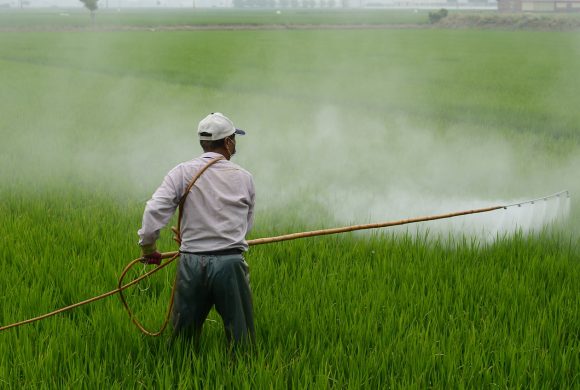
Pesticides are designed to kill specific organisms, but once applied, they do not stay neatly confined to crops. Rainfall and irrigation move these chemicals through soil layers, where they seep downward into groundwater or wash sideways into streams and rivers.
A recent global analysis of 92 widely used agricultural pesticides shows just how extensive this movement has become. Each year, about 70,000 tons of pesticides migrate into aquifers alone.
That number does not include chemicals that remain in soil, move into rivers, or ultimately reach the ocean. While only a small percentage of applied pesticides enter waterways directly, even that fraction translates into enormous volumes at a global scale.
Roughly 730 tons flow into rivers annually, affecting more than 13,000 kilometers of waterways where chemical concentrations exceed safety thresholds for aquatic life.
What makes this especially troubling is that groundwater contamination is slow to reverse. Unlike surface water, aquifers renew themselves over long timescales. Once polluted, they can remain contaminated for generations. This means today’s agricultural decisions shape water quality far into the future, often long after the original pesticide application has been forgotten.
Hidden Toxicity

One of the most misunderstood aspects of pesticide pollution is what happens after the chemicals begin to degrade. Around 80% of applied pesticides break down into so-called “daughter molecules” in the soil.
These byproducts are often assumed to be harmless, but research shows that many persist longer and can be just as toxic as the original compound. Glyphosate is a striking example. While it is frequently described as highly degradable, it breaks down into a compound called AMPA, which is far more persistent and can accumulate in soils and water systems.
These degradation cascades allow pesticides to linger in the environment long after their agricultural purpose has ended. The result is chronic, low-level exposure across ecosystems. Aquatic plants, insects, amphibians, and microorganisms are especially vulnerable.
Because these organisms form the base of food webs, even subtle chemical disruptions can ripple upward, affecting fish, birds, and mammals. Importantly, these effects often occur below visibility thresholds, there are no dramatic die-offs, just gradual weakening of ecological resilience.
Once pesticides enter water systems, their reach expands dramatically. Rivers act as highways, carrying chemicals downstream until they eventually reach estuaries and oceans. There, pesticide residues threaten plankton, coral reefs, and the early life stages of fish and invertebrates.
This matters because plankton and small invertebrates underpin marine food chains. When pesticide exposure reduces their abundance or alters their behavior, entire ecosystems become less productive. Coral reefs, already stressed by warming waters and acidification, face an additional chemical burden that weakens their ability to recover from bleaching and disease.
Freshwater ecosystems are no less vulnerable. Amphibians, for example, are particularly sensitive to pesticide exposure during their larval stages, contributing to global population declines.
Polluted rivers also affect human communities that rely on fishing, irrigation, and untreated surface water. The damage is cumulative, building quietly year after year rather than appearing as a single catastrophic event.
Bigger Than Number

The estimate of 155 million pounds of pesticides entering aquifers each year is considered conservative. The analysis excludes legacy pesticides that remain in the environment long after being banned, as well as chemicals used in aquaculture, public spaces, and private gardens. Together, these sources likely add significantly to the overall chemical load.
There is also a monitoring gap. Many countries lack transparent, standardized reporting on pesticide use, making it difficult to assess risks accurately or compare trends across regions. In many cases, the absence of detected residues is mistaken for safety, when in reality it reflects limited sampling or outdated testing methods.
This lack of visibility creates a policy blind spot. Without clear data, environmental damage remains easy to ignore, even as ecosystems slowly degrade. Closing this gap is a prerequisite for meaningful reform.
Yet, one of the most persistent arguments against reducing pesticide use is fear of lower crop yields. What people haven’t comprehended is that researchers emphasize that this is a false dilemma. There is substantial room to reduce pesticide applications while maintaining, or even improving, food production.
Modern crop management techniques, such as precision agriculture, integrated pest management, crop rotation, and biological controls, allow farmers to target pests more effectively and apply fewer chemicals. Advances in sensor technology and data analytics mean pesticides can be used only where and when they are needed, rather than as blanket treatments.
Equally important is collaboration with farmers. Top-down bans without alternatives can create resistance and unintended consequences. In contrast, policies developed alongside agricultural producers are more likely to succeed, especially when paired with training, financial incentives, and access to new technologies.
The Choice is Ours
The widespread leaching of pesticides into aquifers is a serious environmental challenge, but it is not an unsolvable one. Unlike climate change or biodiversity loss driven by multiple interacting forces, pesticide pollution is tied to specific practices and products that can be measured, regulated, and improved.
The science is clear: small amounts of pesticides can cause outsized harm, especially when they persist unseen in groundwater. But the same research also shows that smarter management, better data, and thoughtful policy can dramatically reduce these risks.
What is required now is not panic, but commitment. By treating pesticide pollution as a shared responsibility, one that links food systems, water security, and ecosystem health, we can protect both agricultural productivity and the natural systems that sustain it.
The chemicals beneath our feet do not have to define our future, but ignoring them almost certainly will. So, should we try to make this a global issue now?
Sources:
Leave a Reply