

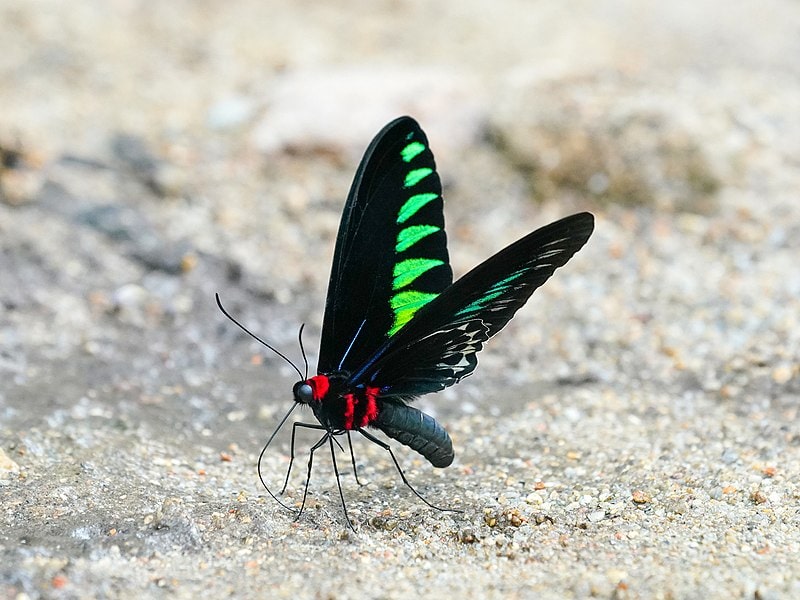
Have you ever heard about Rajah Brooke’s Birdwing? You may think that this is one of those beautiful birds like bird of paradise or a species of exotic cockatoo. But it is not!
Rajah Brooke’s Birdwing is actually a beautiful butterfly that will surely strike your eyes when you see one. Their beauty is beyond comparison and it doesn’t only apply to their colours, but also their shape.
Let alone when you see how they fly, floating in the sky of blue in tropical area. Their movements are more beautiful than how Muhammad Ali moves on the ring. If only a butterfly lover that has never seen this creature encounter it for the first time, they might fall in love immediately.
Well, so how incredible is this butterfly? Wait not, to introduce to more people about this beauty, here in this article we are going to talk about Rajah Brooke’s Birdwing Butterflies. Be ready to get mesmerized only by reading their description.
The Grace of South East Asia
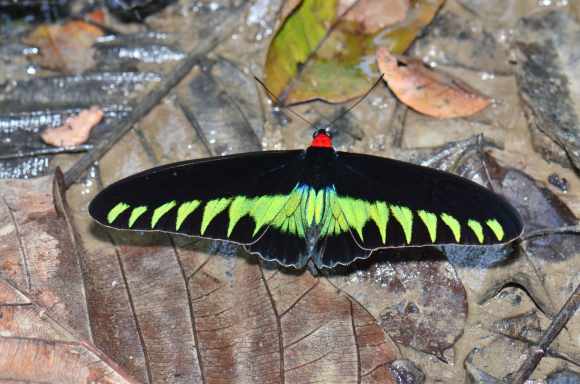
Rajah Brooke’s Birdwing (Trogonoptera brookiana) is one of the most striking butterflies native to Southeast Asia. Named after Sir James Brooke, the first White Rajah of Sarawak, this butterfly is known for its vibrant colors, large size, and graceful flight. Found primarily in Malaysia, Indonesia, and Thailand, Rajah Brooke’s Birdwing symbolizes natural beauty and plays a key role in its ecosystems.
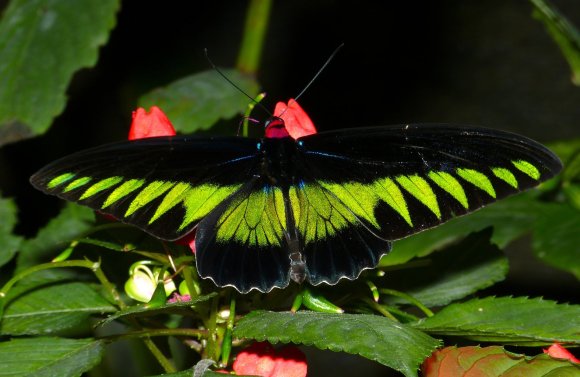
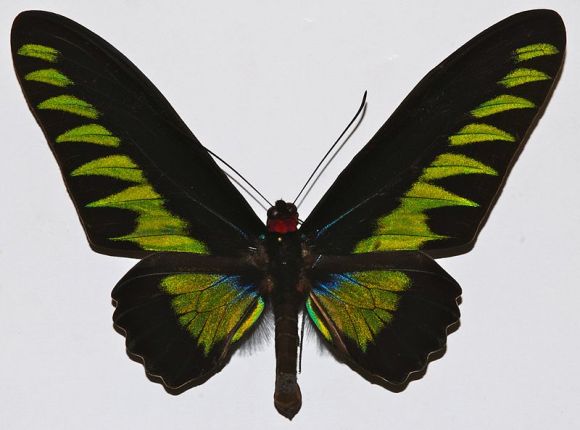
Rajah Brooke’s Birdwing is easily recognizable by its vivid colors. Males have velvety black wings with bright green bands and spots. The forewings have green triangles, creating a stunning effect in flight. The hindwings are marked with green and have long, curved tails adding to their elegance.
Females, while not as colorful as males, still have impressive patterns. Their wings are brownish-black with white markings and red spots near the hindwings’ base. Both sexes have a wingspan ranging from 6 to 8 inches, making them one of the largest butterfly species in their habitat.
Oh, and talking about the caterpillars, their caterpillars are dark brown or black with white spots and fleshy orange-red tubercles. They feed on plants from the Aristolochiaceae family, particularly Aristolochia species, that contain toxic compounds making the caterpillars and adult butterflies unpalatable to predators.
Telling us that the beauty of nature has its own ways to protect itself, doesn’t it?
Where Rajah Brooke’s Birdwing Lives and How They Live

Like briefly mentioned above, Rajah Brooke’s Birdwing inhabits the lowland rainforests of Southeast Asia, thriving in humid, tropical climates. They are common in Malaysia, especially Sarawak and Sabah, and parts of Indonesia and Thailand. These butterflies prefer forested areas near rivers and streams, where Aristolochia vines, their host plants, are abundant.
The dense foliage and high humidity of these rainforests provide ideal conditions for breeding and feeding. The availability of host plants is crucial for larvae survival, while nectar-producing flowers support adult butterflies. Clean, flowing water is also important, as butterflies often engage in “puddling” to drink and extract minerals.
The life cycle of Rajah Brooke’s Birdwing starts with females laying eggs on Aristolochia leaves. Each egg hatches into a caterpillar that feeds on the toxic leaves, sequestering the plant’s poisons for defense. The caterpillar molts several times, growing larger and more colorful.
Once fully grown, the caterpillar forms a chrysalis, where it undergoes metamorphosis. The chrysalis blends in with foliage, avoiding predators. After transforming, the adult butterfly emerges, ready to live in the forest canopy.
Adult butterflies are active during the day. They are strong fliers and can be seen gliding through the forest, their vibrant colors catching the light. Males are territorial and patrol their area, chasing intruders and searching for females.
Feeding primarily on nectar from various flowers, these butterflies help with pollination, maintaining forest health and diversity. Their preference for tubular flowers suggests co-evolution with specific plants, highlighting intricate ecosystem relationships.
Why Rajah Brooke’s Birdwing is Important for Us
Rajah Brooke’s Birdwing butterflies are indicators of forest health and biodiversity. Their reliance on specific host plants signals a healthy forest ecosystem. Their role in pollination supports various flowering plants, contributing to rainforest biodiversity.
Their striking appearance and large size make them charismatic representatives of their habitat, drawing attention to rainforest conservation. Protecting these butterflies involves saving their habitats, ensuring the survival of many species sharing their environment.
Despite their beauty and ecological importance, Rajah Brooke’s Birdwing butterflies face threats. Habitat loss due to deforestation, agriculture, and urbanization poses significant risks. The destruction of rainforests reduces host plant availability and nectar sources, disrupting their life cycle and reducing their numbers.
Illegal collecting and trade also threaten these butterflies. Their stunning appearance makes them highly sought after by collectors, leading to overharvesting. This illegal trade reduces wild populations and undermines conservation efforts.
So, What to Do?
Rajah Brooke’s Birdwing is a stunning and ecologically significant butterfly, capturing Southeast Asia’s rich biodiversity. Its vivid colors, large size, and graceful flight make it a symbol of natural beauty. Its role in pollination and as a forest health indicator underscores its ecological importance.
Conservation initiatives focus on habitat savation, legal protection, and sustainable tourism. In Malaysia, the butterfly is legally protected, and efforts are underway to conserve the rainforests they inhabit. Educating the public about their importance and threats is crucial for conservation.
Eco-tourism can help conservation by promoting natural habitat protection and providing economic incentives for local communities to engage in conservation. Butterfly farms and reserves, where these butterflies can be bred and observed, contribute to their savation and raise awareness about their ecological importance.
Conserving Rajah Brooke’s Birdwing butterflies requires protecting habitats, combating illegal trade, and promoting sustainable practices. By appreciating and safeguarding these butterflies, we contribute to saving the intricate and various ecosystems they inhabit.
As we explore and understand the natural world, Rajah Brooke’s Birdwing reminds us of the delicate balance and interconnectedness of life in our planet’s rainforests. When we talk about fairies in western countries, eastern people may imagine this creature floating in the sky.
Sources:
https://flutter-butterfly-sanctuary.fandom.com/
Leave a Reply