


What if one small, cat-sized animal could help fix an entire forest? After more than 100 years, pine martens are walking through Exmoor woodlands once more.
Nineteen of these shy, beautiful creatures arrived from Scotland last month, and now they wear tiny radio collars so scientists can follow every step.
People are smiling because this is not just a cute comeback story. It is real hope for nature. Want to know why everyone is so excited? Here we will talk about this creature of nature.
Almost Gone
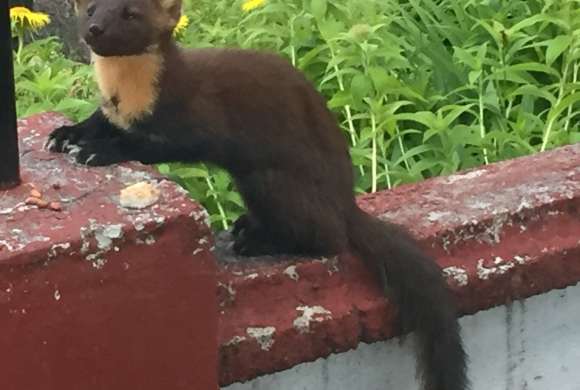
Pine martens used to live in every British woodland because they climbed trees like acrobats and hunted quietly at night. Then the 18th and 19th centuries came, and people hunted them for fur or because they sometimes took farm chickens, while forests were cut down for ships and fields.
By 1900 pine martens had vanished from almost all of England, and only a few hundred survived in the wild north of Scotland, so Exmoor had not seen one for over a century. Everything changed when conservation teams decided to bring them back.
Last autumn the same project released pine martens on nearby Dartmoor, and the first babies were born this summer. Now it is Exmoor’s turn. Nineteen healthy adults, nine females and ten males, travelled more than 500 miles in a special cool van.
They arrived in September so they could eat plenty of blackberries, bilberries, and rowan berries before winter. Each animal got a health check, a tiny radio collar, and a secret release spot deep in the woods.
Tracey Hamston from Devon Wildlife Trust says it perfectly: pine martens were once a key part of our thriving woodland wildlife, so it feels good that they are back where they belong. Everyone hopes they will settle, find partners, and start families next spring.
Why Pine Martens
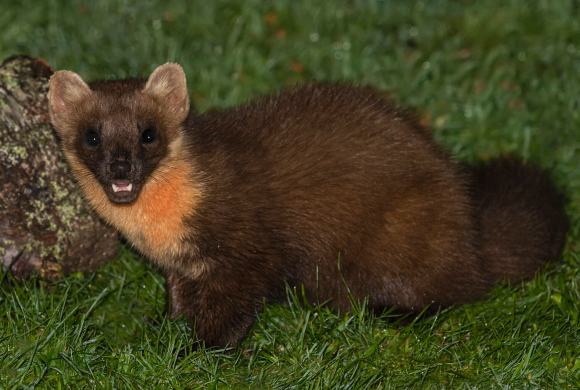
Pine martens are not just pretty because they are nature’s balance-keepers. They love to eat grey squirrels, which are not British and damage trees by stripping bark, while native red squirrels are too quick for pine martens because reds lived with them for thousands of years and learned to escape.
Greys never had that lesson, so pine martens catch them easily. Where pine martens return, red squirrel numbers often go up and tree health improves. They also hunt rats, mice, voles, and rabbits, which stops any one animal from becoming too many.
Birds that nest on the ground get safer because there are fewer rats stealing eggs. Even plants win when voles are kept in check and wildflowers have a better chance to grow.
Scientists call pine martens a keystone species, which means the whole woodland leans on them to stay healthy. Without them the forest feels out of tune, but with them everything finds its place again.
People on Exmoor already notice fewer grey squirrels in areas where pine martens lived long ago. A new report from the Exmoor Society says bringing pine martens back is one of the cheapest and most natural ways to control greys and help red squirrels. It is like putting the missing piece back into a puzzle, and suddenly the picture looks right.
Life as a Pine Marten
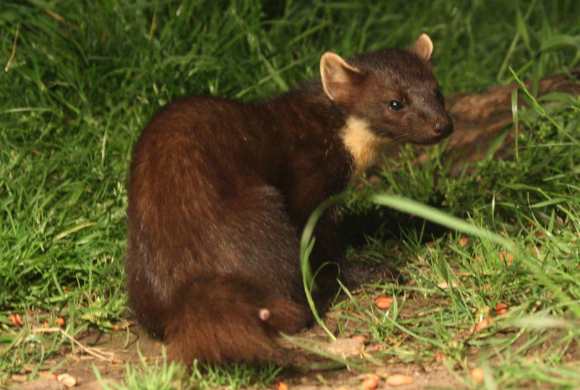
Imagine you are a pine marten waking up in a new forest. You stretch your chocolate-brown fur, show your cream bib, and climb down an oak tree head-first because your semi-retractable claws make climbing easy.
You can even turn your ankles 180 degrees to run down trunks like a squirrel. You weigh about the same as a house cat, but you are longer and much bouncier, and your bushy tail helps you balance when you jump from branch to branch.
You love fruit in autumn, and blackberries, rowan berries, and bilberries are everywhere right now. At night you hunt small mammals or raid a wasp nest for tasty grubs. You mark trees with your scent so other pine martens know who lives here.
The radio collar feels light and does not bother you because it only sends a gentle beep so humans know you are safe. In spring you will look for a mate. Females give birth to two or three tiny kits high in an old tree hole or empty bird nest, and the babies stay hidden for seven weeks before they follow mum everywhere to learn hunting.
Pine martens can live up to eleven years in the wild, and they are shy and mostly active at dawn and dusk. Most people will never see one, but they will feel the difference in healthier trees and happier birds.
Hope That Travels

This is bigger than nineteen animals because it is proof that nature can heal when we help. Tracey Hamston says the release shows all is not lost. We are not separate from wildlife because we share the same land, and right now that land needs help. Every pine marten that settles on Exmoor sends a message to forests everywhere.
Local people feel proud. Farmers understand the martens take a few eggs sometimes, but they also keep rats down. Visitors love knowing something rare and wild lives in the woods again. Children learn that one small action a long time ago can fix big mistakes. The project cost money and planning, yet it feels simple: catch healthy animals from Scotland, drive them south, open the box, and let nature do the rest.
Other places watch closely. If Exmoor works, more counties may ask for their own pine martens. Red squirrels could return to woods that have not seen them for decades. Trees could grow stronger, and birdsong could get louder. All because a few brave people believed missing animals should come home.
So next time you walk on Exmoor, listen carefully at twilight. You might not see a pine marten, but it may be watching you with bright eyes from high in the branches. It is living proof that second chances work. Nature is ready to forgive us. All we have to do is open the door and let the wild ones walk back in.
Sources:
Leave a Reply