


California is facing an unprecedented climate crisis. Rising temperatures, prolonged droughts, and increasingly severe wildfires are threatening homes, farms, and natural habitats. The state has seen some of the most destructive wildfires in history, fueled by dry conditions and an lots of flammable material.
Additionally, water scarcity is becoming a pressing issue for farmers, who rely on irrigation to sustain their crops. With these growing challenges, farmers and landowners are searching for innovative ways to adapt, protect their land, and maintain productivity in an uncertain climate.
One company, V-GRID Energy Systems, is offering a unique and promising solution. Their VGRID Bioservers provide a way to turn waste biomass into two valuable resources: biochar and electricity. This technology not only helps mitigate wildfire risks but also supports sustainable farming practices and combats climate change.
Waste materials that would otherwise be discarded or left to pose fire hazards, is used in more sustainable way to manage resources while providing benefits to the environment and local communities.
How VGRID Bioservers Work
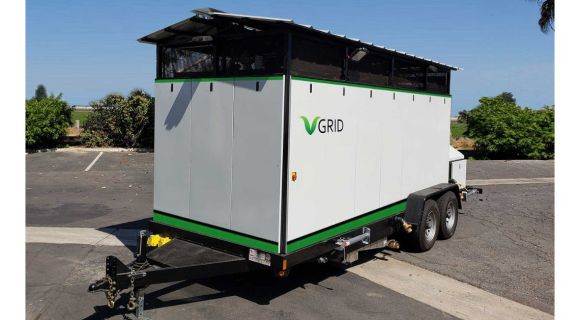
The VGRID Bioservers use a process called gasification to convert waste biomass into useful products. Biomass includes materials such as dead trees, agricultural waste, and other organic plant matter.
The process of biomass gasification offers a multi-faceted approach to energy production and environmental benefit. Initially, biomass is subjected to intense heat within an airtight container, reaching temperatures as high as 1300°C, but with a carefully regulated air supply.
This controlled heating, known as gasification, differs from traditional combustion by preventing complete burning, thereby minimizing atmospheric pollutants. Subsequently, the resulting gases, primarily hydrogen and carbon monoxide, are purified and utilized as fuel for an engine, generating electricity.
Finally, the residual carbon from the gasification process is transformed into biochar, a porous material resembling charcoal, which provides numerous advantages in agricultural applications.
For every 200 pounds of biomass, a VGRID Bioserver can produce 100 kWh of electricity and 40 pounds of biochar. This closed-loop system ensures that waste biomass is put to good use rather than being left to contribute to wildfire risks or decompose, which releases carbon dioxide into the atmosphere.
The Benefits of Biochar and Renewable Energy
The VGRID Bioservers provide two main benefits: renewable energy and biochar, both of which play a crucial role in tackling California’s environmental challenges.
Renewable Energy
One of the biggest advantages of the VGRID Bioservers is their ability to generate clean, renewable energy. The electricity produced can be used to power farms, homes, and businesses, reducing reliance on fossil fuels.
For farmers, energy costs are a significant expense, particularly in dry regions where irrigation systems must run frequently. By using the electricity generated by VGRID Bioservers, farmers can power irrigation pumps, refrigeration units, and processing equipment, lowering their operational costs and minimizing their environmental impact.
Additionally, this decentralized form of energy production enhances grid resilience. Wildfires and extreme weather events frequently lead to power outages in California. With localized power generation from VGRID Bioservers, farmers and landowners can maintain reliable access to electricity even during disruptions to the main power grid.
Biochar
Biochar is a valuable soil amendment that offers numerous benefits, particularly in drought-prone regions. When added to soil, biochar improves water retention with its porous structure that helps soil hold moisture for longer periods, reducing the need for frequent irrigation.
It also enhances soil fertility because biochar retains nutrients that might otherwise leach away, making them more available to plants. Not only that, it also helps reducing greenhouse gas emissions because biochar sequesters carbon which is preventing it from being released into the atmosphere as carbon dioxide.
The structure of biochar also provides a habitat for beneficial soil microbes that improve soil health and plant growth. Great for forests in California.
Tackling Wildfires and Drought
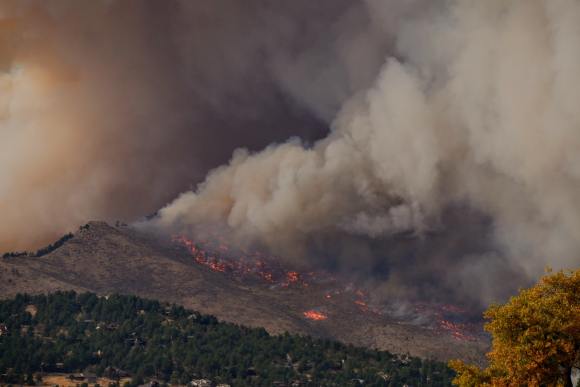
California forests contain millions of dead trees, many of which have been killed by invasive bark beetles. These dead trees become fuel for wildfires, creating dangerous conditions that can quickly escalate into large-scale disasters. One of the best ways to reduce wildfire risk is to remove and repurpose this excess biomass, which is exactly what VGRID Bioservers do.
Instead of leaving dead trees and dry plant material to ignite during fire season, VGRID Bioservers convert them into biochar and electricity. This not only removes dangerous fuel from the landscape but also provides valuable resources that benefit farmers and landowners.
Moreover, biochar can be used to plant new trees that are more drought-resistant. Because biochar improves soil moisture retention, newly planted trees can survive and grow with less water, creating a positive cycle of reforestation, carbon sequestration, and reduced fire risk.
What Happens to Agricultural Waste?
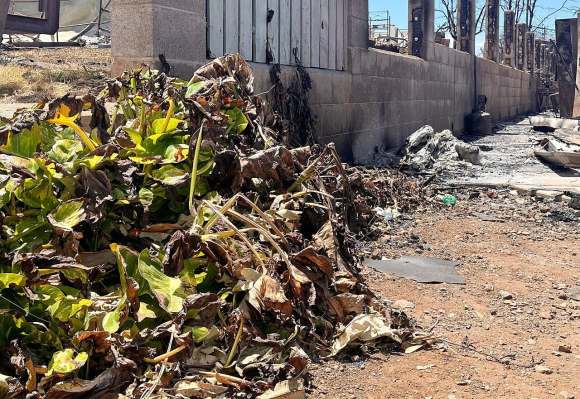
Agricultural waste is another major concern. Farmers produce large amounts of waste, including crop residues, pruning debris, and excess plant material. Traditionally, much of this waste is either burned (contributing to air pollution) or left to decompose, releasing carbon dioxide into the atmosphere.
With VGRID Bioservers, this waste can be transformed into clean energy and biochar, turning a problem into a sustainable solution. Farmers who adopt this technology can reduce their carbon footprint while simultaneously improving soil quality and reducing their reliance on synthetic fertilizers and irrigation.
Scalability and Growing Impact

One of the key advantages of VGRID Bioservers is their modular and scalable design. Each unit is compact and mobile, making it easy to install and operate in various locations.
Currently, there are eight systems in operation, but demand for this technology is growing. Farmers, businesses, and landowners are recognizing the economic and environmental benefits of converting waste biomass into valuable resources.
One farmer, Fred Leyendekker of South Corner Dairy, has already seen the benefits firsthand. He states, “VGRID not only reduces my energy costs, but we have seen a reduction in mortality and disease since we started feeding carbon to our calves.” This demonstrates that biochar may also have potential benefits for livestock health, an exciting area for further exploration.
California climate crisis requires bold, innovative solutions, and VGRID Energy Systems is leading the way. Their Bioservers offer a practical, scalable approach to tackling wildfires, drought, and climate change in a holistic, sustainable manner.
As the world continues to grapple with environmental challenges, technologies like the VGRID Bioservers demonstrate that it’s possible to create solutions that benefit both people and the planet.
In these systems, farmers, landowners, and communities can work together to build a more resilient and sustainable future for California —and beyond.
Sources:
Leave a Reply