


A herd of horses galloping, with their manes floating freely against the wind—we’re always in awe when we see wild horses in nature that they’re a popular subject of any kind of art.
However, some scientists and experts say that there’s too many of them now.
According to the US Forest Service, the Alpine herd which includes around 500 horses, has freely roamed an area of the Apache-Sitgreaves National Forest known as the Black River.
While wild horse advocates want to keep them around as historic and cultural landmarks, The Forest Service considers them feral livestock, and an impediment on the rest of the species that call the forest home.
Moreover, it doesn’t matter if the horses got there 12 years ago or 500 years ago; the scientific consensus remains that the horses disappeared from North America about 10,000 years ago—only to return on European ships throughout the Age of Exploration.
And since there had been no horses in the wild for a long time, some conservationists say that they can no longer co-exist with other species that have evolved for so long without them.
Furthermore, there are studies which have shown that, regardless of how long they’ve been here, wild or not, the horses can harm the environment if left unchecked.
Of the staunch horse advocates, Center for Biological Diversity founder Robin Silver said, “All they care about is horses being wild and free no matter local extinction.”
Has local extinction happened?
According to experts, some other native species have faced threat because of the horses.
The endangered New Mexico meadow jumping mouse needs tall grasses to hide from predators and rear young. Then, Apache trout need thick sun cover from vegetation to regulate water temperature so they can safely lay eggs.
But horses and cattle have trampled and fed around the streamside vegetation, making it harder for those species to survive.
Additionally, in the Tonto National Forest, horses are apparently hurting Chiricahua leopard frogs, yellow-billed cuckoos, southwestern willow flycatchers and numerous endangered fish.

In New Mexico’s Lincoln National Forest, according to Silver, the Sacramento Mountains checkerspot butterfly is going extinct for the same reasons, possibly due to the indirect effect from the horses.
Silver added that the horses have eaten and trampled streamside vegetation in those forests, so much so that they even alter the hydrology of streams in some areas.
Now, while some people from the opposing side say that the 1.5 million cattle that graze on federal lands each year do more damage than the horses, Eric Thacker, a wildlife science professor and range management specialist at Utah State University, thought that the opposite may be true.
Thacker said that a 1,000-pound cow will eat about 25 pounds of forage per day. At the same time, an equally sized horse eats at least 25% more. It’s because horses don’t digest as efficiently as cattle, so they need to eat more to get the same amount of nutrients.
To put it simply, the more vegetation they eat, the less it remains as both food and habitat for other species.
Unmitigated population of wild horses
According to an estimation by the U.S. Bureau of Land Management (BLM), there are 8,181 wild horses on the range in Wyoming, which is “significantly higher” than the upper “appropriate management level” of 3,725 horses for the state’s 16 herd management units.
Even though in the winter, the long-lasting inverted snowpack has decimated native pronghorn and mule deer in the corner of the state where most of its wild horses live, it didn’t affect the equine newcomers.
So far, officials use the rounding up method to control them—which of course has driven many advocates mad. Another way is to open the horses to adoption through programs like the Wyoming Honor Farm.
Even so, many others still live out their days eating government-funded feed on private pastureland.
Wyoming, BLM Office has released a decision to strive for zero wild horses in some portions of southwestern Wyoming. This was met with a lawsuit. Advocates say that rounding up horses with helicopters is inhumane, adding that these horses have their own benefit to the environment.
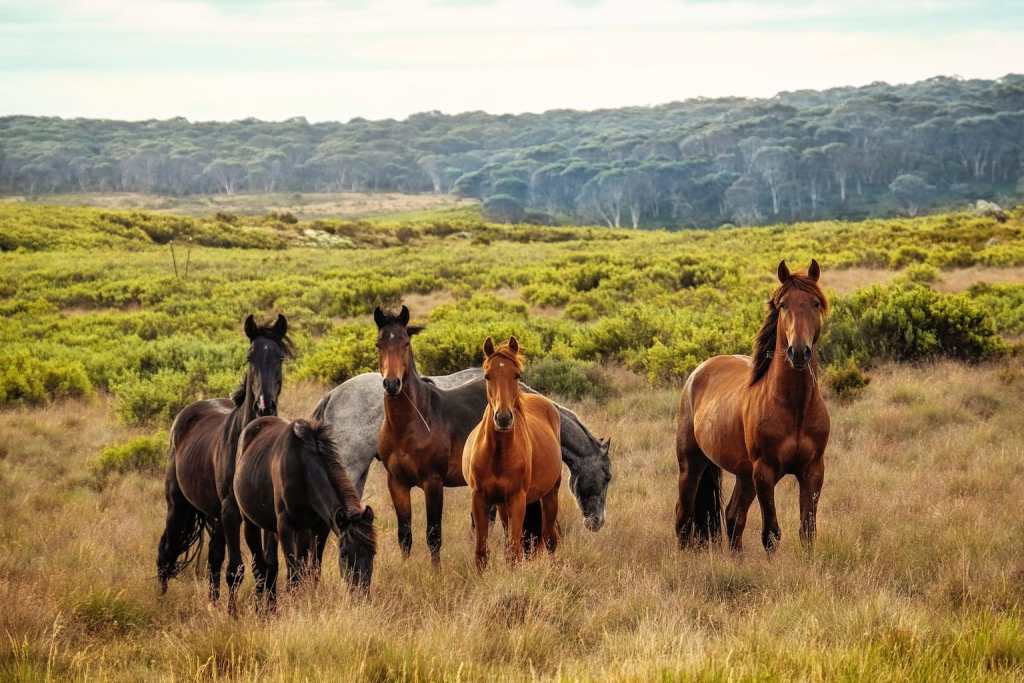
Perks of having wild horses around
Some conservationists say that in some places, restoring horses to their historic homeland can rebalance ecosystems and even reduce the frequency and intensity of wildfires.
And as mentioned, advocates argue that cattle do more damage to the soil than the horses do, as their cloven hooves dig deeper into the ground than horses’ more round and broad hoofs.
Wildlife management professor at Arizona State University Julie Murphree said, “It’s kind of like the difference in someone wearing snowshoes going over an area or someone just wearing stiletto heels poking right into the ground.”
Moreover, Simone Netherlands, president of the Salt River Wild Horse Management Group, doubts a few hundred horses’ abilities to destroy tens of thousands of acres of land.
“We’re worried about the environment too, but this is the most abundant forest. They could never eat it all if they tried. There are 7,000 elk there, 3,000 deer, 700 bighorn sheep, 200 antelope… wild horses are 4% of what lives in that forest,” Netherlands said.
Remember Thacker’s statement about the fact that horses do eat more? Well, California-based ethologist William Simpson said that because horses don’t fully digest their food like cattle, many of the seeds they poop out remain viable for germination and are replanted.
Some experts, including Simpson, say that in some places, restoring horses to their historic homeland can rebalance ecosystems and even reduce the frequency and intensity of wildfires.
Moving the horses where they’re needed
So, instead of leaving the horses to compete for food and space with cattle and other herbivores like deer and elk, experts believe that the problematic wild horses should be relocated to “critical wilderness areas.”
Those are areas with low herbivore populations at higher risk of wildfires. As executive director of the Wild Horse Fire Brigade, Simpson said that we could use the horses to offset those risks and benefit both sides of the conflict.
Both Simpson and Murphree want to use free-roaming horses to mitigate wildfires in particularly at-risk areas, mostly in northern California and Oregon.
According to Simpson’s calculation, between the more than 60,000 horses currently in the BLM holding pens and the 40,000 or so on the landscape, Simpson said the brigade could protect up to 20 million acres of land. Although, Simpson said that the number might be smaller depending on location, temperature and dryness.
Simpson said that the idea has been tested. Simpson credited the free-roaming horses for the mitigation of 2018 Klamathon Fire in Siskiyou County, California, which burned 38,000 acres for 16 days before reaching Simpson’s land and the surrounding community, which stayed fire-free.
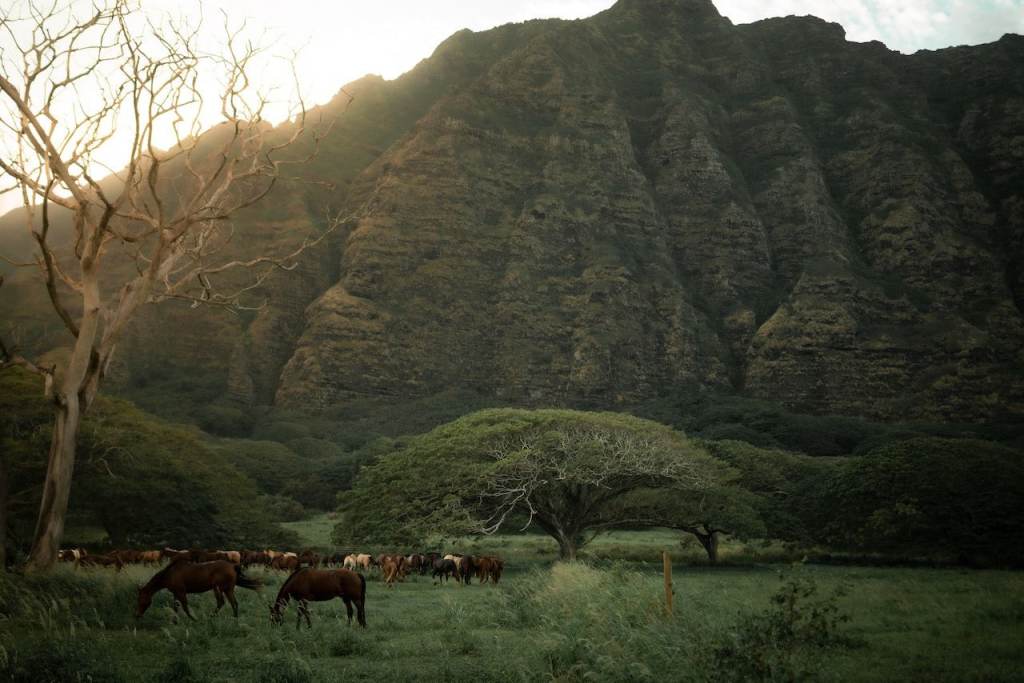
But what’s gonna happen to the horses?
Now, some range scientists said that managing small populations of 100 or so could maintain environmental balance and please both sides of the endless conflict. However, it would only work if both sides cooperated.
Unfortunately, the Forest Service isn’t interested in managing any horses in the watershed. Officials haven’t also planned to move the horses to areas prone to wildfires like Simpson’s idea, regardless of what anti-wildfire function horses may serve.
Robert Lever, forest supervisor of the Apache-Sitgreaves National Forest, said, “We’re not into the business of managing unauthorized livestock. We’re not into the business of managing unauthorized livestock.”
If we want to help the wild horses, we can join the adopt-a-horse program, as mentioned. According to Kris Kirby, the associate state director for the BLM Wyoming Office, the program is very successful. Kirby said that this year, the Wheatland off-range corral has found homes for 500 horses, more than half of the facility’s 930-horse goal.
But at large, we still don’t know what will become of the wild horses.
And while I do have my own concerns about the native species, and I do believe in controlling the population—as much as I love horses, I think that there should be better ways than rounding the horses up and stressing them out. For instance, other than relocation, some have suggested developing birth control for the mares.
However, I’m no expert and I don’t know enough about wild horses-affected areas to make a conclusion. So, I’m gonna ask you instead: what do you think we should do?
Sources
https://wyofile.com/wild-horses-back-in-court-amid-swelling-populations-planned-roundups/
Leave a Reply