


In new research published in the journal Fuel, Baylor University researchers with the Cornerstone Atomization and Combustion Lab (CAC) have showcased a pioneering method for the efficient combustion of biofuels.
They used technology called Swirl Burst (SB) injector to burn glycerol/methanol blended with near-zero emissions. This enables ultra-clean combustion for fuels that are typically difficult to burn due to their high viscosity.
The research may make significant contributions to both academic research and industrial applications, setting a new standard for sustainable energy solutions.
“The current research demonstrates how viscous bio-waste can be transformed to clean energy by the Baylor combustion technology,” said lead author Lulin Jiang.
What this means for biofuel industry

Injectors available today struggle to burn glycerol (a byproduct of biodiesel production) due to its high viscosity. On the flip side, however, it has moderate energy density.
In contrast, the SB injector can handle glycerol without requiring costly fuel preheating or processing. This could transform biofuel economics.
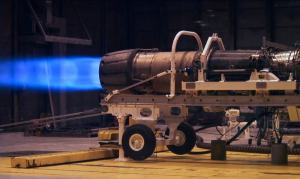
The process allows this injector to achieve a complete and clean burn by producing fine droplets. With this ability, significantly reducing emissions of harmful pollutants like carbon monoxide (CO) and nitrogen oxides (NOx) is possible.
According to Jiang, this novel technology also enables biodiesel producers to convert glycerol waste into a viable fuel source. It therefore promotes a circular economy and reduces the carbon footprint for generating power.
Moreover, the SB injector’s flexibility allows the combustion of various glycerol/methanol ratios without hardware modifications. That makes it ideal for power plants aiming to meet strict emissions regulations.
“Being able to transform waste, such as waste glycerol, into cost-effective renewable energy promotes energy resilience and energy equity for economically disadvantaged groups in a changing climate,” Jiang said.
Testing fuel blends
The research team tested three different fuel blends: 50/50, 60/40, and 70/30 glycerol to methanol ratios by theoretical heat release rate. In addition, they tested the blends at multiple atomizing air-to-liquid mass ratios (ALR).
All blends achieved over 90% combustion efficiency including complete combustion by the 50/50 blend, with near-zero CO and NOx emissions. The result was the same even in non-preheated, uninsulated combustion setups.
This is a significant improvement over conventional air-blast or pressure-swirl injectors, which often generate high emissions with high-viscosity fuels.
“The demonstrated high viscosity tolerance and fuel flexibility of the technology signifies that not only waste glycerol, but also the viscous source oils of biodiesel, and other waste-based bio-oils can be directly utilized for energy generation without further processing, significantly reducing biofuel cost and thus potentially stimulating its broad application,” Jiang said.
The breakthrough could help reduce the biodiesel industry’s environmental impact and improve cost-effectiveness.
Biofuels conundrum
Despite its potential to reduce our current dependency towards fossil fuel, some are not biofuels’ biggest fans.
For instance, in December 2024, several environmental groups sued California air regulators over their update of a climate program, claiming how they didn’t address pollution impacts that biofuels made.
One of the lawsuits accused the board of failing to thoroughly examine the negative effects of burning biofuels derived from animal waste and plants. Another focused on the pollution which often impact low-income and Latino communities.
While the agency declined to comment on the lawsuits, it stated that the program played an important role in the state’s fight against climate change, as well as improving air quality.
Moreover, there are still challenges in terms of fully adapting these alternative fuels.
According to a 2024 report by Lloyd’s Register, there’s still an issue with availability and demand from different kinds of transport sectors, including aviation. Also, investment in biofuel production capacity needed to meet more growing demand isn’t maximized yet.
But even though these alternative fuels meet oppositions and challenges, some others still want to go forward with them.
Toyota introduces engine compatible with biofuel

During a three-hour presentation in Tokyo, Toyota revealed its plans for compact, efficient engines designed to run on green fuels such as hydrogen and bioethanol, or to be paired with zero-emission electric motors in hybrid vehicles.
The announcement positions Toyota as a leader in diversifying carbon-neutral transportation options. As we know, many automobile manufacturers have shifted their focus on fully electric vehicles (BEVs).
China, for instance, is rapidly advancing in the BEV market, with BYD emerging as a strong contender against Tesla.
However, it doesn’t mean Toyota won’t have any more efforts to go electric. The CEO, Koji Sato, emphasized that the company’s new engine is “optimized for the electrification era” and aims to support global efforts toward carbon neutrality.
Toyota’s hybrid pioneer, the Prius, already uses a combination of a gasoline engine and an electric motor to deliver cleaner performance. In upcoming models, the electric motor will become the primary power source, with the engine playing a supporting role.
Collaborative efforts

In this undertaking, Toyota isn’t working alone. Toyota hosted the “Multi-Pathway Workshop” alongside domestic allies Subaru and Mazda, who also showcased their ecological engine innovations.
Mazda revealed that its iconic rotary engine, originally introduced over 50 years ago, is being adapted for electric vehicles. Meanwhile, Subaru confirmed the development of a distinctive “Subaru-like” electric vehicle.
“Each company wants to win, but we can be faster if we work together,” Sato said. Unfortunately, we still don’t know when these automakers are going to release their new engines, as no timeline was provided.
Why not switch completely?
Seeing how these Japanese car manufacturers don’t switch to BEV as soon as possible, and in fact still depend on the seemingly problematic biofuels, some may question their decisions.
However, Toyota executives stressed that energy supply conditions vary worldwide and that products must cater to diverse customer needs.
They also pointed out the high costs of scaling BEV production and the risk to Japan’s economy, with 5.5 million jobs tied to the automotive supply chain.
A sudden transition to BEVs, they argued, wouldn’t be economically viable or socially responsible.
%3F_Yes_it_can._Bio-bean,_turns_coffee_waste_into_biofuel,_in_the_form_of_pellets._-makethefuture_-shellecomarathon_(32673640793).jpg)
While Toyota is developing stylish BEVs, the company remains committed to exploring multiple pathways to carbon neutrality.
A business professor at Waseda University Takahiro Fujimoto expressed his opinion on this situation, “The carbon neutrality the world is aspiring toward isn’t likely attainable for decades to come. It’s going to be a long marathon race.”
This doesn’t mean the professor is pessimistic about the future. Fujimoto acknowledged BEVs as a critical solution for reducing emissions. Nonetheless, he highlighted challenges such as the significant emissions generated during lithium-ion battery production.
Moreover, he noted that in Japan, where trains are a prevalent and ecological mode of transportation, BEVs might not always be the best option.
“At the very least, innovations in BEVs are essential,” Fujimoto said. “But saying BEVs are all we need oversimplifies the issue.”
Fujimoto added that the path to carbon neutrality requires sustained research, development, and adaptability to evolving social, political, and market conditions.
So, maybe the ultra clean biofuel developed by Baylor University researchers can still help in our long journey towards carbon neutrality. Even though some still dislike the idea of biofuels, I’d say we should give it a chance.

Because as Professor Fujimoto said, it’s unwise to make a 180 degree turn so suddenly, because we’ve relied and depended on conventional or traditional fuels for a long time.
Moreover, not everybody on this planet has the same information access before the globalization of the internet, so not what can happen in one place may not be viable in another.
But what do you think of the ultra-clean biofuel? Will it make a difference or are you skeptical about it?
Sources
https://www.sciencedaily.com/releases/2024/10/241017113536.htm
mention (the problem with biofuels): https://apnews.com/article/california-climate-fuel-environment-lawsuit-pollution-a6f724eff2852b46ec2f5b8059aecc7b
https://uwaterloo.ca/news/media/using-idle-trucks-power-grid-clean-energy
Leave a Reply