


It’s unfortunate that we’ve been getting more extreme temperatures. Even places that I had known wouldn’t get too hot have made me sweat a lot.
When we look at bad events caused by extreme temperatures, it’s easy to get discouraged and lose optimism. But this recent study tells us not to.
New research led by Washington State University shows the potential of giving us renewable energy resources in these times.
Collecting data from 1980 to 2021, the researchers found that periods of widespread, extreme temperatures happen alongside higher solar radiation and increased wind speeds. We want to utilize that for solar and wind energy.
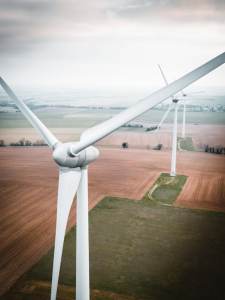
The study, published in the journal Environmental Research Letters, highlights a concerning trend tied to extreme weather. There have been increasing power outages over the past decade across interconnected energy grid regions in the US.
Lead author Deepti Singh at Washington State University noted how important it is to leverage renewable energy during such critical times.
Singh stated, “These extreme events are not going away anytime soon. In fact, every region in the U.S. experiences at least one such event nearly every year. We need to be prepared for their risks and ensure that people have reliable access to energy when they need it the most.
“Potentially, we could generate more power from renewable resources precisely when we have widespread extreme events that result in increased energy demand.”
In the study, the researchers noted down opportunities for solar energy generation particularly during heat waves. They found all six US regions showing increased solar potential.
The team claimed that even during cold spells, the potential for solar energy production remains high. This, however, excludes the grid area in Texas.

According to the researchers, this happens due to clear skies that ties to atmospheric ridges or high-pressure systems. That allows much sunlight to reach the planet’s surface which we can convert into electricity via solar panels.
While wind energy potential during extreme weather events varies across regions, the study identifies three areas. That is, areas where wind power generation potential increases significantly.
First, Northeast during cold waves, and second, both the Texas and major Midwestern grids during heat waves.
By looking into the renewable energy potential offered by extreme temperature events, the US could enhance its energy resilience.
At the same time, the country could also reduce reliance on fossil fuels. Both would pave the way for a more sustainable and reliable energy future.
Looking at the data
In their analysis, Singh and her team examined long-term climate data and power outage records from the US Energy Information Administration.
Here, instead of focusing solely on localized events, they zoomed in on major heat and cold waves. They wanted to recognize their broader impact on the entire power grid.

Unsurprisingly, they found out that we’ve got more temperature extremes because of climate change.
In the Western US and Texas, there have been more large heat waves. Both areas have experienced an increase of 123% and 132%, respectively.
Additionally, the heat waves haven’t become not only more frequent but also more intense, prolonged, and widespread. Their impact has become more amplified across regions.
On the other hand, cold extremes are getting less frequent while their intensity and duration stay relatively the same.
The researchers took the February 2021 cold wave as an example. It caused widespread damage that totaled approximately $24 billion and claimed 226 lives. At that time Texas suffered power outages, as well.
But the researchers emphasized that regardless of whether power outages happened, extreme weather will result in energy demand across all regions. As we know, that strains power grids, and it shows how we’re in need of alternative solutions.
According to Singh, expanding wind and solar energy can lead to energy resilience, especially during extreme events. Such an expansion can also reduce service challenges and lessen negative impacts, particularly on vulnerable communities.
Other than promoting climate resilience, more renewable energy sources can offer a lot of benefits.
Singh stated that solar and wind power could reduce air pollution linked to fossil fuels usage–something that poses health risks to humans.

Moreover, wind and solar energy may promote a more decentralized energy system. Should one install energy systems closer to communities, one can also boost energy accessibility and equity.
Actually experiencing it is unpleasant, of course. But the positive side is that such temperatures may open a path towards a more sustainable and strong future in terms of energy sources.
This study does highlight the potential of renewable energy sources during extreme temperatures.
However, the researchers thought that there should be further research and development to improve the resilience of energy systems to climate extremes and variability.
Singh stated that things get complex because scientists must consider challenges and vulnerabilities in energy transmission and distribution. They must also think about the environmental impact of expanding solar and wind systems.
The lead author said, “But hopefully these benefits can give us additional reasons to accelerate our transition towards renewable energy.
“There are also technological improvements that could help ensure that we can leverage renewable energy when it’s needed. The capacity is there.”
Energy challenges that are still looming

The Washington State University study is noteworthy, as the world needs more energy supply.
Researchers at the Pacific Northwest National Laboratory (PNNL) found that there’s an ongoing, concerning energy droughts in the US, just like the previous researchers stated.
These energy depletion periods can last up to a week when wind and solar energy production get weaker due to calm or cloudy weather conditions.
According to this study, energy droughts can happen any time of the year across the US with different frequency and duration.
In California, for instance, energy droughts have happened for several days. Texas, on the other hand, has experienced more frequent but shorter episodes that last only a few hours.
And just like the previous researchers’ findings, these events often coincide with periods of high energy demand.

Lead author Dr Cameron Bracken at PNNL stated that the team found the increased severity of the droughts occurring during peak demand compared to average periods.
This highlights the critical importance of addressing energy resilience during times of heightened demand which solutions are offered by the previous research.
The study standardized its methodologies to enable other researchers to utilize the same tools for accurate comparisons across different studies.
With it, the PNNL researchers hope that their findings can help improve the design and management of energy storage solutions.
It should be noted that the study didn’t examine how other energy sources react to drought events, like hydroelectric, coal, gas, and nuclear facilities.
Dr Bracken stated that getting such information isn’t easy due to its proprietary nature. The researchers found it difficult to determine the exact impact on the grid during the droughts.
Energy experts Isaac Orr and Mitch Rolling noted the impact of decreasing dispatchable generation from coal during the 2022 MISO drought event, particularly on grid reliability in Minnesota.
They emphasized that the issue isn’t just about the coming-and-going of wind energy. It also involves the retirement of reliable, dispatchable power plants driven by state mandates and federal regulations.
The retirement of such power plants is expected to accelerate, especially with the introduction of new EPA power plant rules.
Those rules require costly carbon-capture technologies. As a result, battery storage facilities are getting more crucial for maintaining grid stability. Especially, there’s now a growing reliance on intermittent wind and solar energy.
Basically, as the grid leans more heavily on batteries to meet demand during energy droughts, there’s a growing concern that electricity costs will rise up–especially in times of peak demand.
This therefore highlights the need for solutions that are robust, resilient, and affordable in the face of unpredictable weather patterns.
Hopefully, with the previous research’s discovery, we can be a step closer to those solutions.
Sources
https://techxplore.com/news/2024-03-cold-extremes-untapped-potential-solar.html
https://justthenews.com/politics-policy/energy/intermittency-wind-and-solar-could-be-worse-originally-thought-experts-say
Leave a Reply