

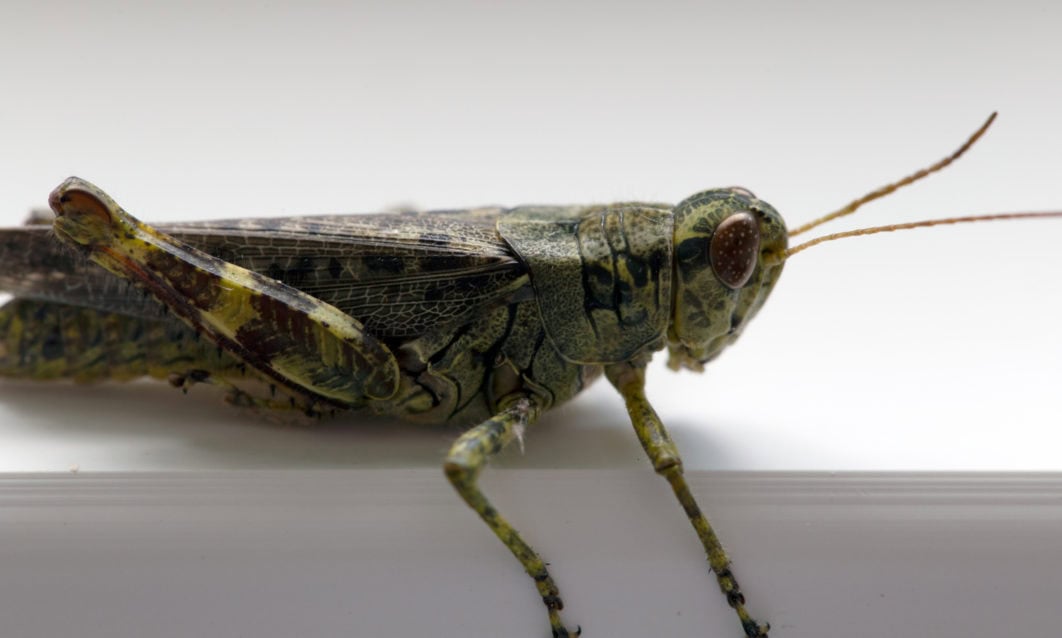
Grasshoppers, which belong to the order Orthoptera, are fascinating insects with several unique biological features. One of the most notable aspects is their powerful hind legs which enable them to leap super long distance relative to their body size.
These legs are adapted for jumping, with large muscles that store energy like a spring which allows grasshoppers to propel themselves into the air.
Well, that’s the only fact about grasshoppers we have. Or not?
More! More About Grasshoppers!
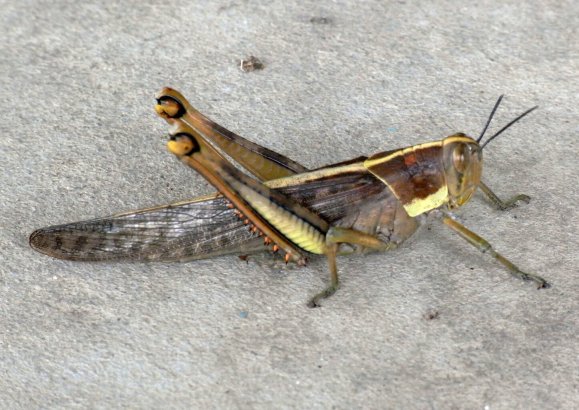
If you insist, okay let us tell you more facts about it. Another intriguing feature is their auditory organs. Unlike most insects, grasshoppers hear through tympanal organs located on their abdomen.
These organs are sensitive to vibrations and allow grasshoppers to detect sound waves, which help them communicate and avoid predators. Additionally, grasshoppers have compound eyes composed of thousands of tiny lenses, giving them a wide field of vision and the ability to detect movement with precision.
Grasshoppers also possess remarkable mouthparts designed for chewing. Their mandibles are strong and capable of breaking down tough plant materials. This is essential for their diet, which primarily consists of grasses and leaves. Their digestive system is highly efficient, that enables them to extract maximum nutrients from their food.
What’s more interesting, grasshoppers undergo incomplete metamorphosis, which means they do not have a pupal stage.
Instead, they hatch from eggs as nymphs, resembling miniature adults. Nymphs go through several molts, shedding their exoskeletons as they grow, before reaching full maturity. This process allows them to adapt quickly to their environment and ensures their survival.
Grasshoppers and Its Behavioral Adaptations
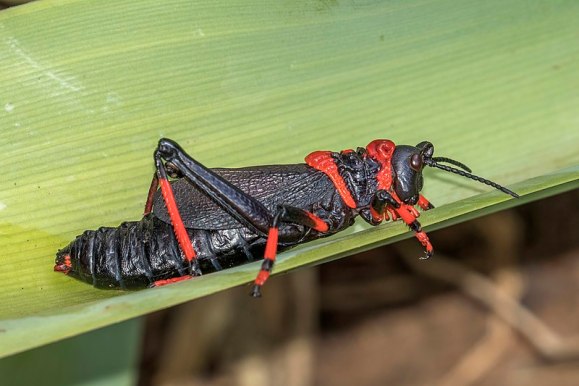
Grasshoppers exhibit a range of behavioral adaptations that help them survive and thrive in diverse environments. One such behavior is their ability to camouflage. Many grasshopper species have coloration that blends with their surroundings, to provide effective concealment from predators. Some even have the ability to change their color slightly to match the environment more closely.
Another interesting behavior is their use of stridulation for communication. Grasshoppers produce sound by rubbing their hind legs against their forewings or abdomen. This sound, known as stridulation, is used primarily by males to attract females during the mating season.
The specific patterns and frequencies of these sounds can vary significantly between species, allowing for species-specific communication.
Grasshoppers are also known for their swarming behavior, particularly in certain species like the desert locust.
Under favorable conditions, such as after heavy rains that lead to abundant vegetation, these grasshoppers can form massive swarms that migrate over long distances in search of food. Swarming is a survival strategy that helps them exploit transient food resources and avoid competition.
In addition, grasshoppers exhibit a behavior called thanatosis, or playing dead, to evade predators. When threatened, some grasshoppers will drop to the ground and remain motionless, to blend in with the soil or vegetation. This behavior can be highly effective in deterring predators that rely on movement to detect prey.
Ecological Importance of This Creature
Grasshoppers play a crucial role in many ecosystems, serving as both herbivores and prey. As herbivores, they help regulate plant growth by feeding on grasses and other vegetation. This feeding activity can influence plant community dynamics, promoting biodiversity by preventing any single species from dominating the landscape.
In turn, grasshoppers are an important food source for a variety of predators, including birds, reptiles, amphibians, and mammals. Their presence in the food web supports the survival of these predators and helps maintain ecological balance. For example, certain bird species rely heavily on grasshoppers during the breeding season to feed their chicks, highlighting the insect’s role in sustaining avian populations.
Grasshoppers also contribute to nutrient cycling within their habitats. Their feeding and digestion process break down plant materials, facilitating the decomposition and recycling of organic matter. This process enriches the soil with nutrients, supporting plant growth and overall ecosystem health.
Moreover, grasshoppers can serve as bioindicators, reflecting the health of their environments. Changes in grasshopper populations can indicate shifts in ecosystem conditions, such as alterations in vegetation, climate, or the presence of pollutants. Monitoring grasshopper populations can therefore provide valuable insights into environmental changes and help guide conservation efforts.
Cultural and Economic Impact

They have had significant cultural and economic impacts throughout history. In some cultures, grasshoppers are considered symbols of good luck, prosperity, and fertility. They appear in various myths, folklore, and art, often embodying qualities like agility, resourcefulness, and resilience. For instance, in Chinese culture, grasshoppers are kept as pets and are believed to bring good fortune.
Economically, grasshoppers can be both beneficial and harmful. On the positive side, they are sometimes used in traditional medicine and as a food source. In many parts of the world, grasshoppers are harvested and consumed as a high-protein delicacy. They are prepared in various ways, from roasting to frying, and are considered a sustainable source of nutrition.
However, grasshoppers can also pose significant challenges to agriculture. In large numbers, they can cause extensive damage to crops, leading to substantial economic losses. Swarms of locusts, a type of grasshopper, are particularly notorious for their destructive potential. These swarms can devastate entire fields of crops in a matter of hours, threatening food security and livelihoods in affected regions.
Managing Grasshoppers
Efforts to manage grasshopper populations and reduce their impact on agriculture involve several methods such as using chemicals, natural predators, and managing their habitats. Understanding how grasshoppers behave and their role in ecosystems is crucial for developing effective ways to protect crops while keeping the environment healthy.
They are fascinating insects known for their unique characteristics and behaviors. They play important roles as plant-eaters and food for other animals, helping to maintain a balanced ecosystem. Their ability to adapt to different environments highlights their significance in nature and their influence on human societies.
These insects are not only biologically interesting but also culturally and economically important. They appear in myths and art across various cultures, symbolizing traits like agility and resilience.
Economically, grasshoppers can be both beneficial and harmful. They are sometimes used in traditional medicine and as a protein-rich food source, yet they can also cause significant damage to crops when their populations grow too large.
By studying grasshoppers and their interactions with the environment, we can find ways to manage them sustainably. This includes using natural methods like predators or carefully controlling their numbers to minimize crop losses while preserving the natural balance of ecosystems.
Sources:
Leave a Reply