


The Amazon rainforest, often called the “lungs of the Earth,” spans 6.9 million square kilometers across nine countries, with 60% in Brazil. It hosts three million species and one million Indigenous people, but deforestation threatens its future.
Over 20% of the forest is gone, driven by beef production, mining, and soy farming. Former President Lula’s 2022 election victory sparked hope for recovery, unlike the high deforestation under Jair Bolsonaro.
Let’s talk further why deforestation happens, its effects, who protects the forest, and global efforts to stop it.
Why Is the Amazon Rainforest Being Deforested?

Deforestation happens when people cut down trees for farming, mining, or building. In Brazil, which has 40% of global tropical deforestation, about 1.5 million hectares vanish yearly. Beef production is the biggest cause, clearing 81,081 square meters annually for cattle pastures.
Imagine a vast forest replaced by fields where cows graze. From August 2018 to July 2019, the Amazon lost 3,800 square miles, equal to 1.8 million football fields, to meet global beef demand, especially from countries like the U.S. and China.
Soybean farming also drives deforestation, contributing 12% to global forest loss. Brazil produces one-third of the world’s soy, mostly for animal feed. In 2018, it grew 118 million tonnes, clearing forests for fields.
Imagine a jungle turned into rows of green soy plants. Gold mining is another threat, especially along the Guiana Shield. Miners clear trees to dig for gold, harming habitats. In 2023, mining spread into protected areas, like Indigenous lands, leaving barren pits where forests once stood, polluting rivers with toxic chemicals like mercury.
Illegal logging and infrastructure, like roads, worsen deforestation. Roads, such as Brazil’s BR-319 highway, open remote forests to settlers. Imagine a dirt road cutting through thick trees, inviting loggers and farmers.
Over 70% of deforested areas are within 50 kilometers of roads. Fires, often set to clear land, can rage out of control, burning more trees. In 2024, fires in the Amazon surged 18-fold, destroying 39,983 square kilometers, showing how human actions rapidly destroy this vital ecosystem.
What Are the Effects of Amazon Deforestation?
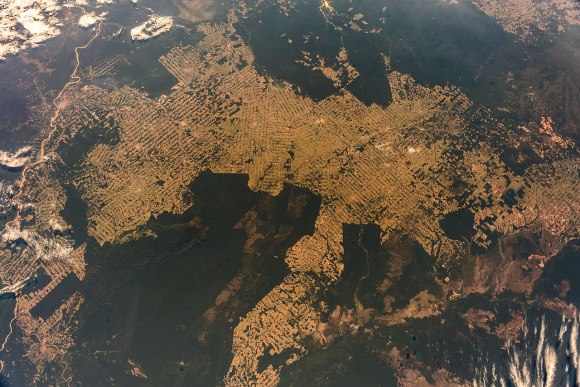
Deforestation harms animals, people, and the climate. The Amazon hosts three million species, like the Blue Macaw, a vibrant parrot now vulnerable due to logging and farming in central Pará, which lost 203,460 hectares in 2019.
Imagine colorful birds losing their tree homes, struggling to survive. Milton’s Titi, a rare monkey found only between the Roosevelt and Aripuanã rivers, faces extinction as 3,130 hectares were cleared in 2019. These animals can’t escape because they rely on treetops.
The Amazon absorbs carbon dioxide, fighting climate change, but deforestation turns it into a carbon source. In 2021, it emitted one billion tonnes of carbon dioxide, equal to Japan’s annual emissions.
Imagine smoke from forest fires adding more heat to the planet. Deforestation also reduces rainfall by disrupting water vapor from trees. This threatens farms in Brazil, where half the rain comes from the forest. Imagine fields drying up, leaving farmers with no crops to sell, raising food prices worldwide.
Indigenous communities suffer when forests are cleared. Over one million Indigenous people live in the Amazon, relying on it for food, shelter, and medicine. Deforestation displaces them, like the 40,000 people moved by the Tucuruí Dam’s reservoir, which flooded 2,875 square kilometers.
Imagine a village forced to leave their home, losing their way of life. Soil erosion from cleared land also harms rivers, making water unsafe for fishing or drinking, affecting communities far beyond the forest.
Who Protects the Amazon Rainforest?

Indigenous communities are key protectors of the Amazon. Their lands, covering over one-third of the forest, have 75% less deforestation in Peru due to legal land rights. Imagine Indigenous families patrolling their forest, keeping loggers away.
In 2021, Peru’s Kakataibo Indigenous Reserve was created, spanning 149,000 hectares, to protect communities after threats from illegal loggers. Their knowledge of plants and animals helps preserve biodiversity, like jaguars and river dolphins, ensuring the forest stays healthy.
Conservation groups, like the World Wildlife Fund, work to save the Amazon. They monitor deforestation and push for sustainable practices. Imagine rangers using satellites to spot illegal logging camps.
In 2023, Brazil’s government, under President Lula, boosted efforts by issuing twice as many fines for illegal deforestation. The Amazon Fund, revived in 2023, uses global donations to restore land and fight wildfires. These efforts help protect 47 million people and countless species living in the Amazon.
Local communities also fight deforestation. In Brazil’s Amacro region, people plant trees to restore cleared land. Imagine a village working together to replant a forest, bringing back birds and plants. In 2024, Colombia and Peru saw deforestation drop due to stronger laws.
However, challenges remain, like illegal gold mining harming the Yanomami people’s land in northern Brazil. Their efforts, combined with global support, are vital to keeping the Amazon alive for future generations.
What Global Efforts Are Fighting Deforestation?

At the 2021 COP26 summit, over 100 countries, including Brazil, pledged to end deforestation by 2030, with $19.2 billion in funds. Imagine world leaders signing a promise to save forests. The pledge supports Indigenous communities and restores damaged land.
However, a 2014 agreement failed, and 2023 saw 6.4 million hectares of global forest loss, showing slow progress. Brazil’s deforestation fell 48% in 2023, saving 196 million tons of carbon dioxide, but more action is needed.
The European Union’s 2023 deforestation-free products law bans imports like beef, soy, and palm oil from deforested areas. Imagine ships checking product origins to protect forests. Companies must prove their goods don’t harm the Amazon.
In 2006, the Soy Moratorium cut soy-related deforestation from 30% to 1% by 2015, showing success. However, a 2024 delay in the EU law’s start, after protests from Brazil and others, risks slowing progress. Stronger enforcement is crucial to stop forest loss.
Brazil’s government, under Lula, aims to end deforestation by 2030. In 2024, deforestation hit a nine-year low, losing 6,288 square kilometers. Imagine rangers stopping illegal loggers in the jungle.
Lula’s plan includes tougher laws and more environmental agents. However, projects like the BR-319 highway paving could increase deforestation by opening forests to settlers. Global support, like Norway’s Amazon Fund donations, helps, but challenges like fires and mining persist, requiring everyone to work together to save the Amazon.
Sources

Leave a Reply