


Globally, there is a growing issue of water scarcity in many high population areas. This is due to a combination of factors; global warming is causing many areas to experience long term drought, and population growth is putting pressure on the existing water supply of many regions.
For instance, the Colorado River in the United States has suffered from drought for over two decades, and estimates suggest its volume could halve by 2100—placing extreme pressure on cities such as Phoenix and Salt Lake City. According to the United Nations, water-related disasters have increased fivefold in just the past fifty years. With around 40% of the global population living near the coast, it is logical to turn to the planet’s largest water source—the oceans—to meet rising demand.
Desalination has proven to be a reliable resource for many areas that have increasingly limited access to fresh water. It works by removing the salt from sea water, as well as any other impurities, to ensure it is safe for drinking. In 2023, there were approximately 16,000 plants in operation around the world. However, the process remains highly energy intensive and carries notable economic and environmental costs.
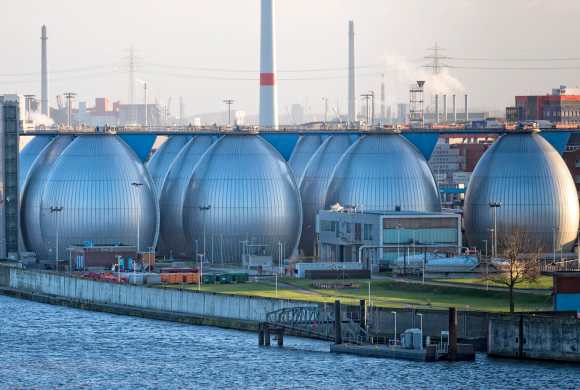
The Middle East hosts the majority of the world’s desalination plants, accounting for roughly one-third of global capacity. The USA and Spain come after with 10% and 5.7% respectively. These regions depend on desalination to be resilient from increasing droughts that are becoming more frequent and longer as climate change takes effect.
Currently, desalinated water accounts for about 1% of global freshwater consumption, but the International Water Association projects this share will double within the next decade. The good news is that the cost of production has reduced from $5 to $0.50 per cubic meter in the past 20 years, making the technology a significantly more affordable option.
Extracting Salt; How Desalination Plants Operate
The most widely used method of removing salt from seawater is reverse osmosis. This involves passing water through a semi-permeable membrane at high pressure to remove impurities. There are also several methods that make use of evaporation to separate the water from the salt molecules, but these tend to be more energy intensive and therefore costly, and are most useful in areas with available heat sources.
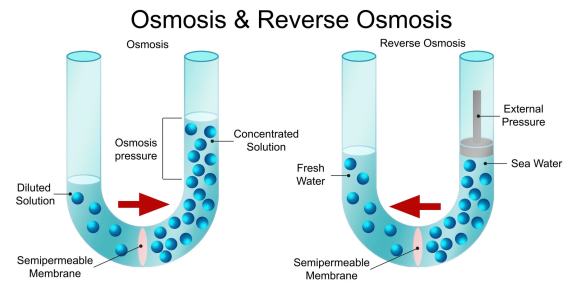
These processes also generate waste, primarily in the form of brine—a concentrated saline byproduct. Modern plants are aiming to limit the amount of brine produced per m3 of fresh water, for example most plants in the UAE mix brine with cooling water from power stations to reduce salinity before releasing it back to the sea.
Most existing plants use fossil fuels for the extraction process. The reverse osmosis technique does not require heat, but requires energy to create the high pressure. The evaporation methods require heat to produce steam which is later condensed into pure water. Heat based processes can make use of waste heat, for example the Jurong Island Desalination Plant in Singapore which is co-located with a power station. Some research is also exploring the use of nuclear power to generate the necessary heat, though this approach carries inherent risks.
Challenges And Opportunities Of Desalination
Spain is one of the countries that has invested most heavily in converting sea water to usable fresh water, with 795 plants operating to produce 5 million m3/day. The Llobregat desalination plant near Barcelona is a good example of this. Managed by a public company, ATL, it was constructed in 2009 when it was barely needed but now due to pressure from drought, it is working at full capacity to produce 33% of the area’s water supply. This forward-looking investment anticipated future needs, helping to secure reliable water supplies today
However, this comes with notable environmental risks: for every 0.45 liters of freshwater produced, approximately 0.55 liters of brine are generated. The Llobregat delta is a protected wetland area, therefore a significant effort has been made to limit the effects. The brine is mixed with the waste water from a local sewage plant, ensuring that the salinity is minimised to reduce negative impacts.
The Llobregat plant also has high energy requirements due to the scale of its production; however, due to successful energy recovery systems it only requires 3.51 kWh/m3. This is in line with the average for the reverse osmosis technology; a good step in reducing overall energy load. Efforts continue to ensure that the source of this energy comes from more sustainable sources and limits the use of fossil fuels.
Water Scarcity As A Political Issue
Yet, water is not just a resource challenge—it is increasingly a political one. Nations are turning to desalination as part of broader strategies for independence and resilience. Singapore has spent decades working on its water supply, with the goal of water sovereignty. Currently, the city state still imports around half of its water from rivers in nearby Malaysia, but the government is working towards limiting this and desalination is one of the key pillars of this effort.
The desalination initiatives in Singapore are cutting edge, using a combination of energy efficient techniques and digital tools to minimise impact. The KMEDP plant, operated by a subsidiary of Keppel Infrastructure Holdings Pte. Ltd. was set up by Singapore’s national water agency.
The plant has the capability to either extract water from the surrounding sea, or process water from a local reservoir, depending on supply. The plant uses advanced data analytics to optimize energy efficiency and can supply up to 7% of Singapore’s national water needs, whether or not desalination is required. With more investment into plants like this, the city-state should find itself with decreasing reliance on imported water.
An Ambitious Attempt To Limit Water Restrictions
Singapore’s success highlights what strategic planning can achieve—but in regions like Jordan, the challenge is far more immediate and critical. Jordan faces severe water shortages, forcing the government to ration water supplies nationwide. Most governments aim for 500m3 of water per person per year, Jordan is currently surviving with only 100m3. This is due to climate change, increased population, and also water loss due to theft, leakage and mismanagement.
To address this crisis, Jordan is developing one of the largest desalination projects in the world: the Aqaba-Amman Desalination and Water Conveyance Project. The project is being managed by Suez, in partnership with Meridiam, its parent company dedicated to the long-term sustainable infrastructures.
Meridiam provides key financial support and also makes sure the project is developed under rigorous sustainability and governance frameworks—helping Jordan achieve greater water independence. Financing is estimated at €3 billion, coming from the Jordanian government, the European Investment Bank, and private partners including Meridiam.
Meridiam’s investment forms part of its broader mission to deliver essential infrastructure that promotes environmental resilience and long-term social impact. The company has become a major player in the transition towards low-carbon, climate-resilient infrastructure.

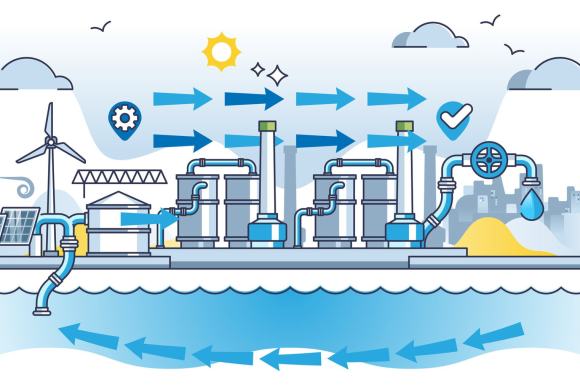
A plant powered by solar panels will desalinate the water at the coast and is aiming to produce 300 million cubic meters of water per year. This will then be piped 450km to the capital, Amman. Suez and Meridiam expect the plant to be operational by 2028 providing a continuous water supply which will be life changing for residents.
The project has been designed to be a flagship in limiting environmental impact. It will take in water at a specific depth to minimise risk to sea life, release none of the chemicals used back into the ecosystem and use high pressure to disperse brine over a large area, minimising impact. The energy for the project will also come from solar panels that will be positioned to limit risk to the local wildlife.
Desalination is becoming a critical component to ensure safe water supplies across the world. Reducing energy requirements and reliance on fossil fuels will be essential to ensure the cost-effectiveness of continued investment. Fortunately, leaps are being made in the use of sustainable fuels as with the Aqaba-Amman project and its use of solar power.
Limiting the effects of waste will also continue to be critical, but efforts in recent years have shown that much progress can be made to ensure that newer technologies can achieve reduced levels of impact whilst providing much needed diversification of supply. The potential of desalination continues to grow, and more investment will be needed to make sure that global water needs continue to be met.
Leave a Reply