


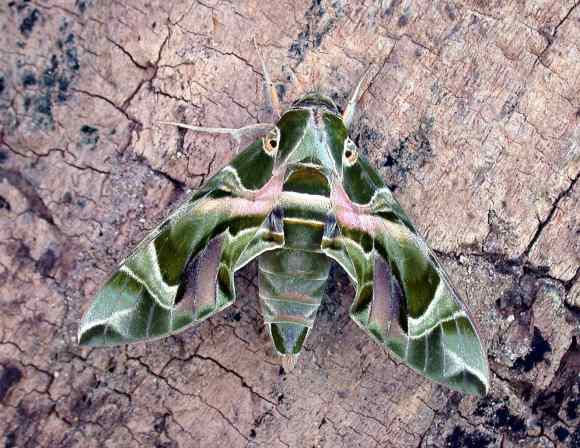
A very special and beautiful moth was found on a small island called the Calf of Man. This moth is called the Oleander Hawkmoth, and it is very rare in this part of the world.
The people who work at the bird observatory on the island were very excited because this was the first time this type of moth was officially seen on the Isle of Man.
The moth has big, colorful wings with pretty patterns in green, brown, cream, and a little bit of purple. So, interested to learn more about this special moth? Check it out here.
Oleander Hawkmoth

The Oleander Hawkmoth is a large and magnificent moth that usually lives in hot countries in Africa and Asia. It has very big wings that are wider than a small egg box. The wings have beautiful curved patterns that look like art, with colors of green, brown, cream, and purple mixed together.
These moths are part of a group called hawkmoths, which are known for being strong flyers that can travel very long distances. During the summer months, some Oleander Hawkmoths fly from their home countries to eastern and southern parts of Europe.
However, they rarely make it all the way to western Europe or Britain because it is very far away.
Kate Fox, who is the warden (a person who takes care of) the Calf of Man, said that this moth is “one of the rarest migrant hawkmoths” to reach their island. Every year, only a few of these moths are seen across all of Britain, which makes them very special.
The moth found on the Calf of Man was so big that it could not even fit inside the moth trap! That is why the workers found it sitting on the outside of the trap instead. After they looked at it carefully and took some photos, they let the moth go free so it could continue its journey.
How Was it Discovered?

The Oleander Hawkmoth was discovered by staff members who work at the Calf of Man Bird Observatory. Even though it is called a “bird” observatory, the workers there study many different types of animals, including moths.
They use special equipment called moth traps to help them see which moths live in or visit the area. A moth trap is a simple tool made from a bucket with a bright light at the end of a funnel shape.
Moths are attracted to bright lights at night (you might have seen this when moths fly around lamps in your house). When the moths come to look at the light, they can rest safely inside the bucket.
The trap does not hurt the moths at all – it just gives scientists a chance to look at them, count them, and learn about them before letting them go. The workers check the moth traps regularly to see what species they have caught.
One morning in October 2025, they found the beautiful Oleander Hawkmoth sitting on the outside of the trap. Because it was too big to fit through the funnel opening, it just stayed on the outside instead of going inside the bucket. This was very lucky because the workers might have missed it if it had flown away!
The team at the observatory does this work all the time to build a better understanding of moth movements. They want to know which moths visit the island, when they come, and where they might be traveling from.
Why is This Important?
This discovery is very important for several reasons. First, it is the first confirmed record of an Oleander Hawkmoth on the Isle of Man. There was one time in 2001 when someone thought they saw this type of moth, but they were not completely sure.
Now, with clear photos and careful observation by trained scientists, everyone knows for certain that this moth really did visit the island. Laura McCoy, who works as the Curator of Natural History at Manx National Heritage (a place that protects the island’s history and nature), said this sighting was “spectacular”.
She also said that the moth “is one of the rarest migrant hawkmoths.” This means the discovery is a big deal for people who study insects and nature on the Isle of Man.
Second, this finding helps scientists understand more about how climate and weather affect where moths can travel. Moths like the Oleander Hawkmoth are called “migrants” because they move from one place to another, sometimes over very long distances
By keeping records of when and where these moths appear, scientists can learn if migration patterns are changing. This might be because of changes in weather, temperature, or other environmental conditions.
Third, the discovery shows that the Isle of Man is an important place for wildlife observation. The Calf of Man is a small island, but many rare and interesting creatures visit it or pass through it during their travels. By continuing to study the wildlife there, scientists can help protect these species and the places they need to survive.
They Are Not Alone!
The Oleander Hawkmoth was not the only interesting visitor to the Calf of Man in 2025. Kate Fox explained that the observatory team also found “quite a few other migrant species” of moths during the year.
This shows that many different types of moths travel to the island from other countries. Some of the other migrant moths they found include Silver Y moths and diamond-backed micro moths.
The Silver Y moth gets its name from a silvery mark on its wings that looks like the letter “Y.” These moths also travel long distances and can be found in many parts of Europe during summer and autumn.
The diamond-backed moth is much smaller (which is why it is called a “micro” moth), but it is also a strong traveler that can fly across seas and countries. Finding so many different migrant moths in one year suggests that 2025 might have been a particularly good year for moth migration to the Isle of Man.
Perhaps the weather conditions were right, or maybe the winds helped carry more moths to the island than usual. Scientists will continue studying these patterns to understand what makes some years better than others for moth sightings.
Sources:
Leave a Reply