


In a time when environmental preservation is essential, how we travel has never been more important. As eco-conscious individuals, reducing our carbon footprints, reducing pollution, and making ethical choices are vital in protecting the planet.
Cycling, a low-impact transportation, has always been considered a greener alternative to cars. However, with technological advances, a question arises—which bike is more eco-friendly: electric or traditional pedal?
Let’s explore the environmental impact of both options and how they affect our planet and the plants and animals we share it with.
A Compact, Earth-Friendly Ride

Photo from depositphotos.com
When considering which option is greener—electric bikes or traditional pedal bikes—the answer often depends on how they fit into one’s lifestyle and environmental goals.
The electric hunting bike offers a unique solution for those seeking a balance of convenience, sustainability, and ease of use.
While traditional bikes have long been the standard for zero-emission travel, folding electric bikes like the Voyager provide an eco-friendly alternative with additional perks.
Why Choose Electric Over Traditional?
| Factor | Voyager Folding Electric Bike | Traditional Bike |
| Emissions & Convenience | It has zero emissions and provides an electric boost, ideal for longer rides or hills without relying solely on pedal power | It requires physical effort for longer rides but produces zero emissions |
| Design & Portability | Compact and foldable; easy to store or carry on public transport, reducing reliance on cars or buses | Generally bulkier, storage and transport are more challenging in urban spaces |
| Longevity & Maintenance | Offers flexibility with electric assistance, reducing physical strain and promoting long-term environmental benefits | It is more straightforward to maintain and does not require a battery; it relies entirely on human power |
How Both Options Benefit Nature
Traditional bikes require no battery or electricity, making them the most direct way to minimize your impact. They also don’t contribute to the resource strain of battery production.
Electric bikes, like the Voyager, help care for nature by decreasing car dependency and reducing the strain on fossil fuels.
Lower emissions mean cleaner air, which benefits urban and rural environments, from plants absorbing CO₂ to ensuring animals are less impacted by noise and air pollution.
| Monitor Tire Pressure: Keeping bike tires fully inflated increases energy efficiency, whether pedaling manually or using electric assistance, reducing unnecessary strain. |
Renewables vs. Human Energy

Photo from Freepik.com
Many argue that traditional bikes win out in green power, as they rely only on human energy—typically fueled by what you eat. The Voyager, however, can be even more eco-friendly by using renewable energy sources like solar or wind to charge its battery.
This significantly reduces its environmental impact compared to cars and motorcycles, making it competitive with pedal bikes when using renewable energy.
Ultimately, electric and traditional bikes have valuable roles in green transportation. When you choose an electric bike like the Voyager, you’re getting the best of both worlds—sustainable transport with added convenience and comfort, making it easier to live a greener lifestyle without sacrificing mobility.
Material Comparison: Electric Bikes vs. Traditional Bikes’ Impact
The materials used in electric bikes (e-bikes) significantly differ from those in traditional bicycles, particularly concerning their environmental impact and sustainability.
Here’s a comparison focusing on earth-friendly and green living aspects:
| Aspect | Electric Bikes (E-Bikes) | Traditional Bikes |
| Frame Materials | Typically aluminum or steel, exploring sustainable options like bamboo or recycled plastics | Commonly aluminum or steel; generally more straightforward construction |
| Battery Components | Use lithium-ion batteries; higher environmental impact from production, but improving recycling technologies | No batteries, avoiding the ecological impact associated with battery production |
| Lifecycle Considerations | Higher initial impact due to battery production; efficient use phase with zero emissions when charged with renewables | Lower overall environmental impact; promotes active transportation with minimal footprint |
While e-bikes utilize more complex materials and technologies that can have higher initial ecological impacts due to battery production, they also offer substantial benefits in terms of energy efficiency and the potential for reducing overall emissions when integrated into a sustainable energy grid.
Traditional bikes remain the most sustainable option regarding material simplicity and lifecycle impact. However, both types contribute positively to green living by promoting cycling over motorized transport.
Pedal Power vs. Electric Boost: Which Bike Saves More Energy?
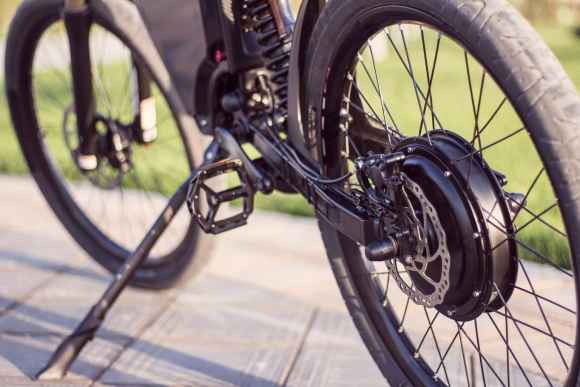
Photo from Freepik.com
Electric bikes (e-bikes) and traditional bicycles differ significantly in their energy consumption and overall impact on energy use.
Here’s a comparative analysis based on the provided search results:
| Aspect | Electric Bikes (E-Bikes) | Traditional Bikes |
| Power Consumption | Average consumption ranges from 200 to 750 watts; typical usage is about 7 Wh/km or 11 Wh/mi | Requires around 30 watts for cruising at 9 mph; higher wattage for faster speeds |
| Battery Capacity | Batteries typically range from 250Wh to 1000Wh, affecting range and energy use per charge | No battery is required, thus no energy consumption for charging |
| Energy Efficiency | It consumes about 0.01 kWh per mile, significantly less than electric cars, which consume about 0.34 kWh per mile | Highly efficient; no electrical energy needed, relying solely on human power |
| CO2 Emissions | Emits approximately 2-5 g/km depending on the electricity mix; can be zero when charged with renewable energy | Produces no emissions during operation but requires energy for manufacturing |
| Lifecycle Impact | Higher initial emissions due to battery production (134-165 kg CO2e) but lower emissions during use compared to cars | Lower lifecycle emissions overall due to more straightforward construction and no battery use |
Although e-bikes have a higher initial environmental impact because of battery production, their overall energy use and emissions during operation are much lower than those of traditional vehicles, making them an excellent choice for eco-friendly transportation.
On the other hand, traditional bicycles are the most environmentally friendly option for energy consumption and lifecycle impact, as they run entirely on human power and require no electricity or batteries.
| Focus on Air Quality Impact: Use your bike more frequently in congested urban environments to help reduce local air pollution levels. |
Choosing Between Electric and Traditional Bikes: Which is Greener?
Electric bikes require energy for charging and involve complex manufacturing processes, but they can reduce reliance on fossil fuels for transportation. With their more straightforward construction and zero emissions during use, traditional bikes present a lower environmental impact in production and disposal.
The greener option depends on usage patterns, energy sources, and lifecycle management. A comprehensive assessment of these variables is essential for determining the most sustainable choice in specific contexts.
Leave a Reply