


In the war against food waste and soil degradation, an unlikely hero has emerged, the black soldier fly larva (BSFL). These tiny, wriggling creatures might not look like much, but they are nature’s most efficient recyclers, consuming up to four times their own body weight in organic waste daily and turning it into nutrient-rich fertiliser—frass.
At a time when over 33% of the world’s soil is degraded and food waste is clogging landfills, these insects are proving that the smallest creatures can have the biggest impact. Across farms in the US, and increasingly around the world, black soldier flies are transforming waste into a valuable resource, regenerating soil health, and reshaping the future of sustainable agriculture.
But if they are such miracle workers, why isn’t every farm using them? And how can companies like Oregon-based Chapul Farms, now backed by federal support, help these humble bugs change the face of farming?
Tiny Creature with a Big Appetite

Picture this, mountains of food waste sitting in landfills, releasing methane—a greenhouse gas 80 times more potent than CO₂. Meanwhile, farmers struggle with depleted soil and skyrocketing fertiliser costs. The solution? A voracious little bug that thrives on waste and leaves behind a goldmine for agriculture.
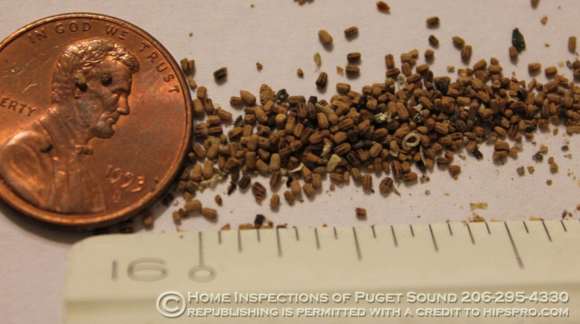
Black soldier fly larvae will eat almost anything—food scraps, agricultural byproducts, even brewery waste. Unlike traditional composting, which can take up to 10 months, these insects break down organic material in just days. The result? Frass—a nutrient-dense fertiliser that restores soil health, improves biodiversity, and reduces the need for synthetic fertilisers.
“They can reproduce pretty quickly too,” says Shankar Ganapathi Shanmugam, an assistant research professor at Mississippi State University. “And since they grow on dead and decaying material, they can survive on waste.”
Chapul Farms has built an entire ecosystem around this concept. They partner with local farms in a circular exchange, farmers provide organic waste for the larvae, and in return, they receive nutrient-rich frass to fertilise their crops. It’s a closed-loop system that not only eliminates waste but also revitalises soil—one truckload of larvae at a time.
Why Frass Beats Synthetic Fertilisers

For decades, farmers have relied on chemical fertilisers to boost crop yields. But these synthetic inputs come at a cost, they degrade soil over time, pollute waterways, and require massive amounts of fossil fuels to produce.
Frass, on the other hand, is alive. Packed with beneficial microbes, it improves soil structure, enhances water retention, and strengthens plant immunity—all while reducing the need for pesticides.
“We could make compost out of anything, but the impact of running it through this insect biology has all these incredible implications,” says Mimi Casteel, an Oregon wine farmer using Chapul’s frass. “It’s portable, cost-effective, and it’s replacing a missing layer of diversity in our soils.”
Unlike chemical fertilisers, which deplete soil over time, frass fosters a thriving underground ecosystem. The microbes in frass multiply, rebuilding soil biodiversity and increasing nutrient absorption naturally. Farmers using frass will eventually need less fertiliser over time, cutting costs and reducing dependency on synthetic chemicals.
With global fertiliser prices doubling between 2021 and 2022, and supply chain disruptions hitting farmers hard, frass isn’t just a sustainable solution—it’s a financial lifeline.
Why Isn’t Every Farm Using Frass?
Despite its benefits, insect-based fertiliser faces hurdles. The biggest one? Regulation.
The US National Organic Program currently does not include insects as an acceptable agricultural additive, making it difficult for organic farmers to use frass. “Finding a use for this is important, but if you’re going to market frass as a fertiliser, you need to regulate it, which takes time,” explains Shanmugam.
Chapul Farms and other advocates are working with regulators to change the narrative—educating policymakers, conducting research, and pushing for frass to be recognised as an organic, sustainable alternative to synthetic fertilisers.
And the timing couldn’t be better. In 2024, the US Department of Agriculture (USDA) awarded grants to projects like Chapul Farms under the Fertilizer Production and Expansion Program (FPEP). This bipartisan initiative is a sign that insect-based solutions are finally getting the attention they deserve.
“Historically, farmers have been taught that insects are a problem,” says Casteel. “They don’t want to talk about adding more bugs to their fields. But when our farms become more complex, we start to see an exponential rollout of ecological returns.”
Powered by Bugs

The potential of insect agriculture goes far beyond fertiliser. The global insect protein market—which includes using black soldier fly larvae as animal feed—was valued at nearly $1 billion in 2022. But while most of the industry has focused on insect protein, frass remains an untapped goldmine.
In fact, insect farms produce twice as much frass as larvae, meaning there’s a massive opportunity to scale this solution. Chapul’s expansion, funded by FPEP grants, is set to yield 10,000 tons of frass per location per year, with new facilities in Oregon and North Dakota.
And the results are already speaking for themselves. Farmers testing frass in their fields are reporting healthier crops, stronger root structures, and improved resilience to drought and disease.
“Anecdotally, I can tell you that in the trials I’ve done, the produce itself grows faster and has better cellular structure,” says Casteel. “Under a microscope, the cells grow more densely, with stronger membranes. That means the plant has more structural integrity from day one.”
Tiny Giants

Insects are keystone species—meaning entire ecosystems depend on them. Without insects, our world would grind to a halt. And yet, industrial farming has pushed insect populations to the brink.
By embracing BSFL and frass, farmers aren’t just reducing waste and regenerating soil—they’re helping to restore insect biodiversity and build a food system that works with nature, not against it.
“We cannot survive without insects,” says Pat Crowley, CEO of Chapul Farms. “Natural ecosystems cannot flourish without them. Insects aren’t just part of the solution—they are the foundation of a truly resilient agricultural system.”
So the next time you throw away food scraps, think of the tiny, tireless soldiers that could be turning that waste into something extraordinary.
Because sometimes, the smallest creatures make the biggest difference.
Sources:
Leave a Reply