

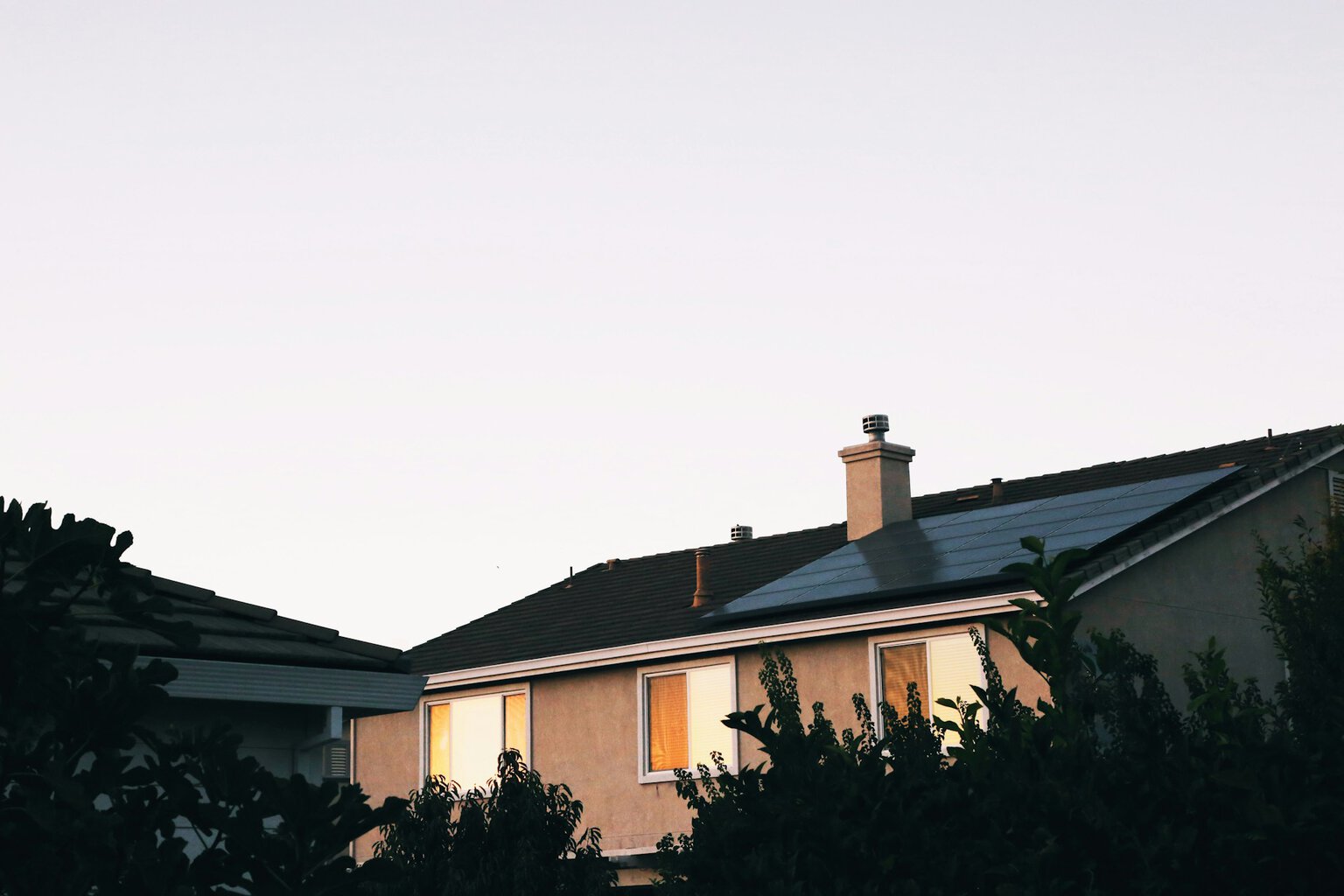
To reach the goal of having more renewable energy in advanced countries, more solar power may be the solution.
However, despite the many solar panels that we can find now, some notice that the world keeps getting hotter regardless. And, the world also sees more extreme weather
What’s the effect of these kinds of weather on solar panels?
As we know, solar panels have to be outside; they’re exposed to all weather.
While it’s true that they’re built to withstand rain, snow, heat, and wind, solar panels are not indestructible.
And with our current situation (climate-wise), many solar panels can degrade faster.
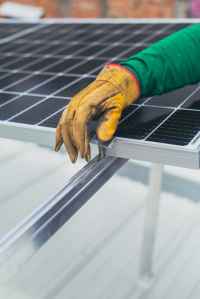
Researchers from Australia have examined which parts of the country that will have the worst conditions for solar degradation out to 2059. They’ve also examined what it will do to the cost of energy.
They found that panels in the country’s hot and humid north will degrade the fastest. On the other hand, panels in the arid interior and more moderate climates in the south have longer lifespan.
But hang on, what causes solar panel degradation, exactly?
Except for oil-based plastics, most man-made products aren’t eternal, including our solar panels.
That’s why, when we want to install panels around our house, we look for manufacturers that offer good warranty.
Most of these manufacturers offer a 25-30 year warranty, guaranteeing that power output will drop by less than 20% over that time. The drop of this power output is caused by solar panel degradation.
There are many causes of it like aging, Light-Induced Degradation (LID), and quality of materials. We’ll look at them one by one.

Degradation caused by aging
Well how about that, aging affects us all!
But jokes aside, this factor is the main degradation mechanism affecting PV modules throughout their years of ‘service.’
It’s a direct consequence of panels being exposed to years of extremities in weather and other external factors.
When solar panels get exposed to external causes, they start to decay over time. The frames corrode, the glass and back-sheet delaminate, and they lose some parts.
When this happens, their efficiency decreases.
Light-Induced Degradation (LID)

LID is a phenomenon which causes a faster rate of degradation in solar panels. It affects modules during the first year of operation.
As the name suggests, the source of this degradation comes from sunlight. It accelerates the oxidation process between the boron used in the system.
Light-Induced Degradation happens naturally.
During the process to make single-crystal silicon, called the Czochralski process, oxygen mixes with the melted silicon.
Boron, which is used to improve solar cells, mixes with oxygen and catches electron-hole pairs, affecting how much power the cells can make.
Material quality
Faster solar panel degradation may also be caused by defects in the materials. Therefore, one can conclude that panels with higher-quality materials degrade at slower rates.
Manufacturers may add materials and other techniques to slow down corrosion and reduce the deterioration.
After testing, some solar panel systems have been proven to last for at least 40 years in worse conditions. And nowadays, some companies in the sector have worked to improve the technology.
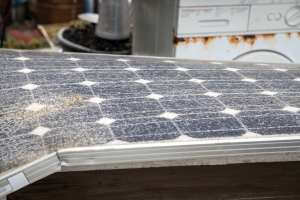
Weathered panels
One does not control the weather. However, one can put it into consideration when installing solar panels. In addition, it’s always wise to do regular maintenance to avoid further downgrade.
Before installing big solar power systems, it’s important to study the area and its history of natural disasters. This helps make sure the place is safe for the installation.
When getting ready for extreme weather, one important thing to do is choose solar panels with stronger materials. These might have better protection against water, stronger frames, tougher glass, and more.
Nonetheless, different climates, different materials and different manufacturing techniques can lead to faster or slower degradation.
So far, the dominant solar technology is silicon.
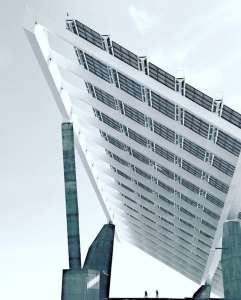
Silicon modules deteriorate because of stress from the environment (as mentioned), voltage changes, and mechanical stresses.
In everyday items, silicon seems to be indestructible. It’s a different case here; silicon wafers are stiff and brittle. UV radiation, temperature, humidity and other external factors are the main causes of damage.
Can’t handle the heating planet
Humid and hotter conditions can turn degradation faster in many ways. The researchers have combined four types of degradation which they’ve predicted will get worse under climate change.
- Delamination. As mentioned, heat and humidity can reduce adhesion which holds the different layers of the cell together.
- Discolored encapsulant. Extra moisture and intense sunlight can cause discoloration or damage to the encapsulant. For those of you who don’t know, encapsulant is the polymer used to adhere layers within the solar cell together
- Ribbon corrosion. When there’s more days of humidity, it can make moisture accumulate and begin corroding the inside part of the cell.
- Internal circuit failure. Solar cells face temperature fluctuations all the time. But, in an even hotter world, that’ll add extra stress to internal circuits. This can lead to a higher chance of failure.
Per the researchers, degradation rates will increase under both high and low emissions scenarios–in Australia only.
Under a high emission scenario, solar panels would degrade twice as fast compared to a lower emission scenario. Of course, the main cause would be the extra heat.
In this situation, solar farms wouldn’t be able to produce more power. They might also have to replace panels more often due to recurring failures.
Basically, this would mean losing about 8.5% of output due solely to extra degradation by 2059.
In addition, under a high emissions scenario, this would mean energy could cost 10-12% more.
The effects, the researchers said, wouldn’t be equal. As mentioned, results showed that solar panels installed in the hot and humid northern Australia will degrade much faster.
Meanwhile, where conditions are hot but dry and arid, the panels would survive longer.
Is there anything we can do?

In parts of the world where it’s hot, like Australia, frequent solar panel degradation will go from annoyance to a very real problem.
For instance, think of the many unprocessed solar panel waste if the deterioration rate keeps getting worse–further shortening their lifespan.
The researchers suggested that manufacturers should think about weather extremities, particularly in humid areas.
“ They can be more careful while selecting a new solar farm location to ensure their modules have lower chances of failure due to degradation,” the researchers said.
Incorporating new ways of cooling panels and improving the materials used is also a wise step to help fix the problem. In particular, materials should be able to stop moisture from accumulating inside the panels.
“These issues can be fixed. The first step is to understand there is a problem,” the researchers said.
Sources:
https://solarmagazine.com/solar-panels/solar-panel-degradation/
Leave a Reply