

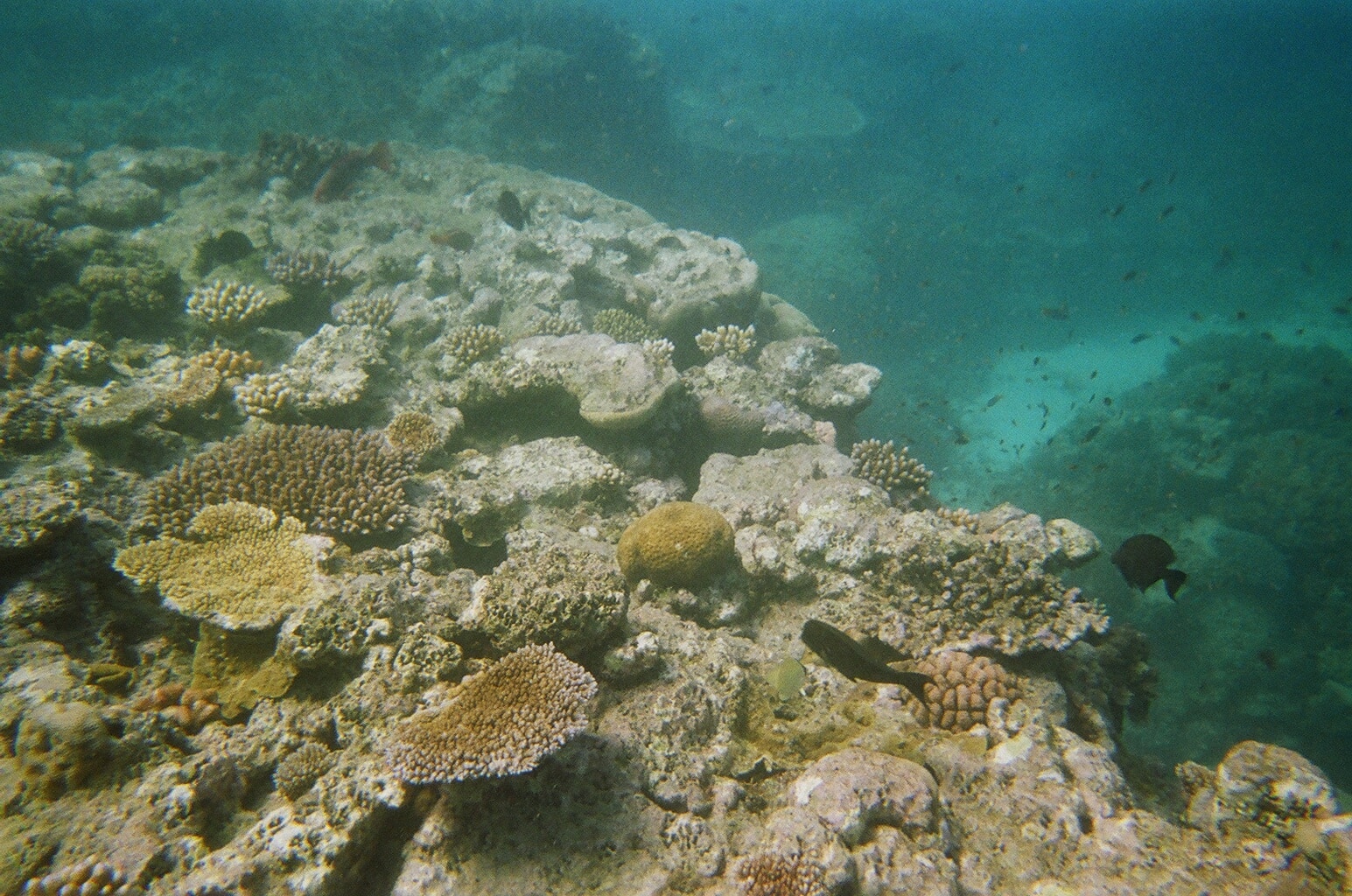
Coral reefs are often described as strong, ancient, and resilient, yet the events unfolding since 2023 show just how fragile these ecosystems have become in a warming world. Scientists have now confirmed that the planet is experiencing the largest coral bleaching event ever recorded.
From early 2023 to April 2025, nearly 84% of the world’s coral reef area has been exposed to heat stress intense enough to cause bleaching. This is not a local problem or a regional crisis.
It is a global event, affecting reefs in at least 83 countries and territories, and it marks a turning point in our relationship with the oceans. This is the fourth mass coral bleaching event ever documented, and the second within the past decade.
How much concern should we put in it? Let’s find out.
What Coral Bleaching Is

Coral bleaching happens when ocean temperatures rise beyond what corals can tolerate. Corals live in close partnership with tiny algae that reside in their tissues. These algae provide food through photosynthesis and give reefs their bright colors.
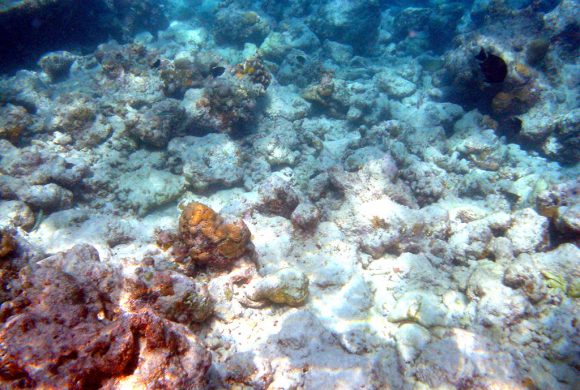
When water becomes too warm, corals expel these algae as a stress response. Without them, corals turn pale or white, a process known as bleaching. Bleached corals are not dead, but they are weakened. Without their main energy source, they struggle to grow, fight disease, and reproduce.
If high temperatures persist, or if bleaching events happen too often, corals may never recover. Instead, they die, leaving behind empty skeletons that eventually crumble into rubble. What makes the current situation especially alarming is how widespread and long-lasting the heat stress has been.
According to data from the US National Oceanic and Atmospheric Administration, bleaching-level heat stress has affected coral reefs almost continuously since January 2023. This sustained pressure dramatically reduces the chances of recovery, even for reefs that were once considered resilient.
Planetary Heat Problem
The record-breaking scale of this bleaching event is directly linked to rising ocean temperatures. The oceans absorb most of the excess heat trapped by greenhouse gases, and over time, this heat builds up. Each of the past eight years has set a new record for ocean heat content.
The rate of ocean warming over the past two decades is more than double what it was in the second half of the twentieth century. In 2024, ocean heat reached the highest level ever observed in more than six decades of measurement.
Sea surface temperatures were especially extreme during the first half of the year, remaining unusually high well into the second half. Even when temperatures dipped slightly, they stayed far above historical averages.
This matters because corals are highly sensitive to even small temperature changes. An increase of just one degree Celsius above normal summer temperatures, sustained over weeks, can trigger mass bleaching. When these conditions become the new normal rather than rare events, coral reefs are pushed beyond their limits.
One Blow

This bleaching event is truly global. Some of the world’s most famous and ecologically important reefs are among those affected. Australia’s Great Barrier Reef has experienced repeated bleaching episodes, as have reefs in Florida and the Caribbean.
Large areas of the South Pacific, the eastern tropical Pacific, the Indian Ocean, and the Red Sea are also showing widespread bleaching. Even regions once thought to be more resistant, such as parts of the Persian Gulf and the Gulf of Aden, are now experiencing severe stress.
These areas already host corals adapted to warmer conditions, which makes their vulnerability especially concerning. If corals living near their upper heat limits are bleaching, it suggests that adaptation alone may no longer be enough.
The global nature of this event also means that there are fewer unaffected reefs left to serve as sources of recovery. In the past, healthy reefs could help repopulate damaged areas. When bleaching happens everywhere at once, that safety net disappears.
Talk About Consequences

A single bleaching event does not always kill a reef, but repeated events close together can be devastating. Corals need time to regain their algae, rebuild energy reserves, and reproduce. When heat stress returns before recovery is complete, corals become increasingly vulnerable to disease, slow growth, and reproductive failure.
Bleached reefs also lose their structural complexity. As corals die, the three-dimensional habitats they create begin to collapse. Fish and invertebrates that rely on coral structures for shelter and breeding grounds are forced to leave or perish. Over time, vibrant reef ecosystems can shift into algae-dominated systems that support far less life.
This loss affects people as well. Coral reefs support roughly a quarter of all marine species and provide food, coastal protection, and income for millions of people. Their economic value has been estimated at nearly ten trillion dollars each year. When reefs decline, fisheries weaken, shorelines become more vulnerable to storms, and tourism suffers.
There is no mystery behind what is driving this bleaching event. The primary cause is climate change, driven by the continued burning of fossil fuels, deforestation, and other human activities that increase greenhouse gas concentrations. While local stressors like pollution and overfishing make reefs more fragile, rising ocean temperatures are the dominant force behind global bleaching.
The troubling reality is that coral reefs are responding exactly as scientists predicted decades ago. Warnings about mass bleaching became more urgent in the 1990s, and each subsequent event has confirmed those fears. What has changed is the speed at which these predictions are becoming reality.
The fact that this is the second mass bleaching event in ten years, and the largest on record, suggests that coral reefs are entering a new and dangerous phase. Instead of rare crises, bleaching may become a near-constant condition in many regions unless global temperatures are stabilized.
What the Future Looks Like Without Action

If current warming trends continue, scientists expect severe coral bleaching to become an annual occurrence in many parts of the world within the coming decades. At that point, recovery becomes nearly impossible. Reefs would not just shrink; many would effectively disappear.
This would represent one of the most dramatic ecosystem losses in human history. Coral reefs have existed for millions of years, surviving natural climate shifts and mass extinctions. The fact that they are now struggling to survive changes happening within a single human lifetime speaks volumes about the scale of the pressure we are placing on the planet.
There is still uncertainty about how much some corals can adapt or acclimate, but adaptation takes time. Rapid warming leaves little room for slow biological processes to keep up. Without meaningful reductions in global emissions, adaptation alone is unlikely to save most reefs.
Despite the severity of the situation, this moment is not meaningless. The scale of the bleaching event makes it impossible to ignore and harder to minimize. It reinforces what scientists, conservationists, and coastal communities have been saying for years: ocean health and climate stability are inseparable.
Protecting coral reefs now requires action far beyond local conservation. It means addressing the root causes of climate change, reducing greenhouse gas emissions, and limiting additional stressors wherever possible. Local efforts still matter, especially when they improve water quality and protect remaining healthy reefs, but they cannot succeed in isolation.
Coral reefs are often called the rainforests of the sea, not only because of their biodiversity but because of what they represent. They are indicators of planetary health. When reefs bleach on a global scale, it is a clear signal that the oceans are absorbing more heat than they can safely handle.
What happens next depends on choices being made now. The reefs are telling us, unmistakably, that time is running short.
Sources:
Leave a Reply