

When it comes to renewable energy, wind turbines are quite well-loved. There is more wind-generated energy thanks to them.
But as we know, not everything about them is perfect. Wind turbines have killed wildlife, they can break quite easily against nature, and there’s a problem with waste.
At the end of a wind turbine’s life cycle, the steel tower, copper wire, and gearing are recyclable. However, turbine blades are another challenge.
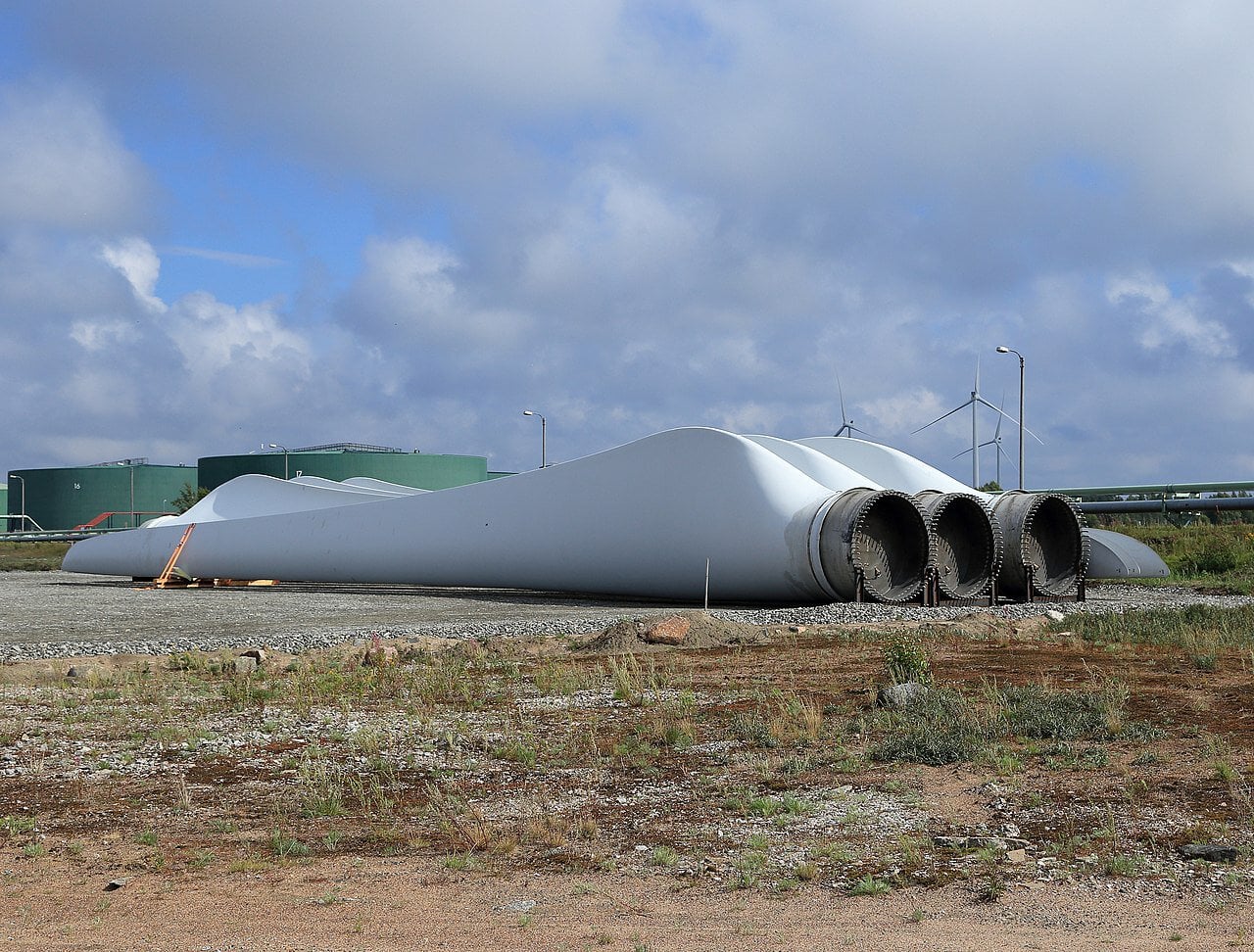
The blades are made primarily from fiberglass. Because they don’t have ‘attractive’ metals and minerals, recyclers don’t bat an eye on them. Moreover, epoxy resins coat the blades, which make them tough to crush.
As a result, most retired turbine blades end up incinerated or in landfills.
With the rapid growth of the renewable energy industry, this poses an environmental issue. Looking ahead, there will be more blades despite the current situation.
Let me give you a picture: in 2022, around 78 gigawatts of wind capacity were installed all across the world. That number is enough to power about 17 million US homes per year.
According to the Global Wind Energy Council, there will be an expected 1,000 gigawatts of wind farms by the end of this decade.
The environmental issue has been in discussions for a while now, and that has reached turbine manufacturers.
To help address the challenge, the manufacturers are intensifying their efforts to make recyclable blades.
Unfortunately, perfecting this technology and applying it in real life will take years. While at the same time, turbines made and installed in the early 2000s are reaching the end of their lifespan.
According to estimates, in Europe, there will be around 25,000 metric tons of wind turbine blades removed annually by 2025.
Where startups help
I feel like there have been many environmental issues mitigated by small, growing startups. And well, let’s just say that’s also the case for this one.
Angela Nagle is a former Intel engineer. Now, she is the co-founder of Ireland-based BladeBridge.
It’s a company that converts decommissioned turbine blades into pedestrian bridges.
You might be saying, “But that’s not recycling.”
And yes, you’re right. Even Nagle explained that her startup aims to buy time. The upcycled bridges will, at some point, reach the end of their lifecycle.

“We’re delaying the disposal. It’s delaying the problem to see if somebody else can find a third life solution,” Nagle said.
So far, BladeBridge has built an 18-foot pedestrian bridge outside Cork City using two retired turbine blades.
The upcycled bridge was commissioned by the county as part of a new cycling route. Per the startup’s estimates, the bridge reduces emissions by 17% compared to conventional pedestrian bridges over a 60-year lifespan.
BladeBridge is now constructing two more of upcycled bridges on a hiking trail. They’re set to be completed by this year.
Startups like BladeBridge is among a handful of companies with similar goal. That is, transforming old wind turbine blades into new products, be it park benches, bike racks, or playgrounds.
Here are some other startups that might inspire you.
Blade playground and bike shelter in Europe
In 2006 Rotterdam-based Foundation Kinderparadijs Meidoorn needed a new playground. The foundation asked for the expertise of Superuse Studios, an architecture firm known for repurposing used items.
The result? One of the world’s earliest wind turbine-repurposing projects.
In 2008, there was a maze-like playground crafted from five damaged turbine blades. Years later today, the playground is still in excellent condition.
Like the bridge, this project showed dual benefits. First, it keeps turbine blades out of landfills. Second, it provides environmentally friendly infrastructure.
According to Superuse Studios, the playground had a carbon footprint roughly 90% smaller. That’s when compared to similar equipment made from wood and steel.
Seeing how the project was a success, Superuse launched Blade-Made in 2021. It’s a new business specializing in upcycling blades into benches, playgrounds, and climbing walls.
In the main parking lot of the Port of Aalborg in Denmark, stands a unique bicycle shelter. The uniqueness only has encouraged employees to cycle more.
Inspired by the port’s role in the wind industry, the shelter was crafted from a discarded turbine blade. The blades were donated by a nearby Siemens Gamesa plant.
Despite initial challenges in design and calculations, the shelter opened in late 2019; it received positive feedback.
Environmental coordinator at the port Dalby Rasmussen explained that wind turbine blades are like a hidden gem. They’re “almost indestructible” and “beautiful if you get the design right.”
Considering how the blades are upcycling-friendly and how beneficial they can be, I’d say that Rasmussen isn’t wrong.
Products made from blades in the US
Canvus is a similar startup with an aim to repurpose and upcycle unrecyclable blades. Instead of shredding them for fuel, Canvus decided to embrace the durability of the hardware.
Since the blades last long, why not use them for new purposes, right?
Therefore, the team behind Canvus brainstormed 150 product ideas before finally setting on 11. The products include planters, picnic tables, and benches that could be produced at scale.
At Canvus’s 110,000-square-foot factory in Avon, Ohio, pre-cut wind turbine blades arrive from across the US.
A team of over 30 craftsmen processes the blades into smaller pieces, scanned to create a 3D blueprint.
Since 2022, Canvus has received over 1,000 retired blades, upcycling several hundred.
The startup prides itself on its business model. Its corporate clients purchase benches and planters, donating them to public spaces.
Priced between $3,500 and $9,500, each item doubles as a marketing tool for the donating company.
There’s a plaque and QR code that links to a customized webpage. This allows donors to showcase their brand.
So far, Canvus has named Shell Plc, Mark Wahlberg Chevrolet, and Grainger Inc. among its customers.
Outside of corporates, the startup also does direct sales to communities.
According to co-founder Parker Kowalski, the company has sold over 200 products. They have been installed across numerous locations since commercial production began in the summer.
Blades of differing quality
Aside of selling products, Canvus also generates revenue by charging wind farm operators for blade disposal.

However, not all turbine-blade afterlives are equal.
Some methods, like processing blades into small pieces for kiln fuel, have a significant energy footprint.
Canvus incorporates recycled materials in its products. But, it’s still working on a full life-cycle assessment.
Jennifer McKinley at Queen’s University Belfast highlighted a challenge.
Wind turbines can have unpredictable lifespan. And, we won’t know what sort of competition that next-gen blades will bring.
Tina Hoffman from MidAmerican Energy emphasizes the difficulty in understanding the total market for repurposing, given the evolving industry.
While MidAmerican Energy recycled 1,100 blades for Canvus in 2021, they aim to reduce the number of blades they need to dispose of through increased maintenance.
As wind power faces growing pains, Canvus’s products receive positive feedback where wind farms may face local resistance.
Stacy Barnes, a city administrator in Greensburg, Kansas, appreciates the reuse approach.
Home to six blade benches donated by renewable energy firms, Greensburg prioritizes sustainable rebuilding since a tornado in 2007.
Barnes said, “To see a reuse, other than just discarding them, is really great.”
These upcycled items may not always be cost-competitive, and they have their own sets of challenges.
However, we should give credits when it’s due.
The early adopters are making necessary progress to prevent the clean-energy transition from causing environmental issues of its own.
And seeing from the startups and efforts above, I believe we’re on the right track.
sources:
Leave a Reply