


Air is something we all share, yet not everyone breathes clean air. Across the United States, nearly half the population lives in places where the air is polluted enough to threaten health. Blame the fire.
Why? because the causes are not hidden, such as extreme heat, longer droughts, and widespread wildfires are making air quality worse.
What once seemed like temporary events now stretch into seasons, filling skies with smoke and turning summer heat into a hazard.
Let’s talk more about this topic a little bit more so that we can understand what we are actually facing nowadays.
Heat and Wildfires

Heat and fire are powerful forces in shaping the air. When forests and grasslands burn, they release smoke made of tiny particles, gases, and chemicals. Among these pollutants, one of the most harmful is fine particulate matter known as PM2.5.
These particles are so small they slip deep into the lungs and even into the bloodstream. They have been linked to heart disease, asthma, strokes, and premature death.
Wildfires also generate nitrogen oxides and volatile organic compounds, which mix under sunlight to form ground-level ozone.
This is not the protective ozone high in the atmosphere but a toxic gas close to the ground. Breathing it irritates the lungs, makes asthma worse, and increases the risk of chronic respiratory disease.
Together, PM2.5 and ozone form a dangerous duo that worsens during fire seasons. Rising temperatures amplify this problem.
Heatwaves create ideal conditions for ozone to form, especially when emissions from cars, factories, or power plants are already present.
Dry soil and parched vegetation provide abundant fuel for fires, while higher winds spread smoke farther.
The cycle feeds itself: heat encourages fire, fire creates pollution, and pollution grows worse under heat.
One Fire Season Can Undo Progress
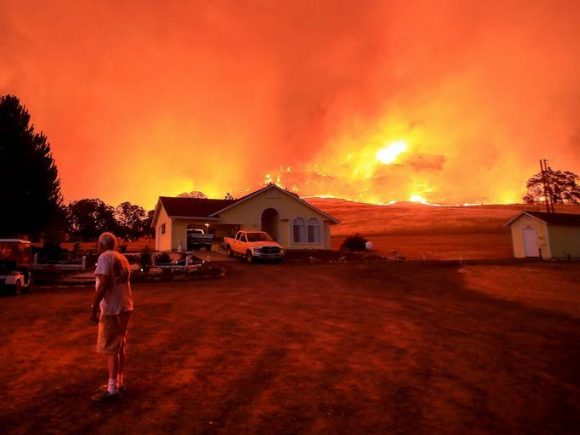
For decades, efforts to cut emissions from vehicles, factories, and power plants made steady improvements in air quality.
Many cities saw fewer smog-filled days, cleaner skies, and healthier breathing conditions. But this progress is fragile. A single severe fire season can erase years of work.
When fires rage for weeks, they release vast amounts of smoke that no air quality plan can fully prevent. Cities hundreds or even thousands of miles away from the flames often find themselves under smoky skies.
Skies turn hazy and sometimes orange, with warnings urging people to stay indoors. Hospitals see more visits for breathing trouble, while schools cancel outdoor activities.
The scale of wildfire smoke is staggering. In recent years, wildfires in one region have produced enough emissions to count for a significant share of global carbon output for the year.
This shows how interconnected the atmosphere is. What burns in one place quickly becomes the air everywhere else.
Even after the smoke clears, the effects remain. Particulate matter lingers in the air, while soot settles on ice and snow, speeding up melting.
The damage is not temporary, it reshapes both health outcomes and climate patterns. This is why one bad fire season has the power to cancel out years of progress toward cleaner air.
Rise of Fire Seasons

The link between climate change and wildfire behavior is undeniable. As global temperatures climb, wildfire seasons grow longer and more intense.
Heat dries out forests and grasslands earlier in the year, which leaves them primed for flames. Drought removes moisture from soils, while pests and diseases, also worsened by warming, weaken trees and create even more fuel.
In the western United States, wildfire seasons are now weeks longer than they were a few decades ago. Fires burn larger areas, last longer, and occur more often.
Areas that once faced occasional small fires now see massive blazes stretching across thousands of acres. In many cases, today’s wildfires burn six times as much land as those of the past, with three times as many reaching the size of major disasters.
Climate change also ensures that no region is entirely safe. While the West is most associated with wildfires, smoke has reached the Midwest and East with increasing frequency.
Long-distance transport of smoke turns wildfire pollution into a national issue, not just a regional one.
All of this creates a feedback loop. Fires release carbon dioxide and other greenhouse gases, adding to the warming that makes future fires more likely. What was once a seasonal challenge has become a defining feature of a changing climate.
Who Breathes the Dirtiest Air

Air pollution does not affect all people equally. While nearly half of Americans live in areas with unhealthy air, some groups face far greater exposure than others. Communities of color, for example, are disproportionately affected.
They are more likely to live in neighborhoods with high traffic, industrial activity, or poor air monitoring. This means they face multiple sources of pollution at once.
Data shows that people of Hispanic and Black backgrounds are far more likely to live in counties that fail in multiple categories of air quality.
They are nearly three times as likely as white populations to live in areas with the worst grades for ozone, particle pollution, or both. This creates a situation where those already vulnerable face even greater health risks.
Children, the elderly, and people with preexisting conditions also suffer more. For them, high levels of pollution are not just an inconvenience but a direct threat to survival. Asthma attacks, heart strain, and heat-related illnesses spike when the air is filled with smoke and ozone.
The unequal burden of pollution highlights the need for both stronger protections and fairer distribution of clean air resources. Everyone needs air to breathe, but not everyone gets the same quality.
Well, the air is one of our most basic needs as living organism to live. Yet, we were not able to protect it from our harmful choices. We need to act as fast as possible yet more effective than just what we did.
Sources:
Leave a Reply