


They appear motionless, perched on rocks or suspended mid-water, fascinating anyone who sees them. But behind this beauty lies a quiet imbalance that threatens entire coral reef ecosystems. They are lionfish.
Originally from the Indo-Pacific, lionfish now thrive well beyond their native range. In the tropical waters of Mayotte and other regions around the world, their spread is both silent and concerning.
Armed with venomous spines, lightning-fast reflexes, and an insatiable appetite for small reef fish, they disrupt fragile coral ecosystems. With no natural predators to keep them in check, lionfish multiply freely and reshape reef dynamics in ways that damage biodiversity and threaten the survival of native fish species.
We think we need to start talking about this animal.
The Impact of Lionfish
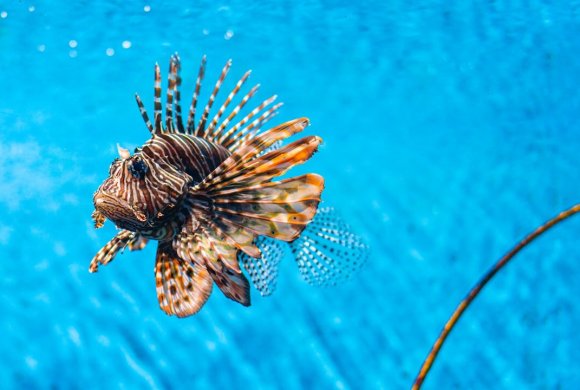
Lionfish are voracious feeders with appetites that seem almost impossible for their size. They can consume up to 90 percent of their own body weight in prey each day. To put this in perspective, imagine if a human weighing 70 kilograms ate 63 kilograms of food every single day.
That would be consuming roughly 250,000 calories per day, or more than 100 times what a normal person eats. This gives you some idea of how much lionfish eat relative to their size. They hunt small reef fish constantly, depleting populations of fish that other marine animals also depend on for food.
Their reproductive capacity is equally staggering. A single female lionfish can lay up to two million eggs per year. Most fish species produce far fewer eggs. This combination of high appetite and rapid reproduction makes the lionfish a major threat to marine biodiversity.
They eat enormous amounts while simultaneously producing millions of offspring that will also eat enormous amounts. The math quickly becomes overwhelming for reef ecosystems that evolved without this predator.
The scale of their impact is amazing. In the Atlantic Ocean, where lionfish are invasive and do not naturally belong, a single lionfish on a reef can reduce the recruitment of native fish by 79 percent within just a few weeks.
In the Bahamas, the abundance of certain native species has declined by up to 95 percent following lionfish invasions. This means that fish populations that were once thriving have been reduced to just 5 percent of their original numbers.
Mayotte
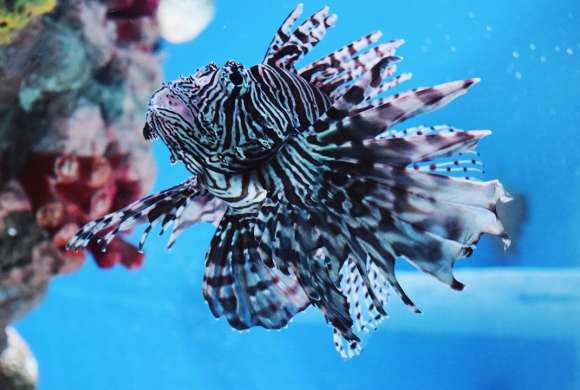
In Mayotte’s lagoon, lionfish have become far more common than before. At times they appear more numerous than species typically expected to dominate, such as anthias, which are small colorful fish that usually swarm in large schools around coral reefs. Seeing lionfish outnumber anthias is not normal.
It signals a fundamental shift in the reef ecosystem. Coral degradation and warming seas have weakened reef structures, opening the door for lionfish to assert themselves. Once rare, they are now omnipresent, haunting the cracks of dying coral.
As waters warm, lionfish gain ground. Not only do they expand their range into new areas, but reef fish that might once have limited them struggle to survive in these disturbed conditions. The weaker the ecosystem becomes, the stronger the lionfish becomes.
It is a predator perfectly suited for the Anthropocene, our current geological period where human activity has become the dominant force shaping natural systems. Climate change, ocean acidification, pollution, and biodiversity loss create disruptions in marine ecosystems.
Lionfish find fertile ground in these disruptions. In a sense, they are symbols of this new era: species that thrive opportunistically while fragile ecosystems collapse around them.
They are not inherently evil or bad. They are simply doing what evolution designed them to do: eat and reproduce. The problem is that they are doing this in ecosystems that did not evolve defenses against them.
How Lionfish Reached New Waters
Understanding how lionfish spread beyond their natural range helps explain why they have become such a problem. Once confined to the Indian and western Pacific Oceans, lionfish have colonized new regions through two main routes: the aquarium trade and maritime corridors.
In the United States, lionfish released into the wild, either accidentally or intentionally, have invaded the Caribbean and Atlantic coast. People who kept lionfish in home aquariums sometimes released them when they grew too large or became too difficult to care for.
These released fish found conditions favorable for survival and reproduction. Without natural predators, their populations exploded.
In the Mediterranean Sea, lionfish arrived from the Red Sea via the Suez Canal. The Suez Canal is a man-made waterway connecting the Mediterranean Sea to the Red Sea. It was built to allow ships to travel between Europe and Asia without sailing around Africa.
But the canal also created a highway for marine species to travel between previously separated ecosystems. Lionfish took advantage of this highway, swimming from the Red Sea into the Mediterranean. They found the warming waters of the Mediterranean increasingly suitable for establishing permanent populations in areas previously too cold for them.
Their spread has been made easier by the absence of predators and a climate increasingly favorable to tropical species. In their native Indo-Pacific range, lionfish face predators like large groupers and sharks that keep their populations in balance.
In invaded regions, local predators do not recognize lionfish as food. The venomous spines of lionfish make inexperienced predators wary. Without predation pressure, lionfish populations grow unchecked.
Living Symbols of Environmental Crisis
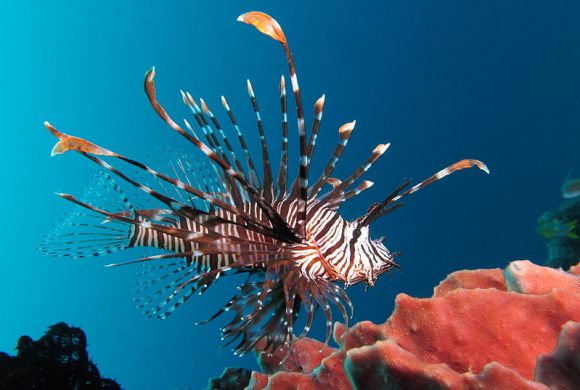
The lionfish embodies one of the ocean’s most troubling paradoxes: a creature of extraordinary beauty whose unchecked spread threatens entire ecosystems. Its presence reminds us that every imbalance we create, however discreet, can turn into a major ecological crisis.
The lionfish invasion is not just about one fish species expanding its range. It represents a broader pattern of ecological disruption driven by human activities.
Climate change creates conditions that favor invasive species. Warmer waters allow tropical species to survive in regions that were previously too cold. Pollution and overfishing weaken ecosystems, making them less resilient against invasions.
The global movement of species through trade and transportation introduces organisms to new environments where they lack natural controls. All of these factors work together to create opportunities for species like lionfish to become dominant where they once could not survive.
In some parts of the world, people have organized lionfish derbies and regulated culling to help reduce populations. Lionfish derbies are competitions where divers catch as many lionfish as possible, with prizes for the biggest catches.
Culinary initiatives have also promoted lionfish as a sustainable seafood alternative. Because lionfish populations are so high in invaded regions, eating them actually helps control their numbers.
Lionfish meat is white, flaky, and mild-tasting, similar to snapper or grouper. However, people must be trained to handle lionfish safely because their venomous spines can cause painful stings.
Sources:
Leave a Reply