


Imagine having an income of $16 million per hour. What would you do with the money? Would you party every single day or would you travel to the moon and back? Or, what if the other option is to pay for what the whole world loses every single hour because of climate change?
Yes, the world loses $16 million every single hour because of climate change, and the number keeps increasing. And the biggest problem is that the poorest countries are the ones burdened with the loss the most.
Maybe this thing is still new to many people because not so many of us have heard about the amount of loss we suffer. And yes, it is pretty surprising that such kind of research have only being conducted today.
Want to learn more about this research? Here in this article we are going to talk about it.
Future Costs

It’s estimated that by the year 2050, the global expenses related to climate change damage could range between $1.7 trillion and $3.1 trillion annually. This projection is of concern, as it underscores the financial burden that will be imposed on nations, communities, and economies around the world if significant steps are not taken to mitigate climate change and its consequences.
The lower end of this estimate, $1.7 trillion, represents a substantial and worrisome cost. This amount is equivalent to the annual GDP of a large, economically significant country. In essence, it implies that we will be spending a significant portion of the world’s economic output each year on dealing with the aftermath of climate change.
To put it into perspective, such a financial burden can disrupt economies, hinder progress, and limit resources available for other critical societal needs, such as healthcare, education, and infrastructure development.
On the higher end, $3.1 trillion signifies an even more alarming scenario. This figure surpasses the GDP of most nations on Earth, underscoring the enormity of the financial strain that climate change could exert. It would necessitate a massive redirection of resources, further exacerbating the global economic imbalance.
These costs cover not only the immediate economic impact but also the broader social and environmental consequences. It’s imperative that nations and the international community take decisive actions to curb the progression of climate change to avert these staggering financial burdens and secure a sustainable future.
Ongoing Losses

As mentioned earlier, for the last 20 years, the costs caused by these events have been incredibly high. They are like a bill of $16 million for every single hour. To make this huge number easier to understand, think about it as $384 million for a whole day or around $140 billion for a whole year.
This is more money than what many countries make. It shows that because of climate-related disasters, we are losing a lot of money. Ilan Noy, study co-author and a professor at the Victoria University of Wellington in New Zealand, said that while the number is already significant, but the actual cost may far exceed it.
“That indicates our headline number of $140bn is a significant understatement. We have no idea how many people died from heatwaves in all of sub-Saharan Africa,” Noy told The Guardian.
What’s even more concerning is that this high cost has been going on for 20 years. This is not a short-term problem that comes and goes; it’s a long-lasting issue that keeps hurting the world’s economy. These costs include many things, like dealing with disasters, taking care of people’s health, fixing broken infrastructure, and the money that is lost because people can’t work.
For your information, it’s not just about numbers! It represents real suffering and difficulties for communities dealing with the aftermath of extreme weather problems. Real people are suffering from real disasters, and we cannot just say it is just another number.
Human Impact Costs

Approximately two-thirds of these expenses are attributed to the loss of human lives, while the remaining third accounts for the destruction of property and other assets. The fact that two-thirds of the damage costs are linked to the loss of human lives is a sobering revelation.
This statistic underscores the profound human toll of climate change. Extreme weather events, driven by climate change, result in casualties, injuries, and long-term health effects. These impacts extend far beyond just economic losses, as they involve immeasurable human suffering, grief, and trauma.
It emphasizes the critical importance of protecting vulnerable populations and implementing strategies to reduce the risks associated with extreme weather events. The remaining one-third of the costs are associated with the destruction of property and other assets.
This includes damage to homes, infrastructure, businesses, and valuable possessions. It not only disrupts the lives of individuals but also has broader economic implications. Rebuilding and replacing these assets incur significant financial burdens on communities and insurance companies, which can lead to increased premiums and reduced financial stability.
Funding for Recovery
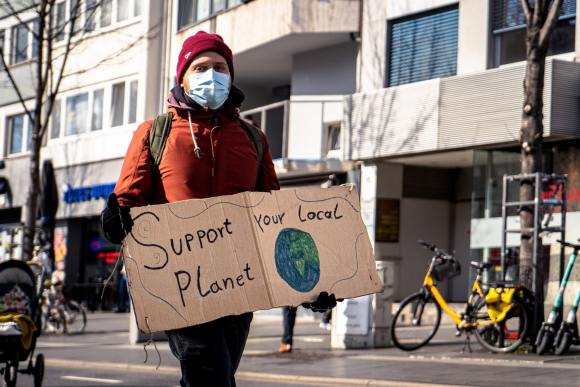
This fund’s purpose is to provide financial support for the recovery from extreme weather disasters in less economically developed countries. The establishment of a loss and damage fund reflects a commitment by the international community to assist nations that are most vulnerable to the impacts of climate change.
These countries often lack the resources and infrastructure to adequately respond to and recover from severe weather events, despite being disproportionately affected. By using the research methods and data from this study, policymakers and international organizations can calculate the necessary funding for this fund.
This involves assessing the potential financial losses that vulnerable countries could face due to climate change-related disasters. The fund’s goal is to ensure that these nations have access to the resources required for disaster recovery, rebuilding, and resilience-building efforts.
This approach not only highlights the financial aspects but also emphasizes the importance of international solidarity and cooperation in addressing the global challenges posed by climate change. If we can finally have the money but we don’t have the solidarity, things will not work out like what we intended. We need to make sure we all work together in this.
Sources:
Leave a Reply