

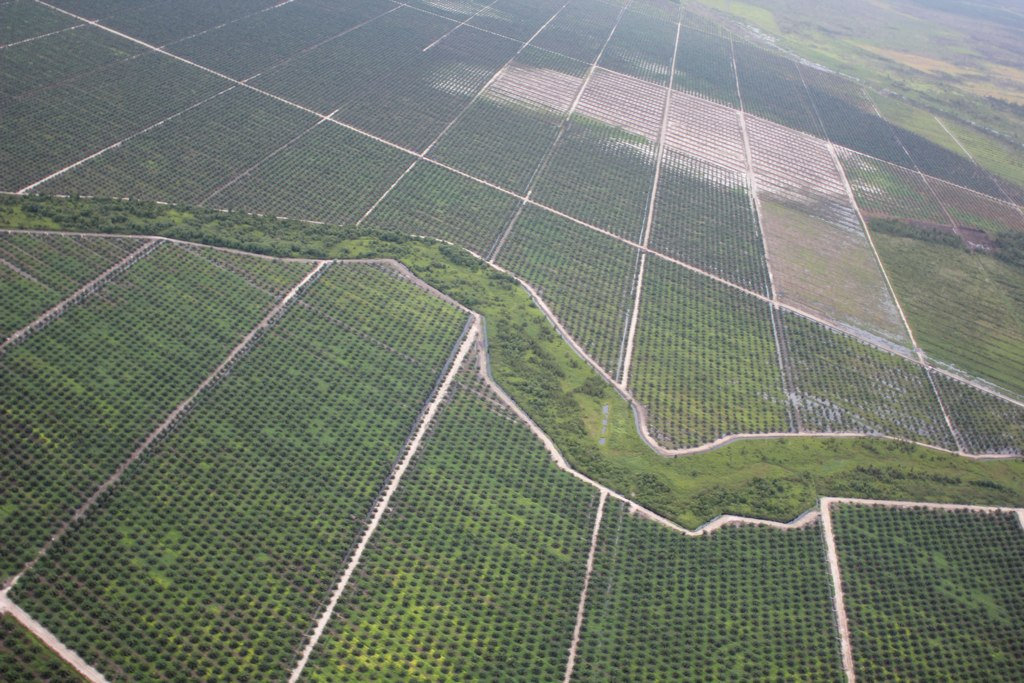
A significant case of deforestation for industrial palm oil production is occurring on a small island off the southern coast of Borneo, as revealed by satellite analysis from TheTreeMap.
This extensive deforestation, which activists claim is illegal, is taking place within a concession linked to PT Multi Sarana Agro Mandiri (MSAM), a subsidiary of the Jhonlin Group owned by the influential tycoon Haji Isam.
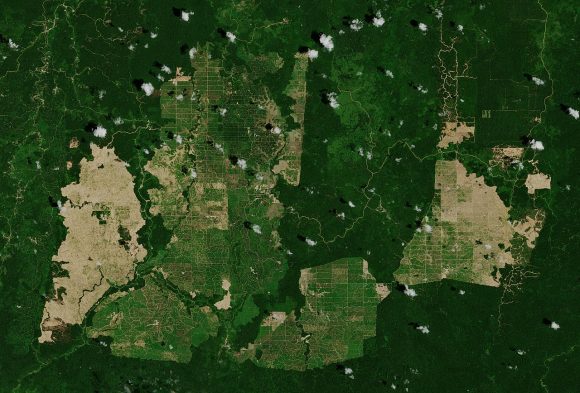
Data from TheTreeMap, available on the forest monitoring platform Nusantara Atlas, indicates that new plantations covering 15,822 hectares were established within this concession on Laut Island in South Kalimantan province during 2022 and 2023.
To accommodate these plantations, up to 10,650 hectares of forest, equivalent to one-sixth the size of Jakarta, were cleared during this period, making it the single largest site of deforestation for palm oil in Indonesia according to TheTreeMap.
Want to know more about it? Here in this article we are going to talk about it.
Laut Island and Palm Oil

Laut Island, despite its relatively small size of 202,400 hectares, which is only about three times the size of Jakarta, still retains a significant portion of forest cover. A mountain called Sebatung stands in the middle of the island and is designated as a protected forest area by the government.
This mountain plays a crucial role in the island’s water catchment areas, and extensive deforestation threatens these resources. Jefri Raharja, a campaign manager with the South Kalimantan chapter of the Indonesian Forum for the Environment (Walhi), emphasizes the high potential for environmental damage.
Especially, concerning water resources, due to the limited groundwater reserves on the island. The loss of forest cover could severely impact the island’s water supply, leading to broader ecological consequences.
There are significant questions regarding the legality of MSAM’s operations on Laut Island. A substantial portion of the concession overlaps with a logging concession held by Inhutani, a state-owned forestry company.
In September 2015, Inhutani requested MSAM to stop clearing and planting oil palms in the overlapping areas, but MSAM ignored this request and subsequently sued Inhutani over the boundaries of the concession.
The Deforestation Dispute
The court rejected MSAM’s lawsuit in June 2016. During the period between 2016 and 2017, the Jhonlin Group reportedly acquired MSAM. Under the new ownership, MSAM reached an agreement with Inhutani in June 2017 for the joint management of the overlapping area.
However, local authorities in Kotabaru were skeptical about this arrangement and sent a letter to the Ministry of Environment and Forestry questioning its legality.
The ministry confirmed that the cooperation agreement was not in line with laws and regulations, according to a 2023 report by the Indonesian NGO Sawit Watch and the Indrayana Centre for Government, Constitution, and Society (INTEGRITY).
Sawit Watch, an NGO monitoring the palm oil industry, reported that despite these issues, MSAM continued its operations. This prompted Sawit Watch to file a report with the national anti-corruption agency, the KPK, in January 2022, highlighting potential irregularities and calling for an investigation.
However, Sawit Watch did not receive any updates from the KPK, leading them to file a complaint with the KPK’s supervisory board. In January 2023, the supervisory board ruled that a KPK officer had violated the agency’s ethics code by not providing updates to Sawit Watch. Despite this ruling, no substantial updates on the investigation have been provided, leaving the issue unresolved.
Some Irregular Permits

Irregularities also surround MSAM’s permitting process. According to Achmad Surambo from Sawit Watch, MSAM did not obtain the necessary forest release decree from the Ministry of Environment and Forestry before securing a right-to-cultivate permit (HGU) from the land ministry.
This sequence is required to legally establish an oil palm plantation in a forest area. Surambo suggests that the irregular order in which these permits were obtained indicates potential corrupt practices.
Sawit Watch hopes the KPK will investigate these issues to uncover any possible corruption involved in allowing MSAM to operate an oil palm plantation inside a forest area before it was officially rezoned.
Deforestation within MSAM’s concession continues unabated, raising further questions about whether proper permits are in place. Surambo argues that the government should thoroughly evaluate MSAM’s operations, especially given the irregularities in its concession.
The government established a task force in April 2023 to audit palm oil companies, scrutinizing their permits, production, and concession sizes, among other details. Given the ongoing deforestation and questions about its legality, MSAM should be a primary target of this audit.
Surambo stresses the importance of ensuring that all palm oil operations comply with legal and environmental regulations to prevent further ecological damage.
Intimidation to Activists

Local journalist Jefri Raharja highlights a concerning pattern of persecution against individuals and journalists exposing the Jhonlin Group’s practices. In 2018, MSAM filed charges against journalist Muhammad Yusuf for his reports on the land conflict with Inhutani and allegations of bulldozing farmers’ crops.
Yusuf was arrested on charges of hate speech and defamation, under a controversial law widely used to silence critics of the government and large businesses. Tragically, Yusuf died of a heart attack after more than a month in custody. This incident raised significant concerns about the use of legal intimidation to suppress journalistic freedom and criticism of powerful entities.
Similarly, in May 2020, another local journalist, Diananta Putra Sumedi, was arrested on similar charges. Diananta had published an article quoting Indigenous Dayak villagers complaining about alleged land grabbing by Jhonlin Agro Raya (JAR), another subsidiary of the Jhonlin Group.
A source in the story later denied the quotes attributed to him, and Indonesia’s Press Council recommended the story be retracted. Despite this recommendation, the police insisted on continuing the criminal investigation.
In August 2020, a court convicted Diananta of hate speech and sentenced him to three and a half months in prison. These incidents illustrate a troubling pattern of legal action and intimidation against those who attempt to expose or criticize the activities of the Jhonlin Group, making it difficult for journalists and activists to hold such powerful entities accountable.
Why This Palm Oil is Shady
The ongoing deforestation on Laut Island and the associated legal and environmental issues underscore the complexities and challenges in the palm oil industry in Indonesia.
The case of MSAM and the Jhonlin Group highlights the potential for significant environmental damage, legal irregularities, and the persecution of those trying to hold powerful entities accountable.
As deforestation continues, the need for strict enforcement of environmental regulations, protection for whistleblowers, and transparency in the permitting process becomes ever more critical. The government and relevant authorities must ensure that all palm oil operations adhere to legal and environmental standards to protect Indonesia’s forests and the communities that depend on them.
Sources:
Leave a Reply