

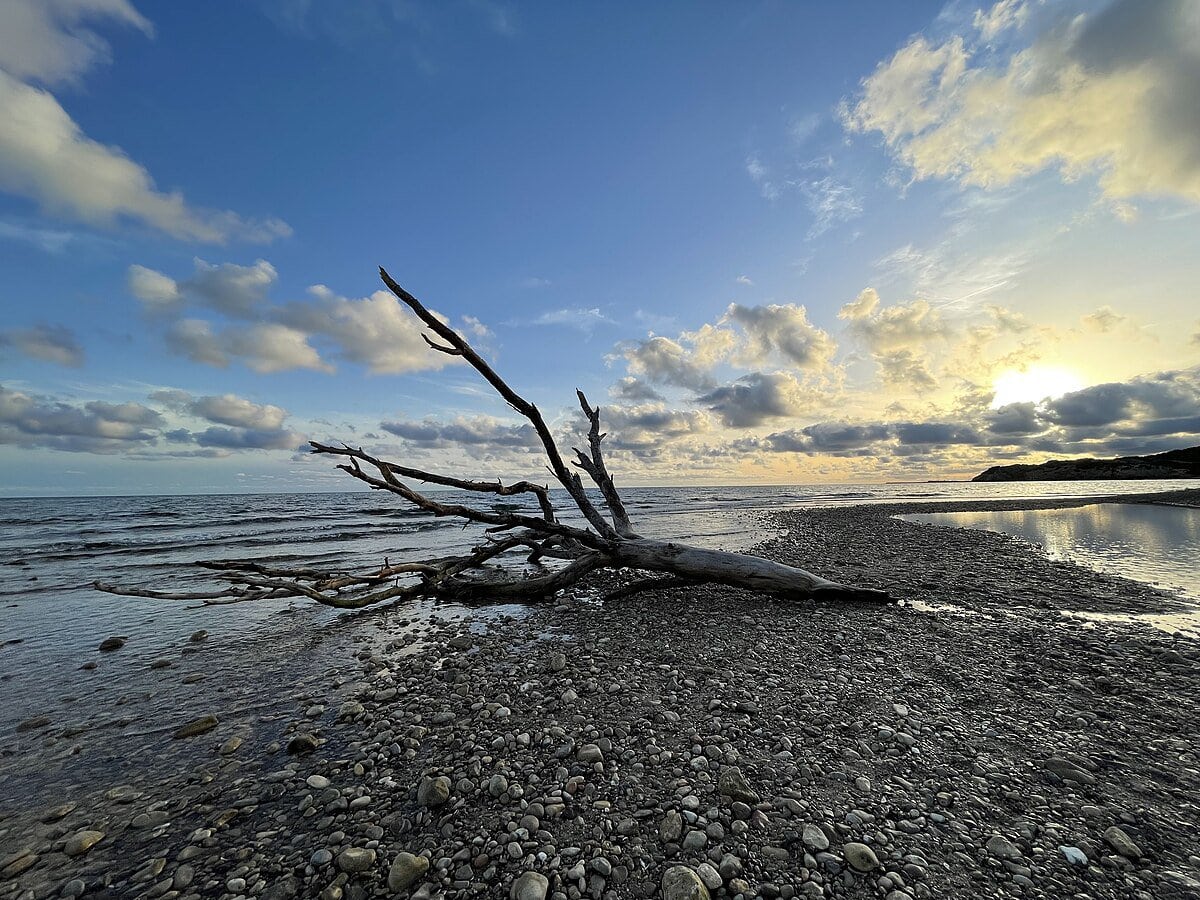
When a tree falls, its story does not always end where it grew. Some trunks remain on the forest floor to decompose, but others begin a new journey, carried by rivers, tossed into lakes, or swept far out into the sea.
These traveling trees become driftwood, shaped by water, sun, and salt until they emerge as smooth, weathered sculptures. Driftwood is more than decoration along a shoreline. It slows rivers, stabilizes beaches, shelters countless species, and provides material for human use.
At the same time, its shapes and textures tell a story of resilience and connection between forests and oceans. So, want to talk more about it? Here we go.
Natural Engineering at the Water’s Edge

Driftwood acts as a powerful force in reshaping ecosystems. When trees fall into rivers, their trunks slow the flow of water. This interruption helps streams hold nutrients, which benefits fish, plants, and the microscopic life at the bottom of the food chain.
Over time, clusters of fallen trees, often called logjams, change the direction of water, shape riverbanks, and trap sediment. These natural dams create pockets of slow-moving water that allow fish to rest and breed while insects colonize the sheltered areas.
One of the most famous logjams in history, known as the Great Raft, stretched across nearly 160 miles of Louisiana’s Red and Atchafalaya Rivers. It likely took more than a thousand years to form, and it dramatically altered the surrounding landscape, creating new lakes and wetlands.
Even though it was dismantled in the 1800s to clear shipping routes, it showed how driftwood can persist for centuries and play a defining role in shaping entire regions. At coastlines, driftwood continues its work.
Where rivers meet oceans, trunks and branches wash up at deltas and beaches. There they stabilize loose sand, help dunes build, and provide cover for wildlife. On bare beaches with no trees, driftwood creates shade and blocks harsh winds, giving native plants the chance to take root.
As a result, entire habitats can form where none existed before. Driftwood is not just washed-up debris, it is a natural engineer that strengthens ecosystems at every stage of its journey.
A Habitat in Motion
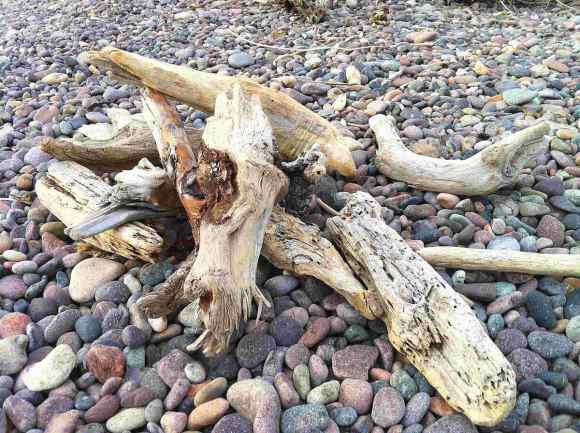
Long before driftwood reaches a shoreline, it often becomes a floating ecosystem. Large logs can drift in saltwater for months, traveling hundreds of miles. While adrift, they provide rare patches of shelter in the open ocean.
Some insects, such as sea skaters, lay their eggs only on floating wood. Tiny creatures like gribbles and shipworms burrow into the wood, beginning the slow process of breaking it down.
As the wood softens, it becomes home to worms, shrimp, and mollusks. More than 130 species of fish and invertebrates are known to use floating wood as shelter or food. Eventually, when the wood grows waterlogged, it sinks to the ocean floor.
These “wood falls” create deep-sea oases, feeding entire communities that might otherwise lack resources. A group of clams called Xylophaga specialize in digesting the submerged wood, turning it into waste that nourishes other species.
Sometimes driftwood washes ashore carrying passengers. In 2016, a massive tree trunk washed up in New Zealand, covered in gooseneck barnacles. People traveled to see it, amazed at the marine life clinging to its surface. Events like this remind us how driftwood links forests, oceans, and coastlines into one connected system.
A Tool and Treasure for Coastal Communities
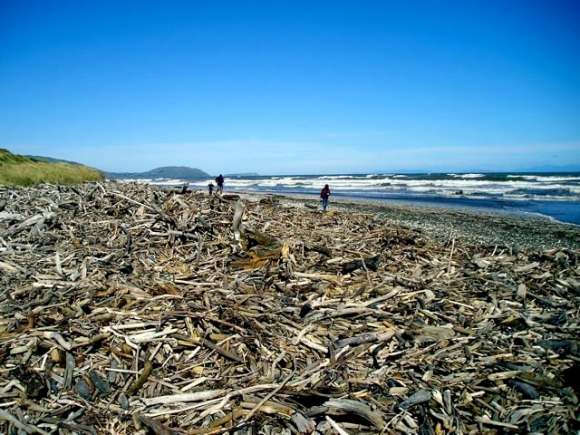
For humans, driftwood has long been more than a curiosity. In places where trees are scarce, it provided vital material. Indigenous communities in the Arctic used driftwood to build sleds, shelters, and boats.
Traditional kayaks and umiaks were framed from driftwood and then covered in animal skins, making sea travel possible in treeless regions. In temperate and tropical areas, driftwood has been used for fuel, tools, and construction.
Because it is already dried and seasoned by the sea, it burns well for cooking. Some coastal groups rely on driftwood as a sustainable alternative to cutting live trees. After severe flooding in the Philippines, where deforestation had weakened hillsides, locals began turning driftwood into charcoal. By doing so, they reduced pressure on forests already struggling to recover.
Even today, driftwood inspires creativity and resourcefulness. Beachgoers use it to build shelters, sculptures, and fires. Artists turn it into furniture, carvings, or wall art.
Its natural forms, created without tools, often spark designs that people would struggle to imagine on their own. For coastal communities, driftwood is not waste but a renewable gift shaped by the sea.
Aesthetic Legacy of the Journey
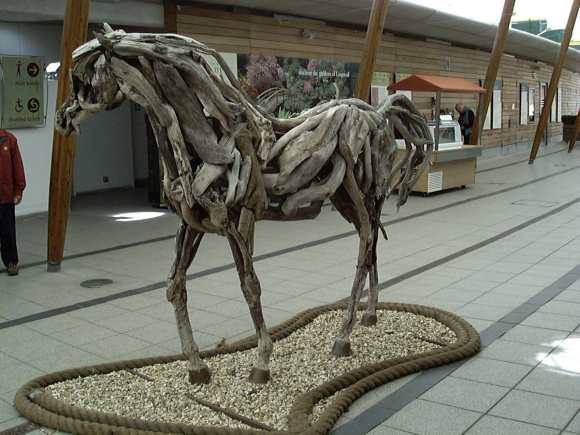
Driftwood’s beauty lies in the record of its travels. Polished by waves, etched by wind, and bleached by sun, each piece carries a unique pattern. Some are smooth and pale, while others are dark and twisted.
The swirls and grooves reflect the species of tree, the strength of the currents, and the creatures that lived inside it. What begins as rough bark becomes flowing lines and textures that resemble natural sculptures.
These patterns are not only pleasing to look at but also serve as records of natural forces. Shipworms leave trails of tunnels. Barnacles form clusters of shells. Cracks and hollows tell of drying in the sun. Each mark is evidence of interaction between wood, water, and living organisms.
In Oregon’s New River region, driftwood logs sometimes support patches of vegetation, turning them into floating gardens on the beach. In Florida, salt and sun leave behind sharp color contrasts, making some driftwood appear almost painted.
Decorators and collectors value these pieces, but their ecological role is often more important than their aesthetic appeal. Leaving driftwood in place helps stabilize beaches. Logs act as barriers against wind and waves, reducing erosion.
They also create shade and cooler microclimates where seedlings can grow. Driftwood often carries seeds and organic material from inland forests, spreading nutrients to coastal dunes. In this way, a single log becomes a bridge between different ecosystems, continuing to support life long after its roots were severed.
Sources:
Leave a Reply