


Have you ever wondered how your food reaches your plate? It’s a long journey, hinging on the efficiency and sustainability of modern agriculture. But what does sustainable agriculture really mean?
In simple terms, it’s the method of producing food in an eco-friendly, responsible way. This method preserves our environment and nourishes the communities it serves. It’s about balancing our present needs with those of future generations.
Now, envision a farmer leveraging advanced tools like automated irrigation systems or drones for crop monitoring. Such modern farming equipment can significantly enhance the efficiency and effectiveness of sustainable agriculture practices. Want to learn how? Let’s delve into this fascinating topic.
The Evolution Of Farming Equipment
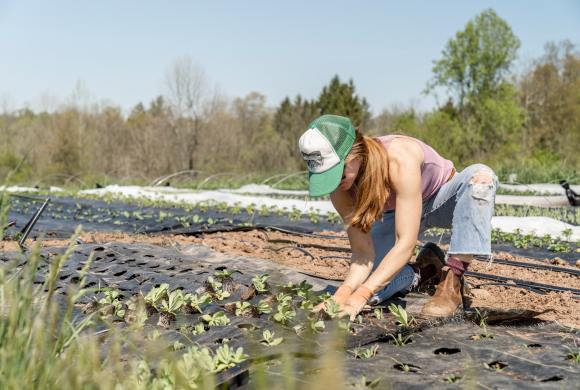
Agriculture has witnessed a tremendous transformation from ancient to modern times. It’s fascinating how technology has reshaped farming. Let’s unpack the evolution of these farming tools, which unfolded as follows:
- Traditional Farming Tools: Once, farming meant manual labor with rudimentary tools. These involved significant effort and offered limited efficiency.
- Introduction Of Machinery: The Industrial Revolution introduced tractors and mechanical harvesters, enhancing productivity and reducing labor.
- Digital Revolution In Agriculture: Today’s smart farming deploys technologies such as global positioning systems (GPS), robotics, biotech, and IoT, elevating farming to new heights.
From manual labor to the use of advanced technologies, farming has come a long way. Now, let’s explore how these modern tools are being utilized in the context of sustainable agriculture.
The Role Of Modern Farming Equipment In Sustainable Agriculture

As we grapple with the urgent need to protect our planet, sustainable agriculture has emerged as an indispensable ally. It’s not just about food production anymore; it’s about protecting our ecosystem while doing so.
Modern farming equipment, which can be easily accessed through farm clearing sales online, is making this possible through the following:
- Precision Agriculture: GPS and remote sensing technologies are a game-changer. For instance, they enable farmers to create yield maps, identifying which parts of the farm produce more or less. This way, they can accurately apply water, fertilizers, and pesticides only where needed, reducing waste and environmental harm.
- Automation And Robotics: Automation and robotic technologies are revolutionizing farming by performing time-consuming tasks with greater speed and accuracy. For instance, automated harvesters can work around the clock, enhancing productivity while minimizing waste. Robots, on the other hand, can perform tasks like weeding, planting, and harvesting, reducing the need for harmful pesticides and enhancing crop health.
- IoT-Based Technologies: Internet of Things (IoT) technologies, including smart sensors and AI-powered analytic platforms, provide real-time monitoring of crop and livestock health, environmental conditions, and equipment performance. This data-driven approach allows farmers to make informed decisions, promoting efficient use of resources and reducing the environmental impact.
- Biotech Equipment: Biotech tools like in vitro cell culture systems and lab-on-a-chip devices contribute significantly to sustainable agriculture. These tools can propagate disease-free plant tissues and allow for rapid disease and pesticide residue detection. Without resorting to genetic modification, these advances improve plant health, ensure food safety, and boost overall agricultural productivity.
- Vertical Farming Infrastructure: Vertical farming, facilitated by modern equipment such as hydroponic systems and light emitting diode (LED) lights, allows for year-round crop production in controlled environments. This method significantly reduces the amount of land, water, and transport energy needed, contributing greatly to sustainable agriculture by lowering the overall carbon footprint.
With the use of these advanced tools and technologies, farming is evolving to become smarter and more sustainable. We’ve now seen how they’re revolutionizing sustainable agriculture. Next, let’s see the ripple effects of these benefits across our food system and the environment.
Benefits Of Modern Farming Equipment In Sustainable Agriculture

Today’s innovative farming equipment is doing more than making the farmer’s job easier. It’s also helping us create a more sustainable world. Let’s see how:
- Crop Productivity And Quality Enhancement
Modern farming tools are amplifying crop yields while enhancing their quality. GPS-guided tractors, for instance, are equipped with technology that ensures seeds are planted at the perfect depth and distance.
This precision improves germination and growth rates. Moreover, yield monitors attached to harvesters collect data on crop yield across different parts of the field, which can guide future planting strategies for better productivity.
- Conservation Of Resources
Through precision farming, resources such as water, energy, and chemicals are used judiciously.
Consider drones, for example. They can map an entire field, identifying areas of pest infestation or disease. Then, they accurately spray pesticides or other treatments only on affected areas, minimizing waste and protecting the surrounding ecosystem.
This targeted application of inputs not only reduces environmental harm but also saves costs.
- Preservation Of Soil Health
Modern farming equipment also plays a significant role in preserving soil health. Consider the no-till seed drill, a machine that plants seeds without requiring prior tilling of the soil.
By avoiding tilling, we prevent soil compaction and erosion, helping maintain soil structure and fertility. This not only preserves the soil for future crops but also aids in carbon sequestration, playing a role in mitigating climate change.
- Promotion Of Animal Welfare
Farm equipment is also improving animal farming. Consider precision livestock farming, where technologies like infrared thermography and accelerometers are used.
These technologies can monitor physiological signs such as body temperature and behavioral patterns like eating, resting, and movement in livestock. This real-time monitoring allows farmers to provide immediate care when needed, preventing disease spread, improving overall herd health, and enhancing animal welfare.
Precision livestock farming helps to ensure that the animals are not just well-fed but also well-cared for and healthy, making it an essential component of sustainable animal farming.
The advent of modern farming equipment has revolutionized the agricultural sector, paving the way for sustainable practices that enhance crop productivity and quality, conserve resources, preserve soil health, and promote animal welfare. However, as we enjoy these benefits, it’s also crucial to acknowledge and address the accompanying obstacles and potential for growth.
Challenges And Opportunities
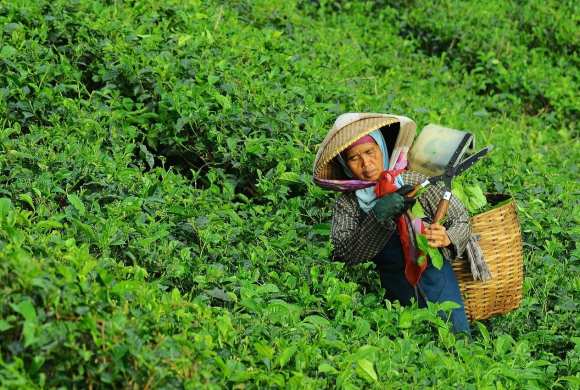
While the benefits of modern farming equipment are numerous, challenges exist. High costs, access to technology, and knowledge gaps can hinder adoption, especially in developing countries. We must address these issues to fully embrace the advantages of these technologies.
While these challenges are significant, they’re not insurmountable. In fact, they present opportunities for further innovation and development in the field of sustainable agriculture. For instance, continuing research and development can bring down costs, making these tools more accessible. Training programs can equip farmers with the necessary skills, narrowing the knowledge gap.
Innovation in farming equipment opens up possibilities for sustainable agriculture like never before. As we learn to overcome the challenges, we pave the way for a greener and more prosperous future.
Final Thoughts

Embracing sustainable practices in agriculture is not just an ideal; it’s a necessity. Modern farming equipment, with its myriad applications, is at the forefront of this change, sparking a revolution that blends technology with the timeless art of cultivation. It highlights human ingenuity, turning the challenges of today into solutions for a greener tomorrow.
In this shared journey towards a sustainable future, every seed sown matters, every drop of water conserved counts, and every farmer empowered makes a difference. It’s a journey of coexistence, where nature thrives and nourishes, communities prosper, and we pass on a thriving planet to future generations. Through this lens, the promise of sustainable agriculture is more than a promise for food security; it’s a promise for life itself.
Leave a Reply