


For a long time, plastic in the ocean was treated as a symbol of damage, something ugly, lifeless, and clearly out of place. We pictured bottles floating alone, nets sinking slowly, fragments breaking into smaller pieces.
But the story has become more complicated. Scientists are now finding that plastic debris is not just moving through marine ecosystems. It is actively reshaping them. Across the open ocean, far from any coastline, plastic waste is turning into floating habitat.
Species once tied to shorelines are surviving, growing, and even reproducing on drifting debris. This discovery forces us to rethink what pollution really means when it begins to support life, while quietly changing the rules that have governed the ocean for millions of years.
This is quite saddening to hear this news. And worse some people still don’t understand it. So, let’s talk about it.
Plastic Rafts
The open ocean was never meant to host coastal life. Most species that live attached to rocks, docks, or reefs need solid surfaces and steady conditions. Historically, the deep ocean offered neither. Floating wood or seaweed appeared only briefly and rarely lasted long enough to support complex communities. Plastic changed that balance.
Unlike natural materials, plastic does not rot or sink easily. A crate, buoy, or fragment of packaging can float for years, carried by currents across entire ocean basins. Scientists now call the communities that grow on this debris “neopelagic communities,” meaning new open-ocean ecosystems that did not exist before.
Research in the North Pacific Subtropical Gyre, part of the region often called the Great Pacific Garbage Patch, revealed something striking. More than 70 percent of the plastic pieces examined carried living coastal species.
Barnacles, hydroids, mollusks, and other invertebrates were not just present, they were thriving. In fact, researchers found more coastal species on the debris than species normally adapted to life in the open ocean.
Even more surprising, many of these organisms were reproducing. This means they are not just surviving short trips but living full life cycles far from land. Plastic has become a stable, long-term platform, offering attachment, shelter, and access to food in places where these species could never persist before.
What looks like adaptation, however, is deeply tied to pollution. These communities exist only because plastic waste is now widespread and permanent in the ocean.
Breaking Natural Barriers
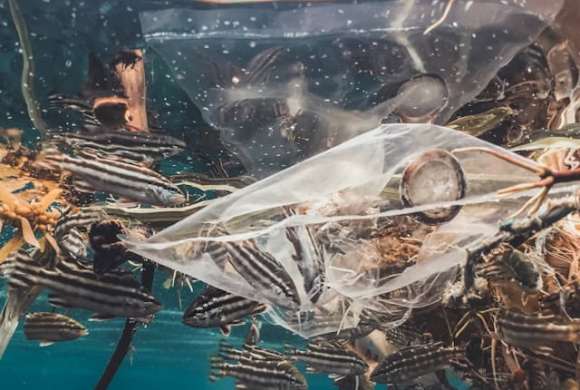
One of the ocean’s strongest protections has always been distance. Islands and coastlines developed unique ecosystems partly because they were isolated. Species could not easily cross thousands of kilometers of open water. Plastic rafts are quietly removing that protection.
When organisms attach themselves to plastic debris, they gain free passage across oceans. A coastal species from Asia can drift toward North America. A species from continental shores can reach remote islands like Hawai‘i. This creates a new and powerful pathway for invasive species.
Scientists studying debris near the Hawaiian Islands have raised serious concerns. Hawai‘i’s ecosystems evolved with limited outside contact, protected by vast distances of open ocean. Now, debris breaking off from the Great Pacific Garbage Patch regularly washes ashore, carrying living organisms with it. These arrivals are not random accidents; they are part of a steady, ongoing flow.
Invasive species can disrupt food webs, compete with native organisms, and introduce diseases. Even small invertebrates can trigger large changes once they establish themselves. What makes plastic rafting especially risky is that it is uncontrolled. Unlike shipping routes or aquaculture, there are no regulations, inspections, or barriers.
The boundaries between marine ecosystems, shaped over millions of years, are being redrawn in a matter of decades. And the driver of this change is not climate or geology, but discarded human waste.
“Plastisphere”
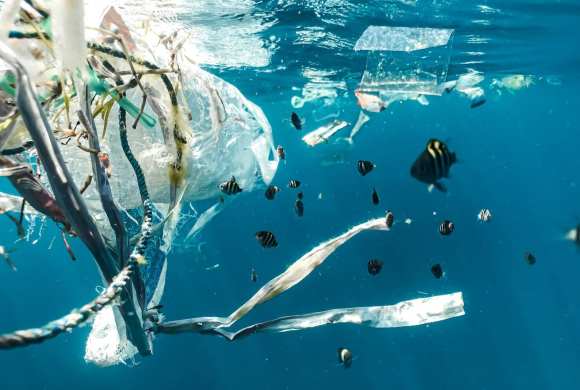
These floating communities are often described as part of the “plastisphere,” a term that captures both their biological richness and their artificial foundation. Plastic provides a surface, but it also brings problems that natural habitats never carried.
As plastic breaks down, it releases microplastics and chemical additives into the surrounding water. Organisms living directly on plastic are exposed to higher concentrations of these particles. Microplastics can enter tissues, interfere with feeding, and move up the food chain when predators consume contaminated prey.
Plastic debris can also transport pathogens. Bacteria and other microorganisms attach easily to plastic surfaces, forming biofilms. Some of these microbes may be harmless, but others could pose risks to marine life when introduced into new environments.
There is also the question of balance. While these plastic-based communities support life, they may destabilize existing ecosystems. Coastal species interacting with open-ocean species create combinations that have no historical precedent. We do not yet understand how these interactions will play out over time.
What is clear is that plastic rafts are not neutral. They are not simply floating islands of life. They are complex systems that mix habitat creation with pollution, mobility with risk, and survival with long-term uncertainty.
Living With the Ocean

The discovery of thriving life on plastic debris challenges simple ideas about environmental harm. Damage does not always erase life. Sometimes it rearranges it. But adaptation should not be confused with success.
These new ecosystems exist because plastic pollution is widespread, persistent, and growing. Every floating community represents a failure in how we produce, use, and dispose of materials. The fact that life finds a way does not make the situation acceptable or safe.
Cleaning up plastic, improving waste management, and reducing single-use materials remain essential. Efforts like removing debris from gyres and stopping plastic from entering rivers can limit future damage. But millions of plastic rafts already drift through the ocean, and they will continue to influence marine life for decades.
The ocean we are shaping now will not return easily to its previous state. Species distributions are changing. Ecological barriers are weakening. New relationships are forming in places where none existed before.
Plastic has become more than pollution. It has become infrastructure, unplanned, unmanaged, and deeply disruptive. The challenge ahead is deciding whether we accept this altered ocean as normal, or whether we take responsibility for reversing a system that turned waste into habitat. The answer will shape marine life long after the plastic itself has faded from view.
Sources:
Leave a Reply