


In an era where climate change and environmental degradation are at the forefront of global concerns, integrating sustainability into all facets of development is no longer a luxury but a necessity.
The construction and real estate sectors, particularly, are responsible for mitigating their environmental impact, given their substantial contribution to carbon emissions and resource consumption.
As such, eco-wise development emerges as a critical approach, emphasizing the need for environmentally friendly practices that ensure the longevity and resilience of building projects.
At the heart of this approach is considering natural hazards, among which flooding stands out due to its increasing frequency and severity in the wake of climate change.
Understanding the Imperative of Flood Risk Assessment

A flood risk assessment plays a pivotal role in the planning and executing of sustainable building projects.
This analytical process involves evaluating the potential for flooding in a particular area and its likely impact on proposed developments.
By incorporating this assessment at an early stage, developers can design structures that are resilient to flooding and contribute to the broader objective of sustainable development.
This strategic alignment with eco-wise principles ensures that the built environment harmonizes with its natural surroundings, reducing the risk of adverse impacts on the project and the ecosystem.
The Science Behind Flood Risk Assessments
The methodology of flood risk assessment encompasses a comprehensive analysis of historical climate data, hydrological and hydraulic models, and topographical surveys.
This multidisciplinary approach enables the accurate mapping of flood plains and the identification of areas at high risk.
Additionally, it provides insights into the frequency, depth, and velocity of potential flooding, informing the strategic placement of buildings, infrastructure, and landscaping to minimize exposure to flood hazards.
Climate Change and Its Impact on Flooding
Climate change exacerbates the challenges of managing flood risk in sustainable building projects.
Rising sea levels, increased rainfall intensity, and the alteration of weather patterns contribute to the unpredictability and severity of flooding events.
Consequently, flood risk assessments must incorporate climate projections to account for future changes in flood risk.
This forward-looking perspective ensures that developments are prepared for current conditions and the evolving climate landscape.
Integrating Flood Risk Assessment with Sustainable Design
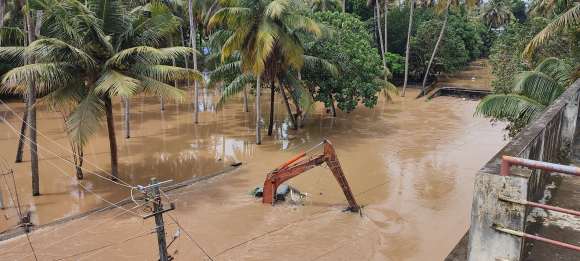
Sustainable design principles are inherently aligned with the objectives of flood risk mitigation.
Key strategies include using permeable surfaces to enhance water absorption, preserving natural waterways to facilitate drainage, and elevating critical infrastructure to prevent water drainage.
Additionally, incorporating green spaces and wetlands can serve as natural buffers, absorbing excess water during floods and reducing runoff.
By integrating these design elements, developers can create aesthetically pleasing and functionally resilient projects.
The Role of Policy and Regulation
Government policies and regulations play a crucial role in encouraging the integration of flood risk assessments into sustainable building projects.
By setting standards and requirements for flood risk management, authorities can ensure that developments are designed with resilience in mind.
This regulatory framework often includes guidelines for site selection, design criteria for flood-prone areas, and mandates for using sustainable materials and practices.
Compliance with these regulations mitigates the risk of flooding and promotes environmental stewardship and community well-being.
Economic Considerations and Benefits
While incorporating flood risk assessment and sustainable design principles may entail higher upfront costs, the long-term economic benefits are significant.
Reduced risk of flood damage translates into lower insurance premiums, decreased maintenance costs, and enhanced property values.
Moreover, sustainable development often qualifies for tax incentives, grants, and other financial benefits, offsetting initial expenses.
Beyond the financial aspect, these practices contribute to creating resilient communities capable of withstanding the impacts of climate change and natural disasters.
Community Engagement and Education

The success of eco-wise development projects relies not only on technical solutions but also on the active engagement of the community.
Public awareness and education on the risks of flooding and the importance of sustainable development can foster a culture of resilience.
Community involvement in planning and decision-making processes ensures that local knowledge and needs are incorporated, resulting in projects that are more likely to achieve widespread acceptance and success.
Lessons from Around the Globe
Examining case studies of successful eco-wise development projects provides valuable insights into best practices and innovative approaches to flood risk management.
For instance, projects that have integrated natural flood mitigation strategies, such as the restoration of wetlands and the creation of urban green spaces, demonstrate the potential for synergistic benefits.
These examples highlight the importance of a holistic approach, combining technical expertise with community engagement and policy support to achieve sustainable outcomes.
Technological Advances in Flood Risk Assessment
Advancements in technology are revolutionizing the field of flood risk assessment, offering new tools and methods to improve accuracy and efficiency.
Remote sensing, geographic information systems (GIS), and computer modeling have enhanced the capability to predict flood behavior, assess risks, and plan mitigation strategies.
These technological innovations facilitate a more proactive and data-driven approach to sustainable building design, enabling developers to anticipate and address potential challenges more effectively.
Adaptive Strategies for Changing Environments

In the context of flood risk assessment, adaptive strategies play a pivotal role in ensuring long-term resilience.
These strategies are designed to evolve in response to changing environmental conditions, allowing for flexibility in the face of uncertainty.
Adaptive building designs, such as modular and floating structures, exemplify this approach by providing innovative solutions that can withstand varying flood levels.
Moreover, adaptive landscaping techniques, including bio-retention systems and adaptive flood plains, further enhance the capacity of developments to cope with water-related challenges.
Balancing Economic Growth and Environment Protection
A critical aspect of eco-wise development involves balancing economic growth with the imperative to protect and restore the environment.
This balance is achieved through the careful selection of development sites, the minimization of ecological footprints, and the incorporation of ecosystem services into project planning.
For instance, the economic valuation of natural flood mitigation services, such as wetlands and forests, underscores their importance for flood risk management, biodiversity conservation, and carbon sequestration.
Final Thoughts

Integrating flood risk assessment into the planning and development of sustainable building projects represents a critical step towards achieving resilience in climate change.
By adopting eco-wise development principles, the construction industry can contribute to creating a built environment that is not only environmentally sustainable but capable of withstanding the challenges posed by natural hazards.
Through collaborative efforts encompassing government, industry, and community stakeholders, it is possible to forge a path towards a more sustainable and resilient future.
Leave a Reply