


We will talk about a ghost. Yes, you didn’t read it wrong, a ghost. Not the one that’s a ghoul, but a ghost that kills a lot of fish. we have talked about it, and the name is ghost net.
Imagine fishing nets drifting endlessly through the ocean, trapping and killing marine life long after they have been abandoned. This is not a horror movie plot. This is reality in Sri Lankan waters. That’s ghost net.
Ghost nets are fishing gear that have been lost, abandoned, or discarded into the sea. Unlike regular fishing nets that fishermen actively control, these ghost nets drift with ocean currents for years, silently entrapping sea turtles, dolphins, fish, and seabirds.
We have talked about it, but we think that we need to talk about it once again because the seriousness of the problem nowadays. Here we will take an example in Sri Lanka.
The Research

A research center in southern Sri Lanka reports finding at least 30 sea turtles entangled in ghost nets along their stretch of beach every year. Scientists call ghost nets “floating cemeteries” because of the chain reactions they trigger.
Small fish caught in the nets attract larger predators like turtles and dolphins, which then become entangled themselves. The problem is staggering. A 2023 pilot study estimated that Sri Lankan fishing vessels alone lost nearly 22,600 kilograms of plastic fishing gear annually.
And researchers believe the actual figure is significantly higher. What makes this crisis even more complex is that ghost nets are a transboundary problem. Fishing gear abandoned in one country’s waters drifts into another’s which creates a regional marine conservation challenge that affects entire ocean ecosystems.
Research from the Indian Ocean tells a sobering story. A 2019 study focusing on the Maldives documented 752 ghost nets that had directly entangled 131 turtles over a 51-month period. However, researchers estimated that these same ghost nets could have ensnared between 3,400 and 12,200 turtles across the entire Indian Ocean region before detection.
This extrapolation reveals the true hidden cost of ghost fishing. For every turtle found entangled, countless others perish unseen in the deep ocean, affecting the genetic diversity and population stability of sea turtle species throughout the Indian Ocean.
The Scale of the Crisis

The magnitude of the ghost net problem in Sri Lanka extends far beyond what most people realize. Thushan Kapurusinghe, project lead of the Turtle Conservation Project of Sri Lanka, emphasized that these lost fishing gears kill scores of marine species, representing a specific threat to marine turtles.
The problem manifests visibly along Sri Lankan coastlines. A survey of 22 beaches revealed that fishing gear constituted 20 percent of total marine debris, indicating that ghost nets are not an isolated incident but a widespread environmental crisis affecting coastal ecosystems.
Charith Dilshan, project manager of the Galbokka Sea Turtle Conservation and Research Center in Kosgoda, southern Sri Lanka, documented concrete evidence of the damage. At their facility alone, they find at least 30 turtles entangled in ghost nets annually along their designated coastal stretch.
These are only the turtles that reach the shore or are rescued by conservation efforts. The actual number of turtles perishing in ghost nets throughout Sri Lankan waters is substantially higher, representing an invisible mortality rate that affects sea turtle populations across the region.
The scope of the problem becomes even more apparent when considering the regional context.
Floating Cemeteries

Ghost nets deserve their ominous nickname because they create cascading ecological disasters within marine ecosystems. When fishing gear drifts through the ocean, it indiscriminately traps whatever crosses its path.
Small fish become the initial victims. Their bodies and movements attract larger predators including sea turtles and dolphins. These predators, drawn toward what appears to be an easy meal, approach the drifting net and become entangled themselves.
This chain reaction creates ecological traps where larger, more valuable species are systematically removed from the ecosystem.
The entanglement itself is lethal to marine organisms. Sea turtles and marine mammals caught in ghost nets cannot escape to reach the surface for breathing. Entangled animals cannot move freely, leading to drowning within minutes to hours depending on the species.
Beyond drowning, entanglement causes injuries from nets cutting into flesh, resulting in infections, tissue necrosis, and chronic wounds that affect animal survival rates even after entanglement removal.
For sea turtles specifically, entanglement disrupts critical life processes. Turtles prevented from reaching nesting beaches cannot reproduce, removing reproductive potential from populations. Entanglement near feeding grounds prevents turtles from accessing essential food sources, which affects their nutritional status and reproductive success.
Beyond turtles, ghost nets impact entire marine communities. Dolphins caught in nets suffocate rapidly. Seabirds become trapped while diving for fish, disrupting their foraging behavior and population dynamics.
Ghost Marine Problem
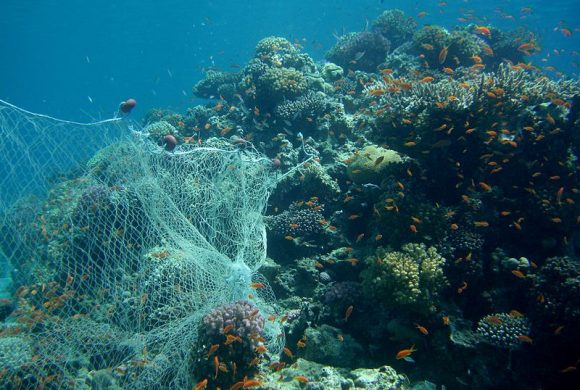
Fishing gear lost or abandoned in one nation’s exclusive economic zone drifts across boundaries, accumulating in neighboring countries’ waters. This transnational circulation means that marine pollution originating from one region affects ecosystems and wildlife populations across vast ocean distances.
The 2019 Maldives study exemplifies this transboundary characteristic. Ghost nets detected in Maldivian waters originated from multiple sources and regions.
Ocean current patterns moved these nets across international boundaries, making them problems for nations that did not produce the gear. This creates a cascade of marine impacts across the Indian Ocean, where ghost nets from multiple fishing nations accumulate in certain regions.
The implications for migratory marine species are particularly significant. Many sea turtle species migrate across thousands of kilometers during their life cycles, traveling between nesting sites, feeding grounds, and overwintering areas across multiple nations’ waters.
A turtle entangled in a ghost net encountered during migration cannot reach critical nesting sites, potentially preventing reproduction across multiple years. Transboundary ghost nets therefore disrupt migration corridors essential for species reproduction and population maintenance across the Indian Ocean basin.
In Total
While ghost nets in Sri Lankan waters originate from multiple sources, Sri Lanka itself contributes significantly to the regional problem. A pilot study published in 2023 surveyed 325 fishing vessels and discovered they lost approximately 22,600 kilograms of plastic fishing gear annually.
Since Sri Lanka maintains more than 50,000 registered fishing vessels, researchers estimate the actual annual loss is substantially higher, potentially hundreds of thousands of kilograms entering the marine environment each year.
Gayathri Lokuge of the Centre for Poverty Analysis identified specific patterns in gear loss. Gill nets represented the most frequently lost fishing equipment, followed by lines and hooks. These gear types are particularly problematic because gill nets entangle prey through gill slits, and lines with hooks create continuous entanglement hazards as they drift.
Interviews with fishers revealed that poor weather conditions and adverse ocean states cause most net loss. During storms or rough seas, fishing gear breaks loose from vessels despite fishers’ efforts to secure equipment.
This means the ghost net crisis is not primarily driven by intentional abandonment but by the inherent risks of ocean fishing operations combined with environmental conditions.
However, systemic factors also contribute. Poor port waste management infrastructure means abandoned or damaged nets are often discarded into marine environments rather than processed on shore.
Limited recycling infrastructure within Sri Lanka creates conditions where disposing of used fishing gear at sea becomes more economically feasible than proper waste management. This infrastructure deficit transforms a manageable waste problem into an ongoing source of marine pollution.
Sources:
Leave a Reply