


Every year on World Lemur Day, attention briefly turns to one of the most extraordinary groups of animals on Earth. Lemurs exist nowhere else but Madagascar and a few nearby islands, yet they represent one of the planet’s most threatened branches of the mammal family tree.
Often described as curious, playful, and strangely human, lemurs are also ecological engineers whose survival is tightly linked to the health of Madagascar’s forests. Their story is often told as a tragedy, but it does not have to end that way.
Understanding why lemurs matter, what is driving their decline, and how protection efforts are working shows that this is a crisis that can still be fixed.
Lemurs Unique Evolutionary Story

Lemurs are not just another group of primates. They are the result of an evolutionary experiment that unfolded in isolation for millions of years. After their ancestors reached Madagascar, probably by rafting across the ocean, they diversified into an astonishing range of species.
Today, more than 100 lemur species and subspecies have been identified, varying dramatically in size, behavior, and lifestyle. Some lemurs, like the tiny mouse lemur, weigh less than a bar of soap. Others, such as the indri, are among the largest living primates outside the great apes.
Many are active during the day, while others emerge only at night, navigating forests with oversized eyes adapted to low light. This diversity allows lemurs to fill ecological roles that monkeys occupy elsewhere in the world.
What makes lemurs especially important is their relationship with plants. Many species are key seed dispersers, carrying fruit far from parent trees and helping forests regenerate. Others pollinate flowers while feeding on nectar. In ecosystems where large mammals are scarce, lemurs often perform tasks that would otherwise be left undone.
This deep connection between lemurs and forests means their survival cannot be separated from the survival of Madagascar’s ecosystems. When lemurs disappear, forests lose vital partners, making them less resilient to drought, fire, and climate stress.
Protecting lemurs is not only about saving animals with big eyes and expressive faces. It is about preserving an entire evolutionary lineage and the ecological balance it supports.
Why Lemurs Are in Trouble
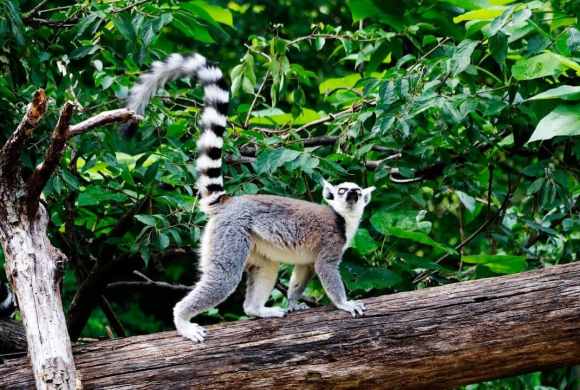
Despite their importance, lemurs are now considered the most endangered group of mammals on the planet. More than 90% of species are threatened with extinction, many of them critically so. The primary reason is habitat loss.
Madagascar has lost a large share of its original forest cover due to slash-and-burn agriculture, illegal logging, charcoal production, and expanding human settlements.
Forests are often cleared to grow rice or other staple crops, leaving fragmented patches that cannot support viable lemur populations. Once forests are broken into isolated islands, lemurs struggle to find food, mates, and safe shelter.
Hunting adds another layer of pressure. In some regions, lemurs are hunted for bushmeat, especially during times of food insecurity. While hunting is illegal, enforcement is inconsistent, and poverty makes conservation rules difficult to follow.
Climate change is making an already fragile situation worse. Shifting rainfall patterns and stronger droughts reduce fruit availability and disrupt flowering seasons. For species that rely on very specific food sources, even small changes can lead to starvation or reproductive failure.
What makes the crisis particularly severe is how quickly these threats interact. Habitat loss makes lemurs more vulnerable to climate stress. Climate stress pushes communities to clear more land.
The result is a feedback loop that accelerates decline. Yet this same interconnectedness also means that well-designed interventions can create positive ripple effects.
Lemurs Life Matters!

Lemurs are often framed as conservation symbols, but their value extends far beyond symbolism. Healthy lemur populations support healthy forests, and healthy forests support human livelihoods.
Madagascar’s forests regulate water cycles, protect soils from erosion, and store carbon. When lemurs help maintain these forests, they indirectly support agriculture, fishing, and access to clean water.
Lemurs also play a central role in ecotourism. Before political instability and the pandemic reduced travel, wildlife tourism generated significant income for local communities. Visitors come specifically to see lemurs in the wild, creating jobs for guides, park staff, researchers, and hospitality workers. When lemur populations decline, so do these economic opportunities.
There is also cultural value. In many Malagasy communities, lemurs are tied to local traditions and taboos known as fady, which historically offered protection to certain species. While these beliefs vary by region and are changing over time, they highlight that conservation is not an imported idea. It has local roots that can still be strengthened.
From a global perspective, lemurs are irreplaceable. Losing them would mean erasing an entire branch of primate evolution. Unlike species that exist across continents, lemurs have no backup populations elsewhere. Their extinction would be final, both biologically and culturally.
Seen this way, protecting lemurs is not charity for distant wildlife. It is an investment in ecological stability, economic resilience, and scientific knowledge that benefits far more than Madagascar alone.
Those That Are Already Working
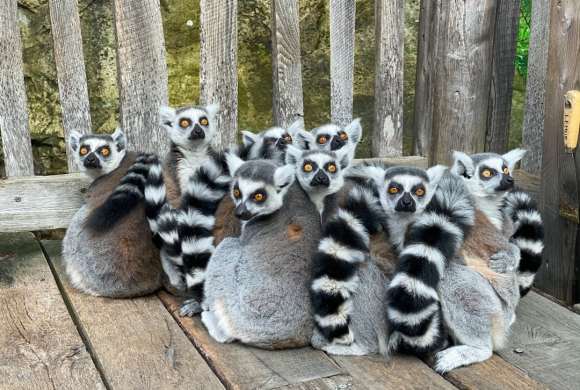
While the situation is serious, it is not hopeless. Conservation efforts across Madagascar show that lemur populations can recover when given the chance. Community-managed forests are one of the most promising approaches.
When local people are involved in protecting land and receive direct benefits, deforestation rates drop and wildlife returns. Reforestation projects are also making a difference. Planting native tree species helps reconnect fragmented habitats, allowing lemurs to move between forest patches.
These wildlife corridors improve genetic diversity and reduce the risk of local extinctions. Protected areas remain essential, but their success depends on funding and enforcement. Partnerships between governments, NGOs, and local communities have improved monitoring and reduced illegal activities in some regions.
Education programs further strengthen these efforts by showing younger generations why lemurs matter and how conservation can align with economic opportunity.
Scientific research plays a key role as well. Better data on population trends, behavior, and habitat needs allows conservationists to target resources more effectively. In some cases, captive breeding and carefully managed reintroductions provide a safety net for species on the brink.
World Lemur Day itself is part of this solution. Awareness may seem abstract, but it drives funding, policy attention, and international cooperation. Each informed conversation increases the chance that conservation remains a priority rather than an afterthought.
Sources:
https://www.thegreatprojects.com/
Leave a Reply