


The long-tailed macaque, a small but remarkable primate found across Southeast Asia, now stands at a difficult crossroads. Once considered common and adaptable, the species faces a level of exploitation that grows heavier each year.
Conservation groups have warned that its wild populations are shrinking at a rate that demands urgent attention. At the same time, industries that rely on the macaque continue to ask for easier access.
Well, want to learn more about this? Check out here.
Why the Macaque Endangered

The long-tailed macaque remains listed as endangered because evidence from multiple regions shows a dramatic decline in its wild population. Over the last few decades, researchers have recorded drops that reach more than half of the known groups in many areas.
This decline does not come from a single cause. Instead, several overlapping pressures have made the species far more vulnerable than it once appeared. Habitat loss continues to erase forested areas where macaques traditionally lived.
Expanding agriculture, rapid development and urban growth have pushed the animals into human settlements, where they are often viewed as pests rather than wildlife in need of protection.
Another source of decline comes from the demand for macaques in scientific research. For years, breeding facilities across Southeast Asia supplied large numbers of monkeys to laboratories abroad.
However, serious concerns arose when investigators found signs that many “captive-bred” macaques had actually been taken from the wild. That discovery caused conservation groups to reevaluate the macaque’s status, and the evidence of wild capture contributed strongly to the endangered classification.
Despite this, some organizations within the biomedical sector resisted the listing because it makes trade more difficult. They argued that the macaque remains abundant near human communities, yet this argument ignores the fact that visible urban monkeys do not represent the true condition of wild populations.
A species can appear common in cities while collapsing in its natural environment, and the long-tailed macaque stands as a clear example of that imbalance.
Biomedical Industry
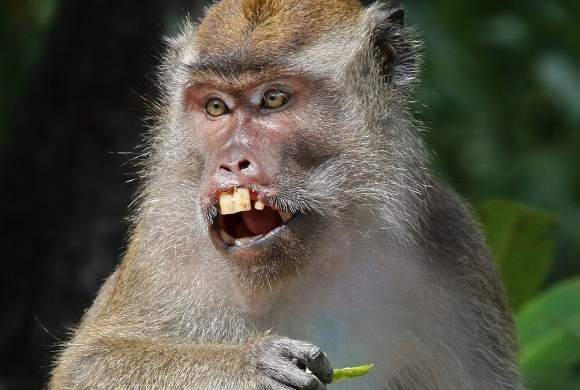
The biomedical industry continues to influence discussions about the long-tailed macaque because the species has been used in vaccine development and pharmaceutical testing for decades.
When the pandemic created urgent demand for testing animals, the macaque became even more valuable. Traditional suppliers struggled to meet the sudden need, which led to unusually high prices and intense pressure on breeding facilities.
In several exporting countries, shipments rose at a pace that raised questions about whether the declared animals truly came from captive-breeding programs.
This situation created a space where illegal wildlife networks found new opportunities. Poachers could capture macaques from forests, sell them cheaply to middlemen and allow those animals to enter breeding farms without proper documentation.
Once inside the system, the monkeys were often labeled as captive-bred and sold at premium prices. This cycle benefitted the traffickers and the facilities but placed enormous strain on wild populations that were already shrinking.
The industry’s continued push for easier access to macaques creates tension with conservation efforts. Some representatives claim that endangered status threatens medical progress, yet that view overlooks the larger issue.
The demand itself has contributed to the decline, and the lack of strong oversight has allowed illegal activity to flourish. If the industry relied genuinely on responsibly managed captive breeding, the endangered listing would not pose a major obstacle.
The strong objections therefore raise questions about the transparency of the trade and about how deeply the system depends on wild-caught animals, even though official statements often deny that connection.
Illegal Trade
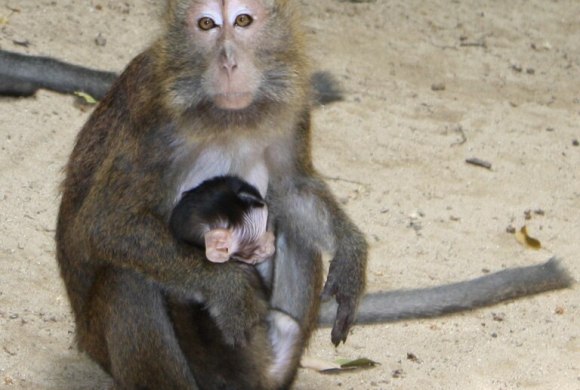
Illegal trade remains one of the most damaging threats to the long-tailed macaque. In several countries, poachers capture monkeys from forests and sell them to buyers who operate breeding facilities or supply networks.
These networks often span borders, and the animals may pass through several hands before reaching a laboratory. In many cases, documents are altered to disguise wild-caught macaques as captive-bred animals. That practice makes enforcement extremely difficult, especially when oversight systems rely on paperwork rather than physical verification.
At the same time, the species faces a growing problem linked to online content. On social media platforms, videos showing macaques dressed as pets or forced to perform tricks have gained large audiences.
More disturbing forms of content also circulate, and the popularity of such videos encourages people to capture young monkeys to satisfy demand for online entertainment. When platforms fail to remove abusive content, they unintentionally support a cycle that leads to more illegal capture, more suffering and greater pressure on wild populations.
Government responses vary widely across the region. Some authorities conduct periodic raids on traffickers or breeding facilities, but many investigations end without significant penalties. In some cases, corruption, unclear regulations or competing economic interests weaken enforcement.
When illegal networks face little risk, they continue to operate and adapt. This pattern leaves the macaque in a vulnerable position because even strong conservation listings cannot protect a species if the laws that support those listings are not enforced. Without coordinated action, the illegal trade continues to exploit every gap in the system.
Misconceptions

One of the main misconceptions about the long-tailed macaque comes from its visibility in tourist areas. Visitors often see large groups of monkeys near temples, markets or city parks and assume the species is thriving.
That assumption creates a misleading picture because it hides the reality of shrinking forest populations. Many macaques moved into urban areas because their habitats disappeared, not because the species naturally shifted to city life.
When people view them as abundant or invasive, the support for conservation weakens, even though the species struggles in the environments where it truly belongs.
Habitat loss continues to shape the macaque’s future. Expanding plantations, logging operations and infrastructure projects reduce the forested areas that once supported the species.
As natural spaces shrink, macaques search for food in farms or towns, which increases conflict with people. In some regions, authorities respond by relocating or culling groups rather than addressing the root cause of the displacement. These actions create a cycle in which habitat loss drives conflict and conflict leads to further decline.
Conservationists argue that coexistence offers a more sustainable path. The macaque is naturally adaptable, and its ability to share landscapes with humans can become a strength rather than a problem if managed carefully.
Sources:
https://neprimateconservancy.org/
Leave a Reply