


Termites are tiny creatures, but the structures they build are engineering marvels. Their mounds stay cool and breathable without fans, electricity, or air conditioning. For humans facing rising global temperatures, these natural designs offer valuable lessons.
By studying how termite mounds regulate air, moisture, and heat, architects and engineers are rethinking how buildings can stay comfortable without using massive amounts of energy.
Isn’t it interesting? Then, let’s talk about it more.
Natural Skyscrapers

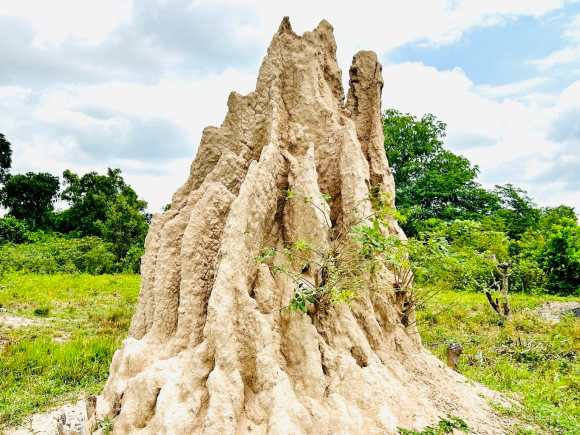
Some termite mounds reach heights of over 20 feet, making them some of the largest animal-built structures in the world. Despite being built by insects, these towers are strong, long-lasting, and incredibly efficient.
They house millions of termites and maintain steady internal temperatures even in climates that swing between extreme heat during the day and cold at night.
One of the key features is the layout of internal tunnels that stretch through the mound like a complex web. These tunnels serve specific purposes, some guide airflow, others manage moisture. The outer part of the mound contains a special section known as the egress complex.
This area controls how gases, heat, and humidity move in and out of the mound. The termites themselves constantly build and rebuild, making subtle adjustments as the environment shifts. Over millions of years, they have fine-tuned this architecture into a highly adaptive climate-control system.
Termites do not build these mounds randomly. They rely on temperature gradients, moisture levels, and air pressure differences to regulate internal conditions. This natural balance keeps the mound comfortable for its inhabitants, no matter what the outside weather is doing.
Ventilation Lessons Termite Mounds Teach Us
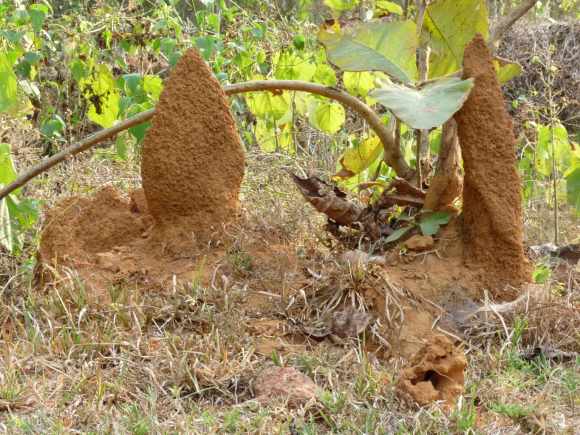
The ventilation system inside a termite mound is driven by wind and differences in air pressure. When wind moves across the surface of the mound, it interacts with the structure’s shape and tunnel orientation.
This causes air to be pulled into certain tunnels and pushed out of others. The effect is similar to how a chimney draft works in a house, but far more precise. The egress complex amplifies this process by creating turbulent airflow inside the mound. Instead of still air, the interior stays fresh with slow but constant movement.
Wind pulsing across the mound helps drive this circulation. Even gentle breezes are enough to move air through the tunnels, removing heat and excess moisture while bringing in oxygen.
This system is passive. It requires no external energy. It works day and night, adjusting as wind speeds change. The mound’s design balances temperature and humidity naturally. When outside air is too moist, the tunnels close or shift flow paths to keep the interior dry.
When temperatures rise, more airflow is directed through deeper, cooler parts of the mound to lower internal heat. This natural air conditioning works by design, not by machinery
How These Natural Designs Are Being Applied
Architects are starting to incorporate termite-inspired structures into modern buildings. The goal is to create buildings that cool and ventilate themselves, using minimal mechanical systems. This could drastically reduce energy consumption, especially from air conditioning, which makes up a large part of electricity use in hot climates.
By designing walls and surfaces with built-in tunnels or channels, airflow can be directed through a building the same way it moves through a termite mound. These channels do not look like typical vents.
They are often narrow, layered, and maze-like. Some designs use curved, porous surfaces that respond to outside wind pressure, drawing air through naturally.
This type of architecture is being made possible by advances in building materials and digital design tools. 3D printing allows for the creation of complex wall systems with internal structures similar to termite tunnels.
These printed panels can be inserted into buildings as functional, passive ventilation components. The walls themselves manage airflow, temperature, and humidity without any fans or filters.
Some buildings now use adaptive materials, which change shape slightly with temperature or humidity, opening and closing ventilation paths as needed. These structures adjust themselves, just as a termite mound responds to changes in the weather.
Termite-inspired designs are being tested in offices, homes, and public buildings. Early results show reduced indoor temperatures and improved air quality without traditional HVAC systems. This technology could soon become standard, especially in areas dealing with extreme heat and rising energy costs.
Termite-Inspired Buildings

The most obvious benefit is reduced energy use. Heating and cooling make up a large portion of global electricity consumption. Buildings that regulate their own climate with little or no mechanical support can cut that use dramatically. This lowers power bills, reduces demand on power grids, and cuts carbon emissions.
This is critical as the number of air conditioning units worldwide continues to grow. Without a major shift in building design, energy use from AC systems is projected to triple by 2050. Passive ventilation inspired by termites offers a direct, low-cost solution that scales easily in both new construction and retrofits.
Indoor air quality also improves. Natural airflow reduces the buildup of pollutants and moisture. This prevents mold, lowers allergy risks, and creates healthier living and working environments. People feel better in spaces with clean air and consistent temperature. This has mental and physical health benefits, especially for those with respiratory conditions.
In humid regions, buildings that manage moisture passively can avoid the health hazards that come from damp indoor environments. Termite-inspired systems regulate not just temperature but also humidity, keeping conditions stable and safe without constant monitoring or repairs.
There are environmental benefits beyond the building itself. Structures that do not rely on refrigerants, such as hydrofluorocarbons, avoid contributing to greenhouse gas emissions. These gases are far more damaging to the climate than carbon dioxide.
Passive buildings also put less strain on city infrastructure, reducing the need for backup power and peak demand systems during heat waves.
What the Future of Architecture Might Look Like
By learning from termites, human architecture is entering a new era. Buildings are no longer static. They are becoming dynamic systems that interact with their surroundings. Termite-inspired walls might one day be as common as double-pane windows.
Cities could feature entire neighborhoods built with self-ventilating structures, eliminating the need for air conditioners altogether. Designers are also exploring other animal-inspired techniques, like beehive structures for load distribution or spider web patterns for lightweight strength.
But termite mounds remain one of the best examples of natural climate control. Their systems are effective, elegant, and proven by millions of years of survival in extreme conditions.
Termite mounds teach us that the key to comfort isn’t more energy, it’s better design. They remind us that smart structures can do more with less.
As global temperatures rise, and cities struggle to stay livable, termite-inspired architecture is not just a clever idea. It’s a necessary one.
Sources:
Leave a Reply