

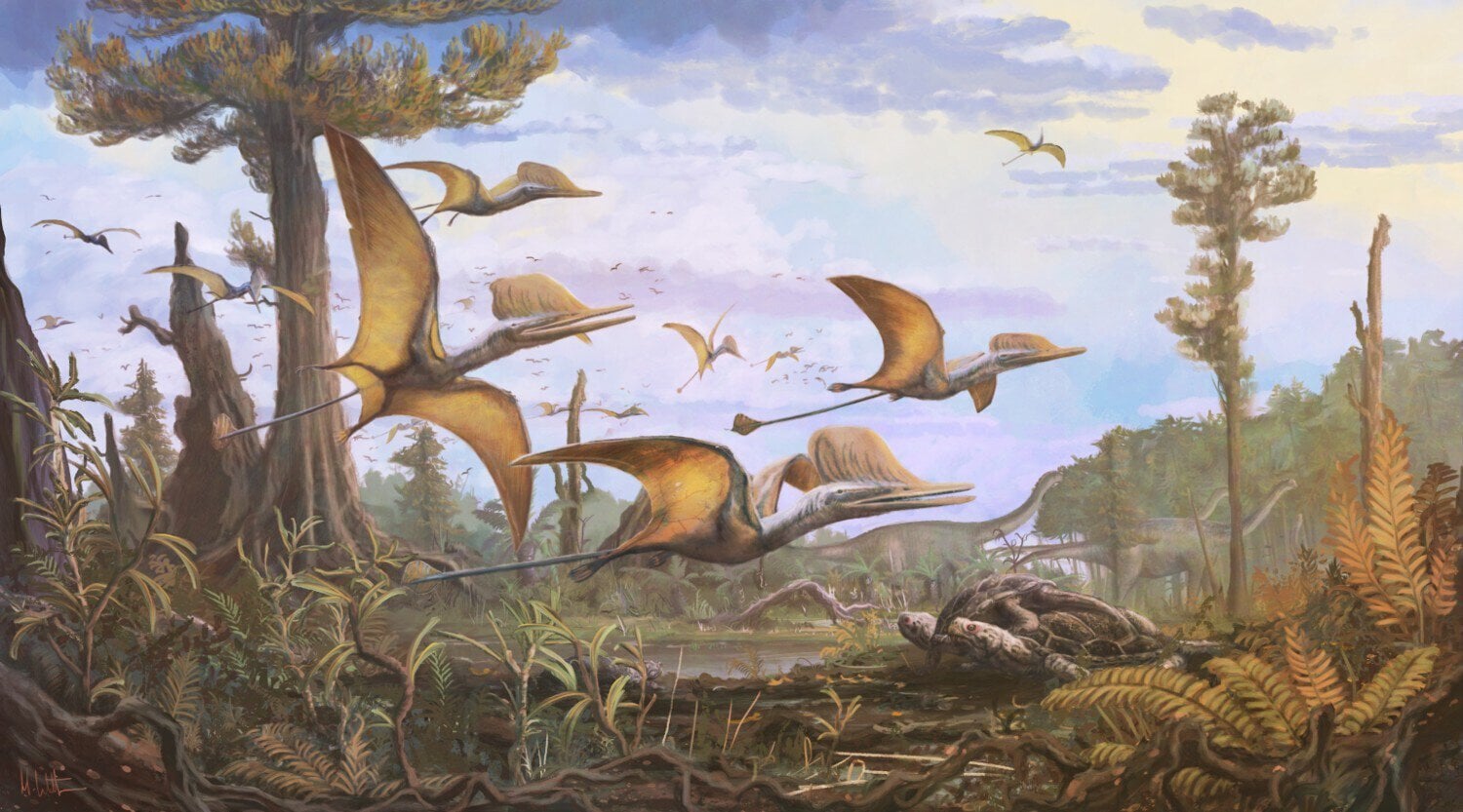
Everybody loves to talk about dinosaurs, and here we are going to talk about it once more. Not about old topics about the size and marvelous power of them, but about a newly found species of Dinosaur found in Scotland called Ceoptera.
The new species of Pterosaur was found by some researchers from United Kingdom’s Natural History Museum Researchers during a field trip in 2006. After a lengthy excavation process, the fossil is ready to be studied.
The discovery of Ceoptera is only the second flying reptile species found in Scotland. Therefore, there is something special about this discover. So, here in this article we are going to talk about it.
The Reptile: Ceoptera Evansae
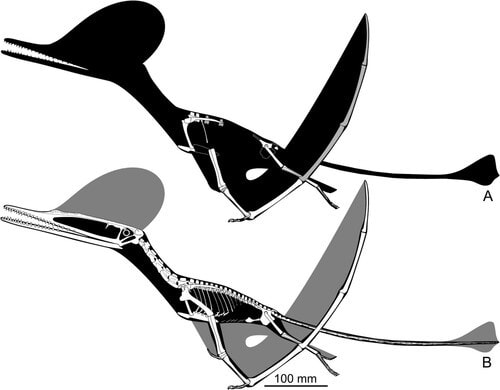
As mentioned above, during a routine field trip in 2006, researchers from the UK’s Natural History Museum found the fossilized remains of a previously unknown species of flying reptile. That reptile apparently is now what we call as Ceoptera evansae.
“The new species is the first of its particular group to have been found in Scotland, and is only the second flying reptile to be named from the country,” stated Professor Paul Barrett, who led the discovery expedition and co-authored the new paper describing the species.
Pterosaurs, also known as “flying dinosaurs,” were ancient reptiles that soared through the skies during the Mesozoic Era.
Ceoptera evansae provides a unique glimpse into the evolutionary history of these enigmatic creatures. With 1.6 meters wingspan, Ceoptera evansae was one of a bunch of fauna that inhabit Scotland around 165 million years ago.
Yes, this discovery is more than just finding a new species. It helps us understand where Pterosaurs lived during the Jurassic era, which is different from what we thought before.
“It reveals that these animals were much more widespread than would otherwise be known. The new species fits very well within the darwinopterans and helps to extend the geographic range of the group from well-preserved material in China to the UK and Argentina,” Barrett added.
The Mystery behind Ceoptera evansae

Understanding the evolution of Pterosaurs, those ancient flying reptiles that ruled the skies during the time of dinosaurs, is quite challenging. The main issue is that there aren’t many fossils of them found.
These creatures were important parts of prehistoric ecosystems, but their delicate bones make it hard for them to survive over millions of years. “Because their bones are so fragile, there aren’t many Pterosaur fossils,” stated Professor Barrett.
Since Pterosaurs spent most of their time flying high above the ground, they didn’t hang around places where fossils are usually found, like near rivers or lakes. This makes finding their bones even harder.
Even when we find the flying Dinosaur fossils, they’re not evenly spread out across the world. Most of them are found in just a few places where the conditions were perfect for preserving them. However, this also means that we may not have a complete picture of where they lived and how they changed over time.
Professor Barrett pointed out, “We mostly learn about Pterosaurs from only eight or nine places in the world.” So, while we have some knowledge about them, there’s still much more to uncover.
This rarity of the flying dinosaur fossils hamper our understanding of their evolutionary stages. We’re missing pieces of the puzzle that could help us understand how they adapted and changed over millions of years. It’s like trying to solve a mystery with only a few clues.
Despite these challenges, paleontologists continue to search for Pterosaur fossils in the hope of piecing together their incredible story. Each new discovery brings us closer to understanding these fascinating creatures and the world they inhabited millions of years ago.
Excavation and Naming Process
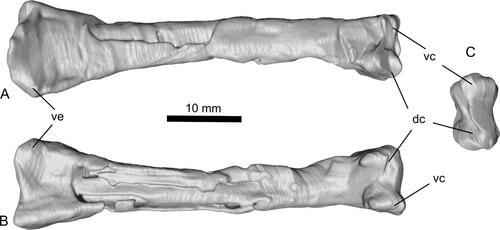
Finding the Ceoptera evansae fossil wasn’t easy, even though everyone was excited about it. It took careful work and teamwork from many scientists.
Professor Barrett stated they were looking at big rocks on the beach when they spotted some bones sticking out. This beach, on the Isle of Skye, is a special place where fossils can’t be just taken, so they carefully collected the rock with the bones and brought it to a museum in London.
There, an expert spent over a year using special methods like using acid to carefully reveal the bones inside the rock. Dr. Martin-Silverstone stated this helps them understand when and where even more advanced flying reptiles might have evolved.
Meanwhile, the name they gave the new creature, Ceoptera evansae, has a special meaning. “Ceoptera” means “misty wing” because it was found on the misty Isle of Skye.
The second part of the name, “evansae,” was chosen to honor Professor Susan Evans who helped them find the fossil. Professor Barrett stated this name reflects the importance of the discovery and the teamwork involved in uncovering Scotland’s ancient past.
What About the Environment They Are Living In?

Finding Ceoptera evansae and other flying dinosaur fossils are not just about learning about old animals. It also helps us understand the environment of the past. These fossils are like time machines, keeping clues about how things were long ago.
Dr. Martin-Silverstone stated, “Looking at these fossils helps us understand where these old creatures lived.” Scientists look at the dirt and fossils from the flying dinosaur spots to figure out what the weather and homes were like back then. This helps us see how the climate has changed over a long time.
Discovering Pterosaur fossils in Scotland also teaches us more about where old animals used to live. Professor Evans stated, “Finding Ceoptera evansae in Scotland tells us there were lots of different plants and animals there during the Middle Jurassic time.”
Learning about the environments of the past can help us take care of nature better today. By understanding how things used to be and why they changed, scientists can try to keep animals safe now.
So, by studying old animals like Ceoptera evansae, we’re not just learning about history. We’re also finding ways to protect the Earth today and in the future. Let’s take a lesson from the past and see how nature reacts to changes in the environment.
Sources:
Leave a Reply