

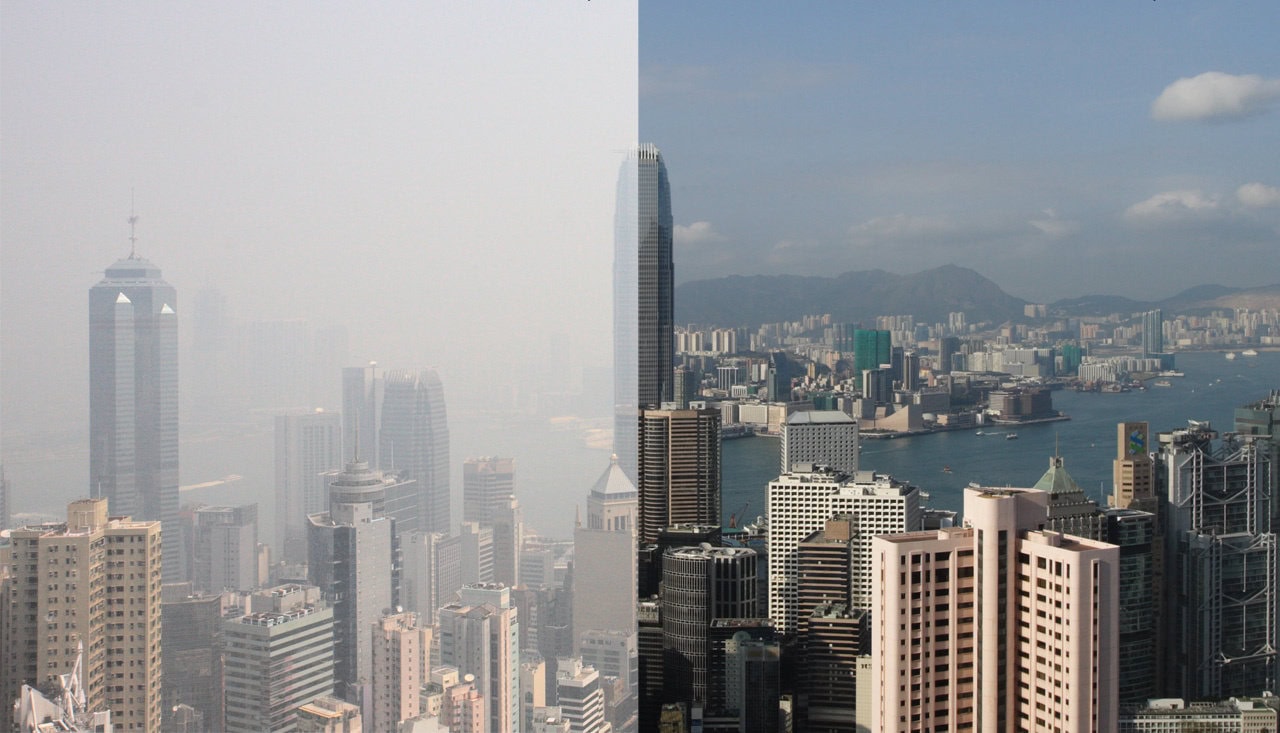
Ozone pollution has become one of Hong Kong’s most persistent air quality challenges. Unlike pollutants that come directly from exhaust pipes or smokestacks, ground-level ozone forms through chemical reactions in the air, which makes it harder to control and easier to misunderstand.
Over the past three decades, ozone concentrations have risen despite major reductions in other air pollutants. This trend has serious implications for public health, ecosystems, and climate goals.
The good news is that ozone pollution is not inevitable. We actually have talked about it in our previous articles, but we didn’t take this way to talk about it. So, what should we actually do? Let’s talk about it in this article.
Ozone Pollution in Hong Kong
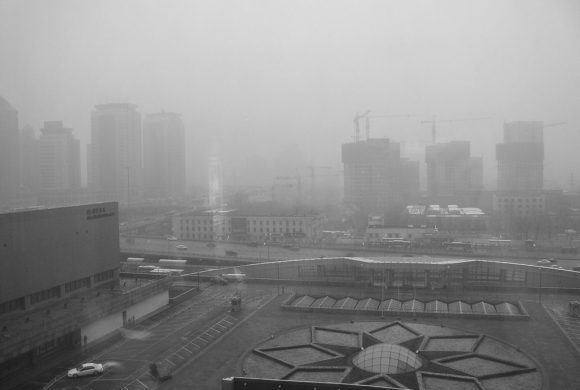
Ozone exists naturally high in the atmosphere, where it protects life from harmful ultraviolet radiation. At ground level, however, ozone becomes a harmful pollutant. This form of ozone does not come from a single source.
It forms when nitrogen oxides and volatile organic compounds react under sunlight. These reactions occur most intensely in warm, bright conditions, which makes subtropical cities like Hong Kong especially vulnerable.
Hong Kong regulates ozone under its Air Pollution Control Ordinance and Air Quality Objectives, which set legal concentration limits. Even with this framework in place, ozone remains one of the most difficult pollutants to manage.
The reason lies in its chemistry. Nitrogen oxides mainly come from combustion processes such as road transport, shipping, and power generation. Volatile organic compounds, by contrast, largely come from non-combustion sources such as paints, solvents, adhesives, and consumer products.
This split complicates policy. Measures that successfully reduce one precursor do not always reduce ozone itself. In some cases, poorly balanced controls can even make ozone concentrations worse.
As a result, ozone pollution requires a different approach from traditional air quality management. It demands precision, coordination, and a strong understanding of how emissions interact in the atmosphere.
Why It Is a Serious Risk

Ground-level ozone is a powerful oxidant that affects both human health and natural systems. Short-term exposure can irritate airways, trigger coughing, and cause chest discomfort. Longer exposure increases the risk of cardiovascular and respiratory diseases, including ischemic heart conditions.
These health impacts place an added burden on healthcare systems and disproportionately affect older adults and people with existing conditions.
Ozone also damages vegetation. When ozone enters plant tissues, it interferes with photosynthesis and slows growth. Crops and trees exposed to elevated ozone become more vulnerable to pests, disease, and extreme weather.
Over time, this weakens urban greenery and surrounding ecosystems, reducing their ability to provide cooling, carbon storage, and flood control.
Beyond local impacts, ozone plays a role in climate change. It acts as a greenhouse gas that traps heat in the atmosphere. Rising ozone levels therefore undermine climate mitigation efforts, even as cities work to reduce carbon emissions.
This dual role makes ozone pollution particularly costly. It harms health, damages ecosystems, and contributes to warming at the same time.
Taken together, these effects explain why ozone pollution deserves far more attention than it usually receives. It is not a secondary issue. It is a central obstacle to cleaner air and a stable climate.
Trends and Patterns
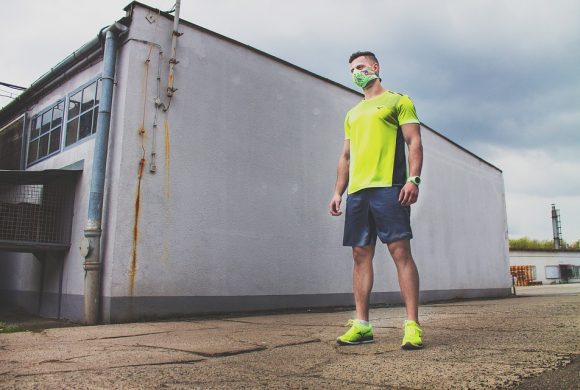
Ozone levels in Hong Kong have followed an upward trend since the early 1990s. After reaching a recent peak in 2023, concentrations fell slightly in 2024. Even with this decline, average levels remain high enough to raise concern.
Compliance with air quality standards also varies by location. Roadside monitoring stations generally meet ozone targets, while many general stations exceed allowable limits each year. This pattern points to a broader regional influence rather than purely local emissions.
Daily ozone levels follow a clear rhythm. Concentrations rise during the morning as traffic and industrial activity increase and sunlight becomes stronger. Peaks usually occur in mid-afternoon, when photochemical reactions reach maximum intensity. In the evening, ozone declines as sunlight fades, even though traffic emissions increase again.
Seasonal patterns matter as well. Ozone concentrations tend to be highest in autumn. During this period, solar radiation remains strong, rainfall becomes less frequent, and wind patterns shift.
In summer, frequent rain and oceanic airflows help suppress ozone formation. These patterns highlight the role of weather and regional air movement in shaping local air quality.
One monitoring station, Tap Mun, consistently records the highest ozone levels. Its distance from urban emission sources suggests that a large share of Hong Kong’s ozone arrives from outside the city.
Studies estimate that more than two-thirds of peak ozone concentrations originate from regional transport rather than local production. This reality makes regional cooperation essential.
Why Did We Slow Down?
Hong Kong has taken meaningful steps to reduce emissions. Policies have phased out older diesel vehicles, tightened power plant emission caps, and promoted electric transport.
Regulations on volatile organic compounds have been in place since 2007, covering a wide range of products. These measures have successfully reduced emissions of nitrogen oxides and volatile organic compounds.
Yet ozone levels have not followed the same downward trend. The core reason lies in non-linear chemistry. Hong Kong has long been a VOC-limited environment. In such conditions, reducing nitrogen oxides alone can increase ozone formation.
This happens because fewer nitrogen oxides remain available to remove ozone from the atmosphere. Without equally strong controls on volatile organic compounds, ozone concentrations can rise even as overall emissions fall.
The solution is not to abandon existing policies, but to refine them. Stronger and more targeted controls on volatile organic compounds are essential. This includes tighter limits on high-reactivity compounds and better enforcement across commercial and consumer products. Research suggests that reducing specific classes of VOCs delivers the greatest ozone benefits.
Regional collaboration must also deepen. Ozone does not respect borders. Emissions from the Pearl River Delta significantly influence Hong Kong’s air quality, including unusual nighttime ozone increases caused by transported air masses.
Joint monitoring, shared reduction targets, and coordinated industrial policies can address this reality more effectively than isolated action.
Ozone pollution is complex, but it is not unsolvable. With smarter controls, stronger regional partnerships, and policies grounded in atmospheric science, Hong Kong can reduce ozone levels while protecting health, ecosystems, and climate goals.
Sources:
Leave a Reply