

Plants get grumpy fast when the water runs short. Now imagine a whole rainforest in that spot. Scientists in Brazil decided to find out what really happens next.
For 25 years, the Esecaflor Project in Pará has kept a patch of Amazon forest under artificial drought, giving it only half its usual rain. The goal is to predict how the biome could cope as the climate warms. The results surprised everyone.
Under a Plastic Roof
Let’s start with the setup. It is the longest-running and biggest experiment of its kind ever done in a tropical forest, and it works a bit like a giant, very patient science fair project that has run for decades, with a forest as the star.
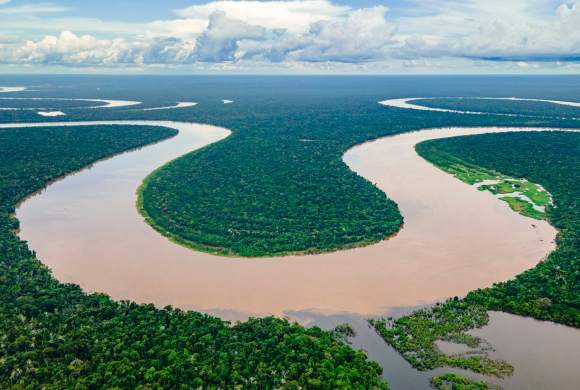
The drought began in 2001 on one hectare inside Caxiuanã National Forest, which covers about 318,000 hectares. Researchers hung 6,000 clear plastic panels under canopy, one to four meters above ground, to steer roughly half the rainwater into gutters and channels.
A matching plot of the same size stays untouched for comparison. In both plots, the team tracks soil moisture, air temperature, tree growth, sap flow, and root development. Two 40-meter towers with NASA radar send data to the agency’s lab in California.
The idea came in 1998, when British ecologist Patrick Meir of the University of Edinburgh met meteorologist Antonio Lôla da Costa and the late agronomist Samuel de Almeida in Belém. Together they sketched a plan to study how drought could affect the forest’s carbon storage.
Meir says computer models already warned about big tree die-offs from climate change, but forecasts for long droughts stayed fuzzy, so the team needed a new kind of experiment. Lôla da Costa says funding covered three years, but questions kept coming.
How the Forest Changed
Think of a slow-motion movie. For the first few years, nothing seemed to happen, then the story turned dramatic. The forest did not collapse overnight, and each stage taught researchers something new about how trees fight over every last drop of water.
Lôla da Costa says nothing changed for three years, thanks to the forest’s moisture reserves. After five years, trees began dying, especially big trees with trunks over 50 centimeters, which need more water. By year eight, 40 percent of the biomass was gone.
Biomass loss peaked around year 15, and scientists wondered whether the forest would collapse or bounce back. The team kept going. By 2024, with the big trees gone, nearly 50 percent of the biomass had disappeared, but something unexpected was brewing.
Here’s the twist, and it’s a big one. The little water left was enough for smaller trees to share. Their deaths slowed, then reversed, and they started growing again. Lôla da Costa calls it a huge surprise. The forest had settled into a new balance.
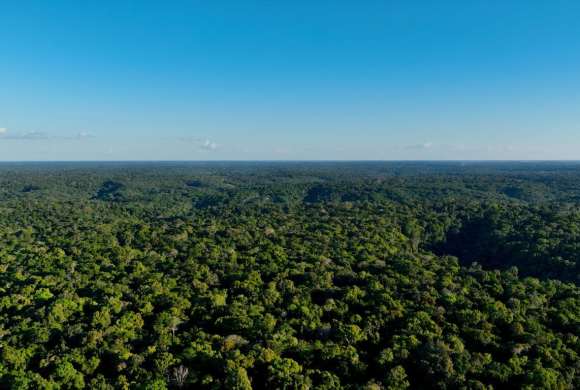
The result is a shorter, less dense forest. It lost biomass in leaves, branches, trunks, and roots, and stores less carbon dioxide. Still, by sharing the limited soil water, it found a steady new balance, says a May 2025 paper in Nature Ecology and Evolution.
Not a Savanna
So is the Amazon doomed to turn into a dry, grassy plain? Not so fast. The scientists behind the project push back on that whole idea, and they explain why big trees die and what this new kind of forest could really become.
Tropical ecosystem specialist Lucy Rowland of the University of Exeter says larger trees may not die because their plumbing is weaker, as the team first thought. The likelier reason is that their tall crowns poke above the canopy and face a hotter, drier atmosphere.
She also notes that real droughts hit trees through both the soil and the air, while the experiment’s artificial drought only affected the soil. That leaves one big question still open for scientists: why are large trees so vulnerable to drought in the first place?
Rowland says the rainforest will never turn into a savanna. It would become a novel, highly degraded ecosystem with no natural reference. She also warns against using savanna as an insult, since Brazil’s Cerrado is a species-rich, high-value ecosystem, not a wasteland.
That mistaken view, she says, has helped drive mass destruction of the Cerrado. So the words we pick matter. A degraded forest is still a forest, and a savanna is not a lesser version of the rainforest. Both deserve real respect and protection.
What Comes Next
The story is far from over. The experiment has entered a fresh chapter, and the big questions now point to the future: can the giants come back, and what do human actions mean for forests that need time to heal?
In November 2024, after 23 years, the team removed the plastic panels, and rain now falls normally, just like in the control plot. Researchers want to know whether large species like kapok, andiroba, and angelim vermelho can grow back in this new setting.
Those giants pull carbon from the air and recycle rainwater through transpiration, helping form flying rivers. Rowland warns that recovery won’t be quick. Some species may need decades or even centuries, while natural droughts keep hitting these forests more and more often.
Meir agrees that understanding the differences between sizes and species is a top priority. The forest looks stable for now, but it has less biomass, is shorter, and is more open than before, which could leave it more vulnerable to future climate extremes.
Lôla da Costa has made an 18-hour boat trip every month for 30 years, passing barges loaded with logs. He says a well-managed forest will not collapse, but machines that clear hundreds of hectares in a day leave no chance of recovery.
So next time your houseplant droops, think of Esecaflor. Its equipment tracks tree growth every 15 minutes, like a heartbeat on a monitor, and a dying tree shows a flat line. Lôla da Costa says if trees disappear, all of us go with them.
Sources:
Leave a Reply