

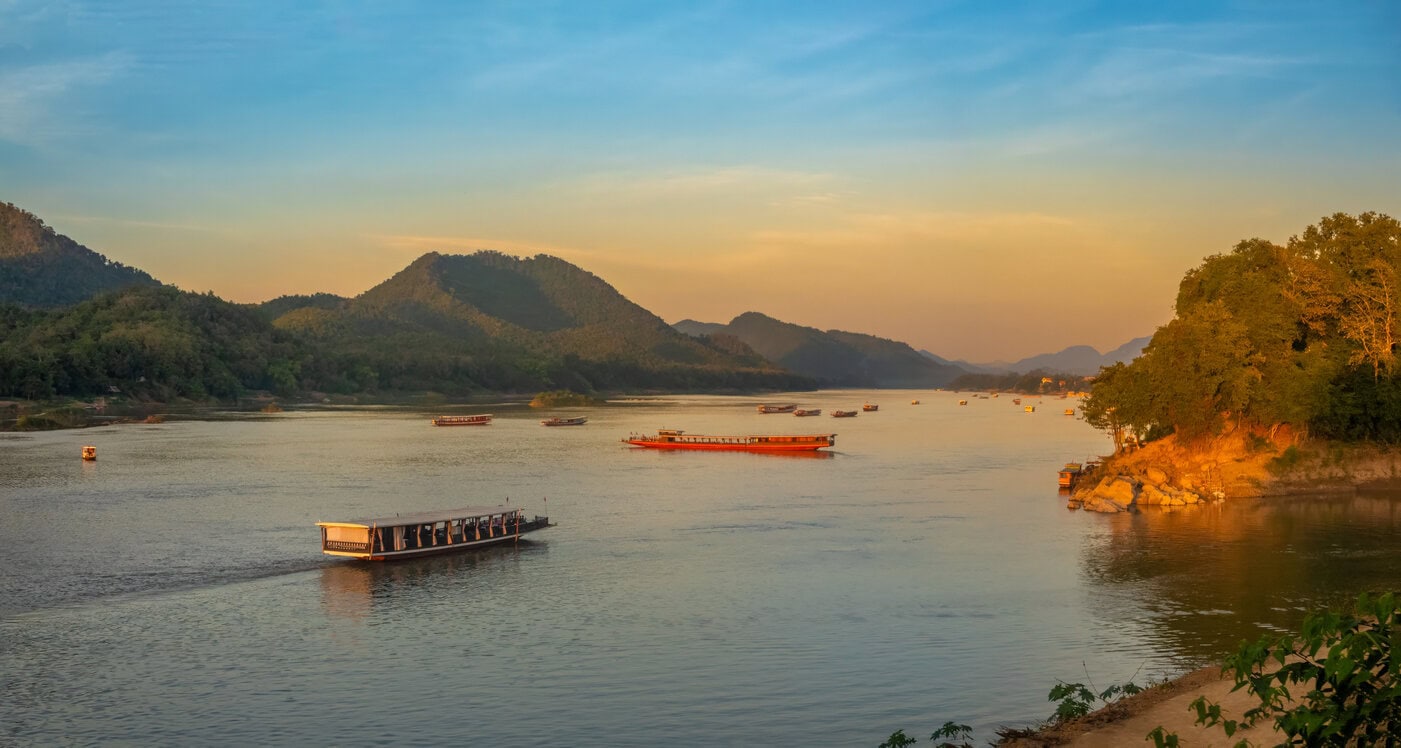
Water that can’t move gets smelly fast, and everything you rinse down just sits there. Now picture that happening to a whole river. In southern Vietnam, a big gate on the Ba Lai River has done exactly that.
The Ba Lai sluice gate started working in 2002 to keep salty sea water out and save freshwater for rice farmers.
More than twenty years later, the river looks like a stagnant lake, and the people nearby are still dealing with the fallout.
To Protect Rice
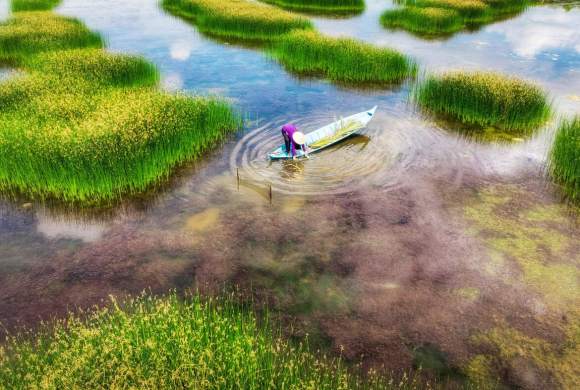
Let’s start with the big plan. The goal sounded simple: turn the Ba Lai into a year-round freshwater reservoir for rice. It would serve Bến Tre City and four nearby districts, which are now wards and communes in Vĩnh Long province after a 2025 merger.
The price tag was 67 billion dong, about $4.38 million back then. The gate was supposed to bring freshwater to 193,000 hectares of land.
Ecologist Nguyễn Hữu Thiện says it grew out of Vietnam’s post-1975 rice first approach, where saltwater was “automatically considered an enemy.”
On paper, it looks like a win. Data from the state-owned Bến Tre Irrigation Works Exploitation Company says the dam cuts yearly saltwater intrusion time by a third and halves salinity. It also allows three rice harvests a year and supplies water to homes.
But the ground tells another story. The Mekong once reached the sea through nine mouths, which earned it the name Nine Dragons. Sand swallowed the first dragon, the Bassac, in the 1960s. Thiện says people have now killed another dragon.
That leaves the Mekong with seven dragons, he says, a bit like a favorite band losing a member. It’s a fun image, but the reality behind it is serious for the river and the families who live along it every day.
One Gate Chokes a River
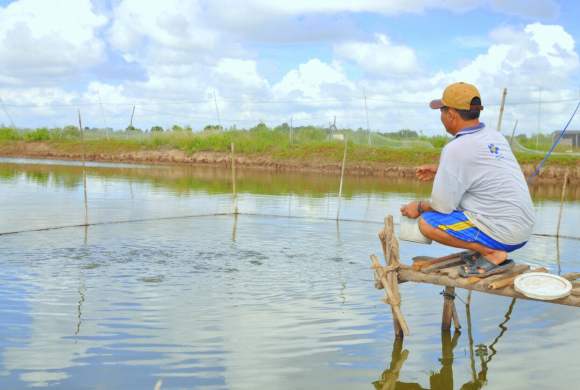
So how does a gate cause so much trouble? Think of a slow drip coffee maker with the filter jammed. Nothing flows, and everything builds up in the pot. The Ba Lai works the same way, just with far bigger consequences.
The gate stays closed most of time, so the river acts more like a lake. It traps toxins, fertilizers, weeds, and household waste coming from upstream. The result is severe organic pollution and eutrophication, the kind of mess nobody wants floating past their house.
Nature took a hit too. Early on, plants died as the gate turned the river’s brackish water into a freshwater system. Research also shows threatened fish species rose from one to six after construction, and blood cockle ponds have nearly disappeared, according to Thiện.
Here’s the twist. The salt still gets in. With the Ba Lai blocked, sea tides push up the nearby Mỹ Tho and Hàm Luông rivers, and saltwater sneaks into Giồng Trôm district through the 2.7-kilometer Giao Hòa channel, like a side door left open.
Erosion is the final piece. Tidal waves hit the sluice and make coastal erosion worse, but the Ba Lai’s current is so weak that sediment sinks instead of rebuilding the lost sand and mud. It ends up choking the river mouth.
Farmers Stuck in the Middle
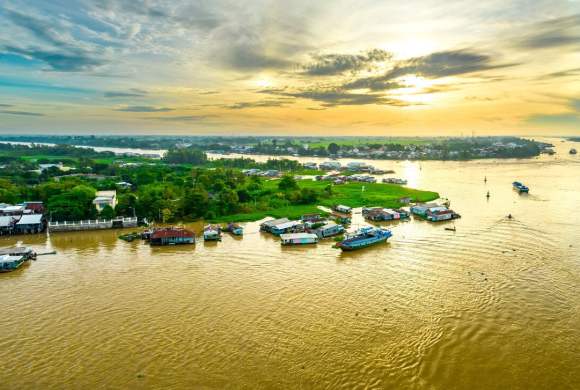
Now meet the people. Downstream shrimp farmer Nguyên, who uses a pseudonym because the topic is sensitive, plans every harvest around the days the sluice releases water. During the rainy season, pollution is his biggest worry, and one wrong guess can wipe out his stock.
Nguyên says fruit farmers in the freshwater zone use tons of pesticides and herbicides. Those chemicals linger on the ground, and when it rains, they wash into canals and the river. For him, that runoff means water heavy with built-up toxins.
Rice farmers have it rough too. According to Lê Anh Tuấn, a senior lecturer at Cần Thơ University, rice prices have barely moved in 15 years while fuel, fertilizer, pesticide, and labor costs keep rising. He calls rice farmers “perpetually poor.”
The numbers explain the temptation. In 2020, rice sold for only 4,983 dong per kilogram, about $0.19. Whiteleg shrimp fetched 170,000 to 185,000 dong per kilogram, roughly $6.48 to $7.16. No wonder some farmers in the freshwater zone started eyeing saltwater ponds.
So some farmers took matters into their own hands. By 2020, local media counted about 540 hectares of illegal shrimp ponds run by 1,500 households in the Bình Đại freshwater area. Meanwhile, Bến Tre’s rice area fell to one-seventh of its 2002 level by 2024.
Secret Wells
Some farmers fight back quietly. Scholars call it subtle, non-confrontational resistance.
Upstream farmers who can’t move away drill wells into saltwater veins to build secret shrimp ponds, which breaks the government’s land use rules and carries a risk of the ground sinking.
Nguyên says drillers sink pipes 50 to 100 meters down and keep testing the water until it’s clean. Wells get camouflaged, too. His uncle hides his under the floor of a farm hut, with a bed on top, and pulls the pipe when officials visit.
Authorities didn’t ignore it. Patrols hunt for illegal wells, and caught farmers get fined, sign pledges not to do it again, and watch their wells get sealed with cement. Officials also warned that unapproved shrimp farming gets no compensation if the shrimp die.
There’s a shift on paper. Resolution 120, issued in 2017, treats saline water as an economic resource and warns against heavy-handed meddling with nature.
Local plans now lean toward aquaculture and away from low-value rice. Still, the government has never publicly admitted the sluice’s shortcomings.
Old habits die hard, though. A new proposal would turn the Măng Thít River in Vĩnh Long into a strategic “super reservoir” for freshwater.
Tuấn urges caution with big projects in the Mekong Delta, warning that we may someday wish we never built them.
So next time your sink drains slowly, think of the Ba Lai. Water that can’t move piles up trouble. Before we build another big gate, let’s ask the people beside the river, and give the remaining dragons room to flow.
Sources:
Leave a Reply