

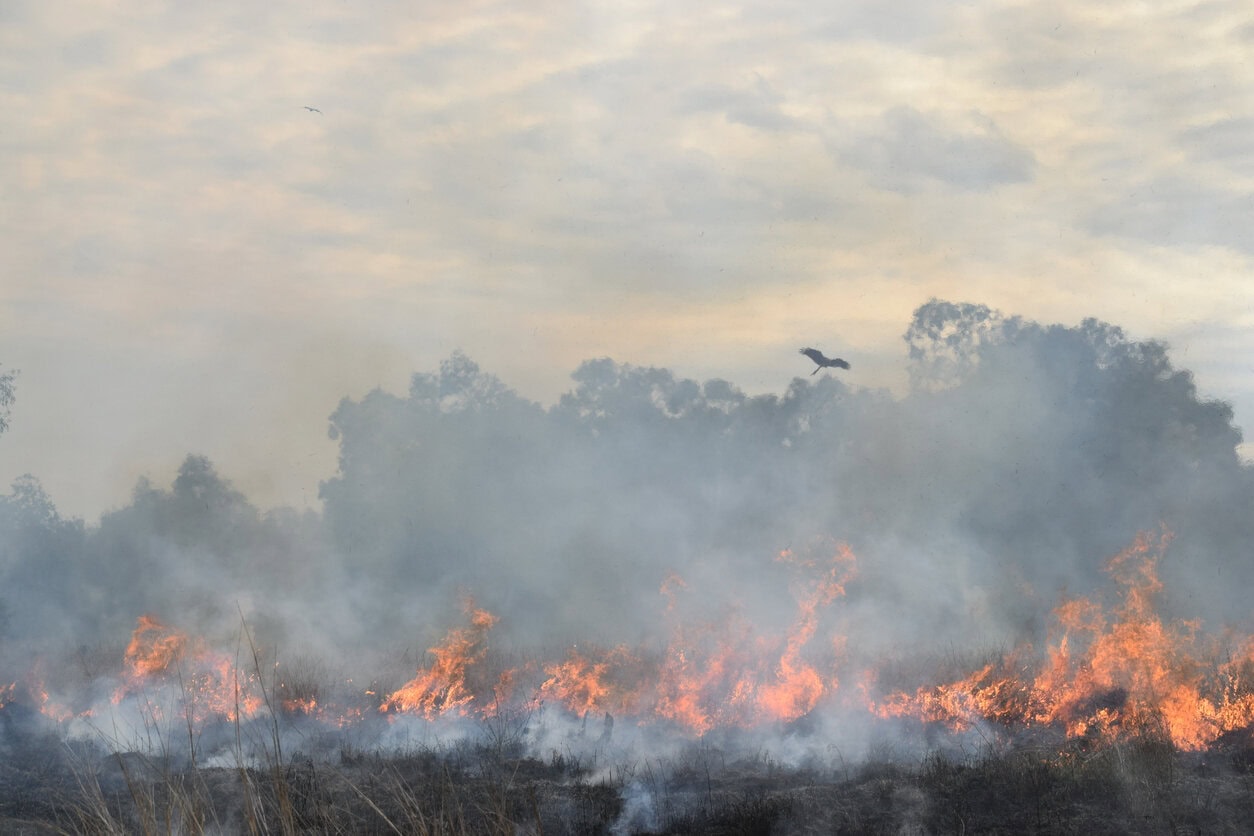
In case of fire, what do you do? You probably head for the door, fast. Almost every animal reacts the same way when it sees flames. But in northern Australia, some birds do the opposite.
A team of scientists reported this odd behavior in a paper uploaded to the preprint server bioRxiv. It has not been peer reviewed yet, so treat it as an early look. Still, it reveals a clever bird strategy worth knowing.
Fire Shaped This Land
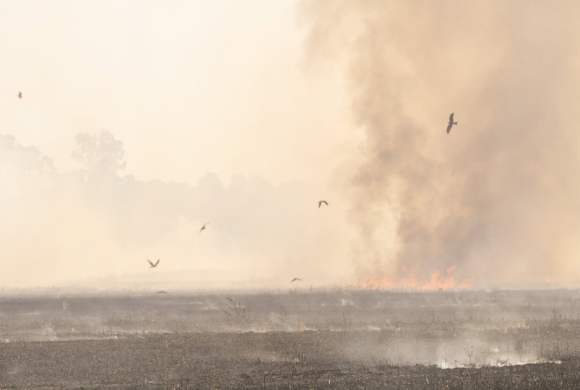
To understand these birds, start with the land itself. Fire is not a stranger in Australia’s northern savanna. People and wildlife have lived alongside it for a very long time, and the story begins with human hands.
Humans have used fire deliberately to maintain the landscape in the country now known as Australia for at least 11,000 years. That is a long tradition, and it is not just history. It continues today in places like central Arnhem Land.
Rangers from the Mimal Land Management Aboriginal Corporation light small patches of relatively cool fires across landscape early in the dry season. Cognitive zoologist Ivo Jacobs and his team made their observations around these prescribed burns, working together with the rangers.
Humans are not alone in using fire to their advantage here. That is the surprising part of this study. Birds have been quietly working the same fires, and the rangers’ small burns gave scientists a safe, controlled place to watch them closely.
Why Birds Rush Toward The Flames?
So why would a bird fly toward danger? It comes down to food. A fire changes the landscape in a way that turns hiding animals into easy targets, and some birds have learned to read that signal.
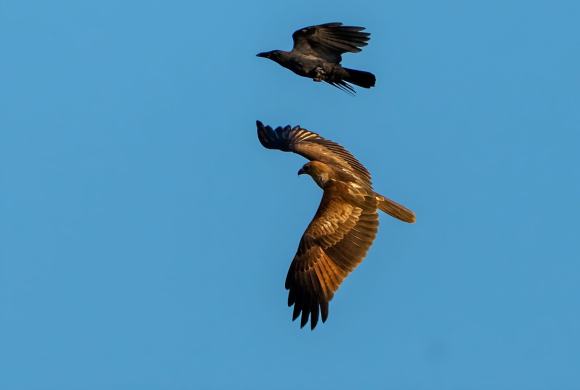
According to Jacobs and team, fires seem to attract raptors by making prey easier to spot and easier to catch. Think of it like a kitchen suddenly losing its cabinets. Everything that was hidden is now out in the open.
Picture a grassy field where grasshoppers hide in every patch. When flames move through, they jump and scatter. A bird watching from above sees movement everywhere, and that movement means lunch. It is a simple trade, but it clearly works.
Researchers call these birds pyrophilic, which simply means fire-loving. It is a fancy word for a simple idea. Where there is smoke, there is a bird looking for dinner, and the birds clearly saw something worth chasing.
These birds can detect fire from great distances. The researchers suspect they use visual cues like smoke plumes, although nobody has examined that in detail yet. So the exact trick is still a mystery, a bit like a magic show without the explanation.
What’s On The Menu?
Showing up is one thing. Eating well is another. The numbers show these birds are not just curious tourists. They are getting real rewards for their bold choice, and the menu is surprisingly varied.
Two species stood out. Black kites were 23 times more abundant when fire was around, and white-breasted woodswallows were 20 times more abundant. That is a huge crowd for a place that is usually quiet and open.
Raptors caught prey at about ten times the average rate when they used a prescribed burn, compared with times when there was no fire. Ten times is no small bonus. It is like finding a buffet where you usually find a vending machine.
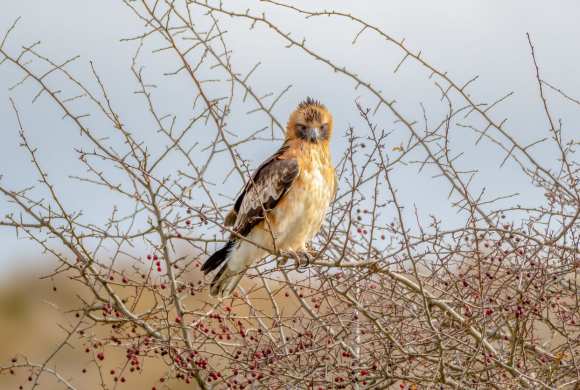
Most of the prey were insects, especially grasshoppers. Some black kites caught toads and a snake, and a nankeen kestrel got a lizard. So the menu goes from tiny snacks to a few bigger meals, depending on what gets flushed out.
The birds mostly hunted over unburned ground in front of the advancing fire, where more prey is likely flushed. That makes sense, since animals running from the flames have little room to hide.
Black kites were the most fire-loving birds observed. They were more numerous during larger fires, and they hunted more efficiently on the ground than in the air. The ground in front of the flames was their favorite spot.
Firehawks, Climate Change, And What Comes Next
The story gets even more interesting when you add old knowledge and new risks. Some reports describe birds that may spread fire on purpose, while a changing climate is making fires harder to predict. Here is where things stand.
Earlier research describes so called firehawk raptors, black kites among them, that carry burning sticks from one site to another, apparently to spread fire. Geographer Mark Bonta from Penn State Altoona told National Geographic that Aboriginal peoples have known this for probably 40,000 years or more.
Jacobs and team did not spot any firehawk behavior during their fieldwork. Still, their observations add detail to the birds’ clever and complex relationship with fire. They also add a reason why firehawks might risk carrying flaming sticks through the sky.
It is also a reminder that fire is more than destruction in this landscape. For these birds, it has been part of daily life for millennia. That long history is exactly why the new findings feel so important.
Now the picture is changing. Wildfires in Australia are happening more often and with greater intensity, largely because of climate change. These uncontrolled fires are very different from the small, cool burns the raptors seem drawn to.
What that means for fire-loving birds is unknown. The researchers suggest similar observations should be made at natural wildfires, which differ in many ways from prescribed fires. Until then, we only have a partial map of this relationship.
So next time your smoke alarm blares and you bolt for the door, think of the black kite circling the flames. Most of us run from fire, but these birds learned to read it. The question now is whether they can keep up.
Sources:
Leave a Reply