

Does your morning coffee come in a paper cup? Maybe you grab one on your way to work, school, or somewhere else because you don’t have time to sit down and enjoy your drink. It’s easy, cheap, and convenient. But there’s something hiding inside that innocent-looking cup that most people rarely think about.
Many disposable paper cups are lined with plastic to stop hot drinks from leaking through the paper. That small layer does its job, but it also makes the cups harder to recycle. Now, researchers in Canada have developed a plant-based coating that could offer a different solution. And it might change how we make everyday food and drink containers.
The Hidden Plastic
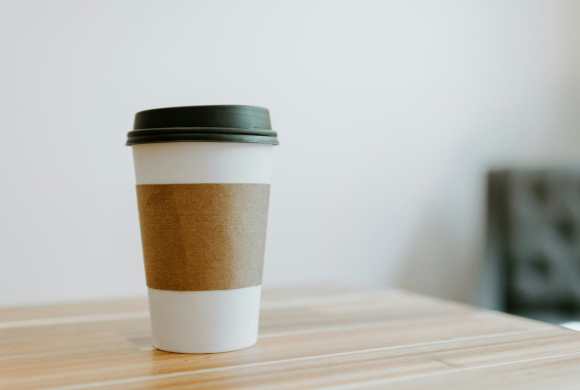
Paper cups look harmless enough. They’re made mostly from paper, so you might assume they can simply be recycled after you’ve finished your coffee. Unfortunately, things aren’t that simple.
Many disposable cups contain a thin layer of polyethylene, a type of plastic commonly used to keep water and other liquids from soaking through the paper. Without this lining, your hot coffee could quickly turn the cup into a soggy mess. Not exactly the kind of morning experience you’re looking for.
The problem is that plastic and paper are difficult to separate during recycling. As a result, many plastic-lined containers are not as easy to recycle as ordinary paper products.
And recycling isn’t the only concern.
Conventional plastics can remain in the environment for centuries. Instead of disappearing, they gradually break into smaller pieces called microplastics. These tiny particles can spread through waterways, soil, wildlife, and even the food and drinks people consume.
The plastic lining inside coffee cups may also release tiny particles when exposed to heat and friction. According to Shirley Tang, a materials chemist at the University of Waterloo in Canada, the researchers were surprised by how easily some plastic liners released particles during their experiments.
So, if paper cups are supposed to make life easier, why do they come with another environmental problem?
Researchers from the University of Waterloo think a material already found in plants could help.
A New Coating
The research team has developed a coating made from cellulose, the material that forms the walls of plant cells. You can find cellulose in many natural sources, including wood and other plant-based materials.
Unlike conventional plastic coatings, this new material is designed to provide protection without relying on the usual plastic lining.
The researchers combined two main ingredients. The first is cellulose acetate, which makes up most of the coating. The second is cellulose nanocrystals, tiny structures that help strengthen the material.
Together, they create a protective layer that can stick to paper without needing additional chemical adhesives.
Here’s how it works.
The cellulose components form hydrogen bonds with the paper surface. These bonds help create a tightly connected network that fills many of the tiny spaces between paper fibers. Think of it like sealing small holes in a wall before water gets through.
The result is a coating that can resist water, grease, and gases. That’s important because a disposable cup needs to handle more than just a few drops of cold water. It has to survive hot drinks, oils, and other substances without falling apart.
The researchers tested the material under several challenging conditions. It remained effective when exposed to boiling water, food oils, and different chemical solvents.
They also tested how much pressure the coated paper could handle before breaking. Their experiments showed that the coating became especially strong when cellulose nanocrystals made up around 3 percent of its total weight.
That balance matters. A cup needs to be strong enough to hold your drink, but it also needs some flexibility. Nobody wants a coffee cup that cracks the moment you squeeze it.
Stronger Paper
One of the most interesting parts of this research is that the coating could make paper products stronger without requiring thick layers of material.
The researchers tested their formula on ordinary brown paper towels. These towels are thin and absorb water quickly, but after applying the coating, they became much better at resisting water.
That suggests the technology could work with different types of paper, not just the thick material commonly used for disposable cups.
The coating also improved the paper’s ability to block oxygen. According to the research, oxygen transmission was reduced by more than ten times compared with uncoated paper.
Why does that matter?
Oxygen can affect the quality and freshness of certain foods and drinks. A better barrier could help protect packaged products from unwanted changes. This means the technology may have uses beyond your morning coffee.
Another interesting benefit is the possibility of using thinner paper while keeping the strength needed for food and beverage containers.
Sayan Ganguly, a materials scientist at the Tang Nanotechnology Lab and the study’s first author, explained that using thinner paper could reduce the amount of material needed to manufacture cups. That could also help lower production costs, with possible savings eventually reaching consumers.
So, this isn’t just about replacing one material with another. It’s also about finding ways to use less material in the first place.
Cellulose is renewable and can come from different biomass sources. That makes it an interesting option for companies looking to reduce their dependence on conventional plastics.
Of course, a plant-based coating doesn’t automatically solve every packaging problem. Its production, cost, and environmental impact still need to be considered. But the early results give researchers a reason to keep working on it.
Could Your Next Coffee Cup Be Plastic-Free?
The idea sounds promising, but don’t expect your local coffee shop to replace all its cups just yet.
The coating is still at the research stage. Before it can be used in commercial food packaging, researchers need to complete food-safety tests and go through the necessary regulatory evaluations.
That means scientists still need to make sure the material is suitable for contact with food and drinks. They also need to understand how it performs when manufactured on a much larger scale.
Shirley Tang, who leads the Tang Nanotechnology Lab at the University of Waterloo, has made it clear that the timing for commercialization is still uncertain.
That’s an important reminder. A successful laboratory experiment doesn’t mean a product is ready for supermarket shelves tomorrow.
Still, the potential is worth watching. Disposable cups are only one example of packaging that depends on plastic coatings. Food containers and other paper-based products could also benefit from a material that blocks water and grease without using conventional plastic.
And when you think about how many disposable containers people use every day, even a small improvement could matter if the technology eventually becomes widely available.
For now, your morning coffee still probably comes in a plastic-lined cup. But researchers are working on another option that takes inspiration from something as ordinary as the plants growing around us.
The next time you hold a paper coffee cup, remember that the paper isn’t always the whole story. Sometimes, the biggest problem is the thin layer you can’t even see. And perhaps the solution has been growing in nature all along.
Sources:
Leave a Reply