

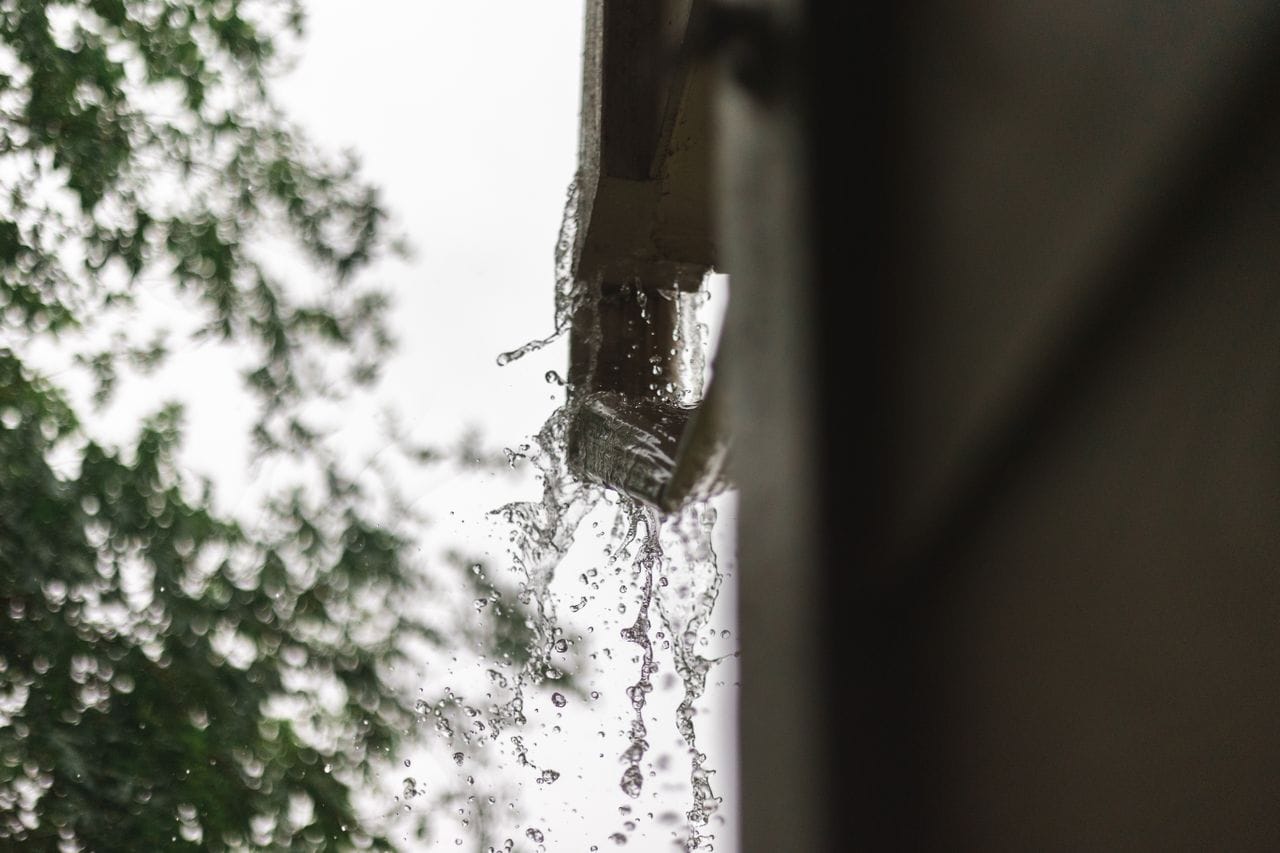
Look up at your roof during a heavy rain and think about this: a 1,000-square-foot roof can shed roughly 600 gallons of water from a single inch of rainfall. Every bit of it funnels into a handful of downspouts. Where that water goes next matters — for your home, your yard, and the local environment.
In many neighborhoods, downspout water shoots straight onto driveways and sidewalks, then into storm drains. Along the way it picks up fertilizer, pet waste, oil, and sediment, carrying them into streams and lakes. Meanwhile, the same water dumped beside a foundation can cause wet basements, erosion, and soggy lawns.
The good news is that managing roof runoff in a more sustainable way often protects your home at the same time. Here are the most effective eco-friendly options.
1. Rain Barrels and Cisterns
Capturing roof water is the simplest way to put it to use. A rain barrel connected to a downspout can collect water for gardens, potted plants, and lawn spots during dry spells, reducing demand on municipal water.
Tips for success:
- Use a barrel with a screened lid to keep out mosquitoes and debris.
- Add an overflow hose that directs excess water well away from the foundation.
- Drain and disconnect barrels before freezing weather.
- Check local rules — most areas encourage rain barrels, but a few have restrictions.
A single barrel fills quickly in a big storm, so think of it as a supplement, not a full drainage solution.

2. Rain Gardens
A rain garden is a shallow, planted depression designed to collect runoff and let it soak slowly into the ground. Native plants with deep roots help water infiltrate while providing habitat for pollinators and birds.
Key design points:
- Place it at least 10 feet from the house so water doesn’t seep toward the foundation.
- Size it based on the roof area that drains to it and how quickly your soil absorbs water.
- Do a simple infiltration test first: dig a hole, fill it with water, and see how fast it drains.
- Choose plants that tolerate both wet spells and dry periods.
Rain gardens are one of the few drainage features that actively improve local ecology.

3. Downspout Extensions and Splash Blocks
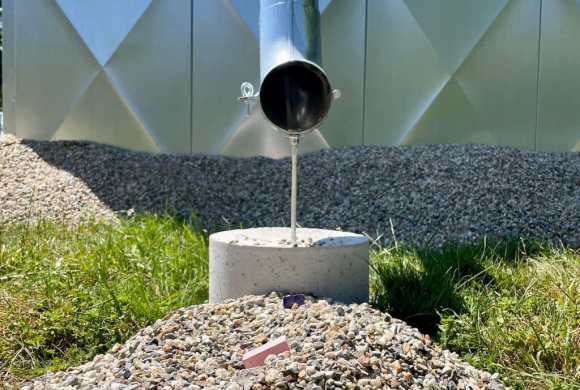
Sometimes the best first step is the simplest. Extending a downspout several feet from the foundation and onto ground that slopes away from the house prevents most foundation-related water problems. Pair the extension with a splash block or a bed of river rock to prevent erosion.
Direct the outflow onto lawn or planting beds rather than pavement, so water soaks in instead of racing to the storm sewer.
4. Buried Downspout Lines and Pop-Up Emitters
For a cleaner look, downspouts can connect to buried pipes that carry water to a pop-up emitter in a lower part of the yard. The water then spreads out over the lawn or into a planting bed. It’s tidy, keeps walkways clear, and still allows water to infiltrate rather than run off.
5. Dry Wells
A dry well is an underground chamber or gravel-filled pit that receives downspout water and lets it slowly percolate into the surrounding soil. It’s useful where space is limited, but it only works well in soils that drain reasonably — heavy clay can cause it to fill and back up.
6. Permeable Surfaces
If roof water currently runs onto a large patio or driveway, consider permeable pavers or gravel areas that allow water to pass through. Replacing even part of a hard surface reduces runoff and recharges groundwater.
Choosing the Right Approach
The best solution depends on your soil, slope, rainfall, and how much space you have. Many homes benefit from a combination: rain barrels for capture, extensions or buried lines to move water away from the house, and a rain garden to soak it in. For a side-by-side comparison of options, including pros, cons, and where each works best, this guide to downspout drainage ideas walks through eight approaches in detail.
Small Changes, Big Impact
Managing roof runoff is one of the easiest ways homeowners can reduce stormwater pollution and conserve water. A few downspout upgrades can keep your basement dry, your lawn healthier, and local waterways cleaner — all at the same time.
Start with one downspout this season. Watch where the water goes in the next storm, and choose the option that keeps it on your property, soaking into the ground where it belongs.
Leave a Reply