


You probably think of plastic pollution as something happening far away, like turtles tangled in ocean debris. But what if the walls of your own house, and even the water you drink from a bottle, are quietly adding tiny plastic particles into your body right now?
A new report just dropped some pretty alarming news. It pulled together more than 350 peer reviewed studies and found that microplastics are coming from places most people would never suspect. We’re talking baby formula, paint, and even breast implants.
Then a question emerged, wha’ts actually in your water bottle?
The Sneaky Sources
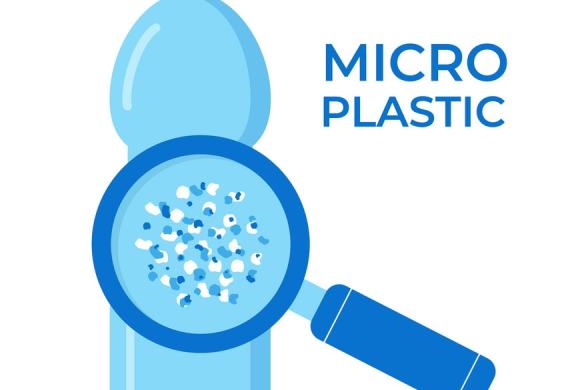
Microplastics are tiny plastic fragments smaller than 5 millimeters, roughly the size of a sesame seed. They’ve already been found in bottled water, human blood, animal poop, and even near the summit of Mount Everest. Pretty much everywhere.
But according to this report, commissioned by the Netherlands based Plastic Soup Foundation, the real story isn’t just about obvious sources like plastic packaging. It’s about the sneaky, overlooked ones hiding in places we trust the most, like hospitals.
Operating rooms, believe it or not, are major hotspots for microplastic exposure. Researchers found concentrations reaching up to 9,258 particles per square meter during a single work shift. Medical tools like cardiac catheters, orthopedic implants, silicone breast implants, and even IV fluid bags are all quietly shedding plastic particles.
This gets even scarier when you think about newborn babies. Premature infants receiving intravenous nutrition can ingest up to 115 microplastic particles in just 72 hours, purely from the plastic tubing used to keep them alive. Even baby formula itself can carry microplastics depending on packaging and preparation.
Your Own Home
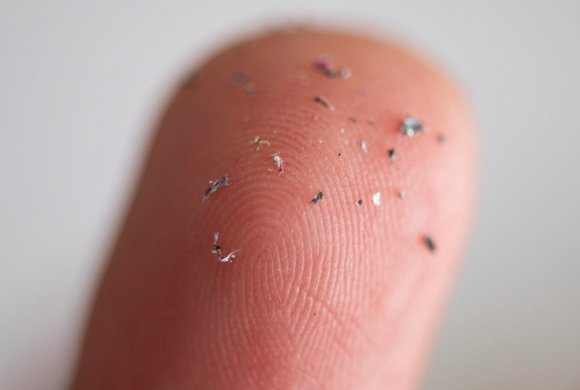
Here’s the part that really hits close to home, literally. Everyday children’s products like building bricks and play mats are constantly shedding tiny particles of PET, PVC, and polypropylene into household air and floor dust without anyone noticing.
Kids are especially vulnerable here too. Since children breathe more air relative to their body size and spend way more time crawling around on floors, their exposure ends up being much higher compared to adults in the exact same house.
And it doesn’t stop there. Household paint, largely made from plastic binders, becomes a massive hidden source too. As paint weathers over time or gets scraped during renovations, it releases enormous amounts of particles. One single coat over 100 square meters can release between 17 and 68 quadrillion polymeric paint particles alone.
Maria Westerbos, founder of Plastic Soup Foundation, put it simply. Most people still think plastic pollution only affects oceans and beaches, not their personal health. But she explains that our own living environments are basically becoming microplastic generators, exposing us constantly in ways we’ve never really thought about before.
Backfire
Here’s a twist you probably didn’t see coming. Some proposed solutions to climate change could actually make microplastic exposure worse instead of better, which honestly sounds like fixing one problem while accidentally creating another.
One example is stratospheric aerosol injection, a geoengineering technique designed to cool the planet by injecting reflective particles high into the stratosphere. While most current research focuses on sulfur dioxide or calcium carbonate, scientists are also considering plastic polymers as an option.
The report warns this could become a massive, largely unmeasured source of intentionally released airborne microplastics. It’s described as a potentially “terascale” contributor, and that’s on top of rainfall that already carries microplastics from car tires and synthetic clothing fibers.
Countries like the UK and the US are actively funding research into this exact technology, hoping it might help slow down global warming. But if it also means raining down more plastic particles onto our planet, is that trade even worth to make?
Any Of This Matter?

Plastic production itself is a major climate problem too. It’s made from fossil fuels and contributes 3.4 percent of global greenhouse gas emissions, which is roughly the same as the entire aviation industry combined. That’s a lot of planes worth of pollution just from plastic.
Every year, humans generate a staggering 400 million tons of plastic waste. About 60 percent of that ends up scattered across our natural environment, where it slowly breaks apart into smaller pieces but never actually disappears completely. It just keeps circulating.
Scientists still aren’t entirely sure what the long term health effects of all this microplastic exposure will be. But the report describes the risks as scientifically plausible, potentially serious, and unfairly distributed across both present and future generations who never had a say in any of this.
So next time you unbox a new toy for your kid, repaint your living room, or grab a bottle of water on a hot day, maybe pause for a second. The plastic problem isn’t just floating somewhere out in the ocean anymore. It’s already inside your walls, your home, and maybe even inside you.
Sources,
Leave a Reply