


When we think about the effects of heatwave and extreme heat, we usually think about people suffering in the sun.
But the record heatwave hitting Western Europe right now is also killing farm animals by the hundreds of thousands, destroying livelihoods, and pushing agricultural systems to their breaking point.
In France, the heat has already killed hundreds of thousands of poultry in just a matter of days. Schools have been closed, power supplies have failed, and dozens of people across Western Europe have died.
Farmers are now being forced to harvest their grain at night just to avoid working in the dangerous midday heat, and the crisis is only getting worse. Is this something that would keep happening every year?
What Is A Heatwave?

A heatwave is a period of unusually hot weather that lasts for several days or even weeks. Scientists define it as a stretch of time when temperatures stay well above the historical average for a particular region.
Heatwaves are natural events, but climate change is making them much more frequent, much longer, and much more intense than they used to be, and the trend is expected to continue as global temperatures keep rising.
For humans, heatwaves can be deadly. They cause heat exhaustion, heatstroke, and heart failure, especially in elderly people, children, and those with existing health conditions.
But the damage does not stop with people, because farm animals are also extremely vulnerable to extreme heat, and when temperatures stay high for too long, the results can be catastrophic for farmers and food supply chains alike.
Thousands Of Poultry Dead

This is exactly what is happening right now in France. Clement Blanchard, a 32-year-old chicken farmer in Pays de la Loire, France’s second-largest poultry-producing region, said he had lost about 700 chickens over just a few days.
Under normal weather conditions, he would expect to lose only one or two birds per day. He explained, “We’re faced with the same thing with our animals as we are ourselves: they suffer enormously from the heat, and so at times like this there are abnormally high death rates.”
Blanchard’s situation is far from unique. Yann Nedelec, head of the French poultry industry group ANVOL, estimated that at least several hundred thousand birds had already died across both indoor and outdoor farms in the country.
The Chambers of Agriculture of Brittany and Pays de la Loire, the two biggest poultry-producing regions in France, described the deaths as “massive.”
Together, these two regions produce nearly 60 percent of all the poultry raised in France, which is itself the European Union’s third-largest poultry producer after Poland and Spain.
Cannot Keep Up
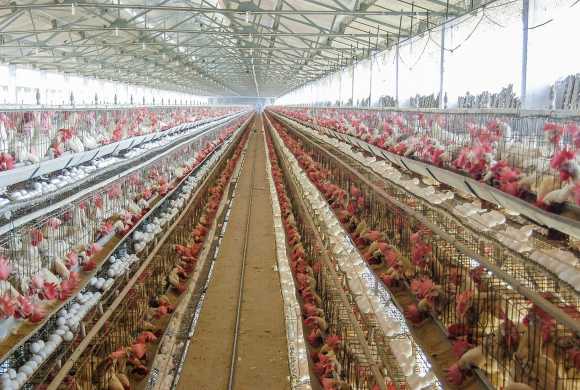
The sheer number of dead animals has created another serious problem. Normally, dead farm animals are collected and sent to processing facilities for rendering, where they are safely broken down.
But the volume of carcasses being produced right now is far too large for the existing collection system to handle, and Blanchard said he was still waiting for collection workers to arrive at his farm days after the deaths began.
While waiting, farmers have been advised to spread sawdust or wood shavings over the carcasses to absorb liquids and slow decomposition.
Authorities in both regions are also now considering allowing on-farm burials as a temporary solution, though this would only be permitted after careful technical and environmental checks to make sure it does not contaminate the soil or nearby water sources.
Cows Are Struggling Too
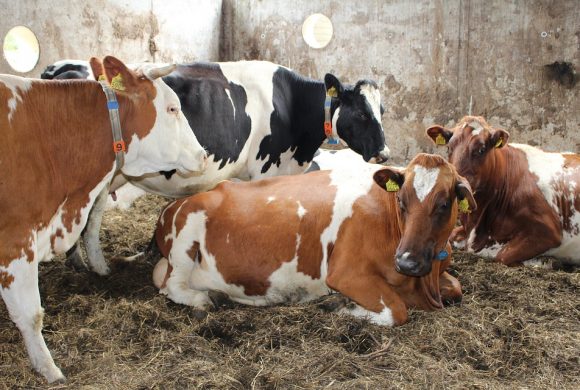
The crisis is not limited to poultry farms. Dairy cattle are also suffering badly across the country. High temperatures reduce how much feed cows are willing to eat, increase their demand for water, and significantly cut their milk production.
Frederic Vincent, who keeps about 70 dairy cows near Angers in western France, said his entire herd had clustered under ventilation points inside the barn for days while fans ran at full speed trying to keep the animals cool enough to survive.
The impact on his milk production has been severe. Vincent reported that output had fallen by 15 to 20 percent, a loss that will directly affect his income for weeks to come. He described the scene on his farm with words that were hard to forget.
He said, “They’re standing there with their mouths wide open, just trying to find air. It’s very difficult, physically for people and for the animals.”
A Chain Reaction

What is happening in France is a clear example of how heatwaves create chain reactions that go far beyond the immediate danger of hot weather. When temperatures rise to extreme levels for extended periods, the effects ripple outward through every part of daily life.
Animals die, food production falls, collection and supply systems get overwhelmed, farmers lose income, and the stress on communities and governments grows quickly.
The economic losses from events like this can be enormous. A farmer who loses hundreds of animals in a few days does not just lose the animals themselves.
They lose the income those animals would have generated, the time and money already spent raising them, and sometimes the confidence to keep going in a profession that is becoming harder and more unpredictable every year.
For small family farms in particular, a single extreme weather event can cause damage that takes years to recover from.
Scientists have been warning for years that climate change would make events like this both more common and more severe. The current heatwave gripping Western Europe is not just a weather event. It is a preview of what could become a regular summer experience across much of the world if global warming continues at its current pace.
The suffering happening right now on farms across France is a reminder that the consequences of a changing climate are not distant or abstract.
They are already here, they are already causing real harm to real people and animals, and they will continue to get worse unless the world takes serious action to reduce the greenhouse gas emissions driving the warming in the first place.
Sources:
Leave a Reply