

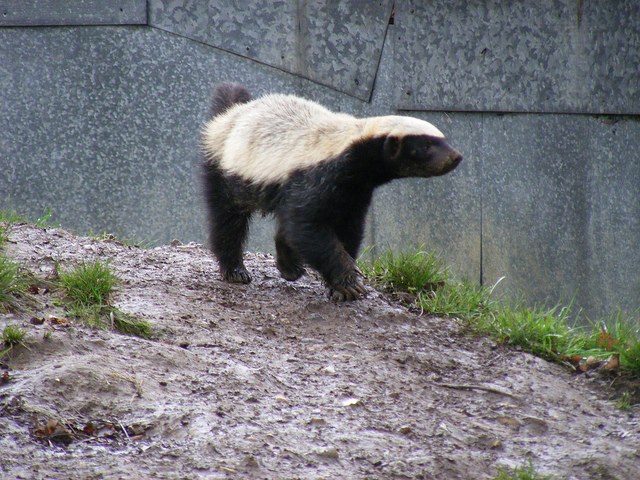
Competition and cooperation are not always opposites. In the animal kingdom, rivals sometimes make the best partners. Take the coyote and the badger. Both are crafty carnivores. Both hunt the same prey in the same prairies.
By all logic, they should be enemies, competing fiercely for every meal. But something remarkable happens when these two predators cross paths. Instead of fighting, they team up.
They hunt together in a partnership so effective and so ancient that Native Americans were familiar with it long before European settlers arrived on the continent.
Recently, this extraordinary collaboration was captured in stunning photographs near the National Black-footed Ferret Conservation Center in northern Colorado, giving scientists and the public a rare visual glimpse into one of nature’s most fascinating examples of interspecies teamwork.
A study published in the journal Mammology found that 90 percent of all coyote-badger hunts featured exactly one of each animal, while about 9 percent involved one badger hunting alongside two coyotes.
The partnership has been documented across much of Canada, the United States, and Mexico, and it raises a deeply interesting question about how and why natural rivals choose to work together.
The Skills Each Hunter Brings

To understand why coyotes and badgers hunt together, you first need to understand what makes each of them special as individual hunters.
Coyotes are nimble and fast. They excel at chasing prey across open prairies, covering ground quickly and cutting off escape routes with sharp turns and rapid bursts of speed. Their strength lies entirely above ground, in the open spaces where speed determines whether a hunter eats or goes hungry.
Badgers are almost the opposite. They are slow and awkward runners who would lose a footrace against almost any prey animal on an open plain. But underground, they become something different entirely.
Badgers are exceptional diggers, having evolved over millions of years to pursue small animals deep into burrow systems beneath the earth. Their powerful claws and muscular bodies make them perfectly designed for tearing through soil and following prey into tunnels where no other predator can follow.
Prairie dogs and ground squirrels, the primary prey in these hunts, have evolved survival strategies specifically tailored to each of these predators. When a badger threatens them, they leave their underground burrows and flee across the open surface where the badger cannot catch them.
When a coyote threatens them, they do the opposite. They dash for the nearest burrow entrance and disappear underground where the coyote cannot follow. These prey animals have essentially developed two separate escape strategies that work perfectly against each predator individually.
But when both predators hunt together, the escape strategies cancel each other out. Running above ground means the coyote catches you. Hiding underground means the badger digs you out. The rodents face a trap with no exit.
Partnership Benefits Both Hunters
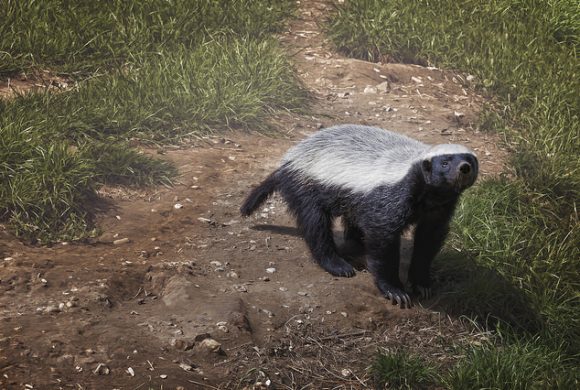
The logic of the partnership seems straightforward from a prey animal’s perspective. But what do the coyote and badger actually gain from working together? After all, when one of them finally makes a kill, they do not share the meal.
The coyote keeps whatever it catches above ground, and the badger keeps whatever it digs up below. So why bother with the collaboration at all?
The answer lies in efficiency. Research suggests that both animals hunt more successfully when working together than when hunting alone. A study conducted at the National Elk Refuge in Wyoming found that coyotes hunting with badgers consumed prey at higher rates and had access to an expanded habitat base.
They also spent less energy moving around because the partnership effectively cornered prey more reliably, reducing the amount of ground a coyote needed to cover chasing animals that ultimately escaped underground.
For the badger, the benefits were equally real. Badgers hunting with coyotes spent more time actively pursuing prey and less energy on excavation because coyotes pressured prey animals into their burrows in the first place, giving badgers more targets to dig toward.
Overall, the research concluded that prey vulnerability increased significantly when both carnivores hunted in partnership.
Even when only one animal ends up with a meal on any particular hunt, the overall success rate for both species improves enough over time to make the partnership worthwhile.
It is a remarkable example of how natural selection can produce cooperative behavior even between competitors, simply because cooperation produces better results than rivalry.
A Relationship With Limits
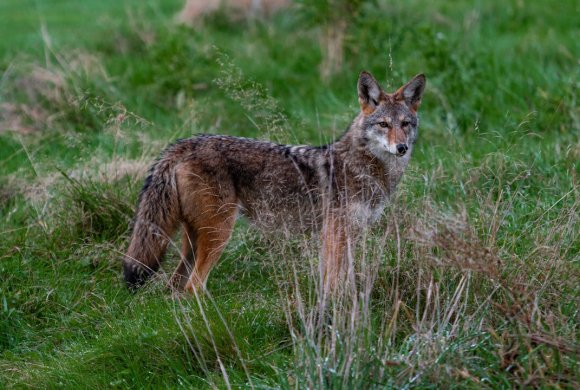
The coyote-badger partnership is not unconditional friendship. These animals have not decided to be friends. They have simply learned, or rather evolved to recognize, that cooperation in certain circumstances benefits both parties.
Most of their interactions appear to be mutually beneficial or neutral, but they sometimes prey on each other when the opportunity arises. The U.S. Fish and Wildlife Service describes their arrangement as a sort of open relationship, and the timing of their collaboration reveals just how pragmatic and calculated it actually is.
The partnership tends to strengthen during warmer months when prairie dogs and ground squirrels are active above ground and in their burrow systems. As winter approaches and temperatures drop, the two predators tend to drift apart.
The reason is simple. In winter, hibernating prey animals sleep deep in their burrows, making them accessible primarily to digging. A badger can excavate a sleeping prey animal without any help from a fast-running coyote. The coyote’s speed becomes irrelevant when the prey is not moving. So the badger hunts alone, and the coyote finds its own food elsewhere.
But winter eventually gives way to spring. Ground squirrels and prairie dogs become active again. The prey’s dual escape strategy returns. And the two hunters, just as they have for thousands of years, find each other on the prairie and resume their ancient collaboration.
Neither forces the partnership. Neither one depends on the other exclusively. They simply recognize when working together makes sense and act accordingly.
Beyond Logic
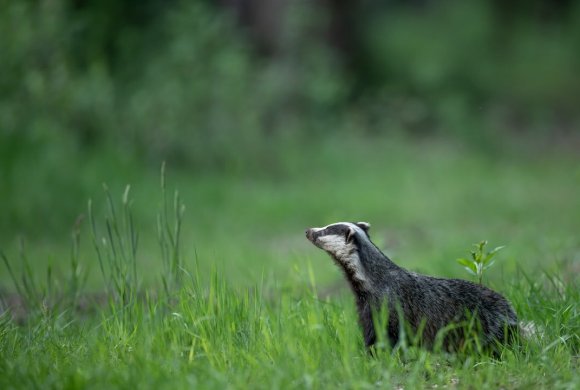
The coyote-badger hunting partnership challenges a popular simplification about how nature works. Many people imagine ecosystems as battlegrounds where every animal competes ruthlessly against every other for food, territory, and survival.
The coyote-badger partnership shows that this picture is incomplete. Natural selection does not always reward pure competition. Sometimes it rewards the ability to recognize when cooperation produces better outcomes than rivalry, even between animals with overlapping interests.
This type of relationship, where two different species benefit from interacting even without being fully dependent on each other, appears throughout the natural world. Cleaner fish pick parasites from larger fish that could easily eat them.
Oxpecker birds ride on buffalo and eat the ticks from their skin. Different species of ants sometimes coordinate foraging routes to avoid competition. In each case, animals that would logically compete have found arrangements that work better than pure conflict.
The coyote and badger represent a particularly vivid example because their partnership is so clearly strategic, so well documented, and so elegantly matched to the specific challenge of catching prey that has evolved to escape both of them individually.
Sources:
https://animals.howstuffworks.com/
Leave a Reply