


For more than a century, coal powered industrial growth across the world. Entire towns and regional economies were built around coal mines and power stations. Generations of families worked in the same mines, lived in the same towns, and built their lives around the rhythm of coal production.
But the world is changing. As countries shift toward clean energy and move away from fossil fuels, many coal-dependent regions face a painful economic decline. In the United States, coal capacity has dropped by around 60 percent since 2010.
In the European Union, countries including Germany, Spain, and the Netherlands have set legally binding deadlines to phase out coal before 2030. Without planned transition strategies, retired coal sites risk becoming abandoned industrial zones, driving job losses, population decline, and shrinking local tax bases.
The challenge is no longer only how to close coal plants safely. The bigger question is what comes next for the workers, the infrastructure, and the communities that built their entire identities around coal.
The Hidden Value
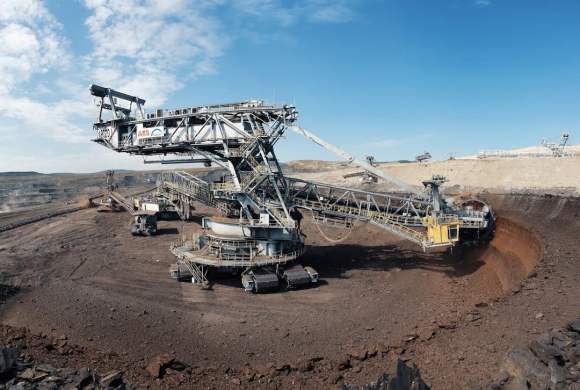
Here is something most people do not realize. Old coal plants and mining sites are not just abandoned wastelands. They are actually sitting on some of the most strategically valuable industrial land available for clean energy development.
Coal plants already have grid connections, transmission capacity, and industrial permits that would take years and enormous amounts of money to obtain for a brand new site.
Building new renewable energy projects typically requires lengthy approval processes and costly grid upgrades. Repurposing former coal sites avoids all of these barriers, making it faster and cheaper to build solar farms, wind farms, and battery storage facilities.
In the eastern United States, retired coal plant sites in Appalachia are already being redeveloped into solar and battery projects. These developments received support from the Biden administration’s Inflation Reduction Act, which directed significant investment toward communities historically dependent on fossil fuels.
The approach preserves grid reliability while creating new local employment opportunities in the clean energy sector.
Coal mining also leaves behind large flat areas of reclaimed land that can be repurposed for manufacturing.
Solar panel assembly plants, wind turbine blade manufacturing facilities, and green hydrogen production sites all require exactly the kind of large, flat, industrially zoned land that former coal mines provide.
The infrastructure that once served coal extraction can be redirected to serve the clean energy economy with relatively modest additional investment.
Underground Mines as Energy Storage
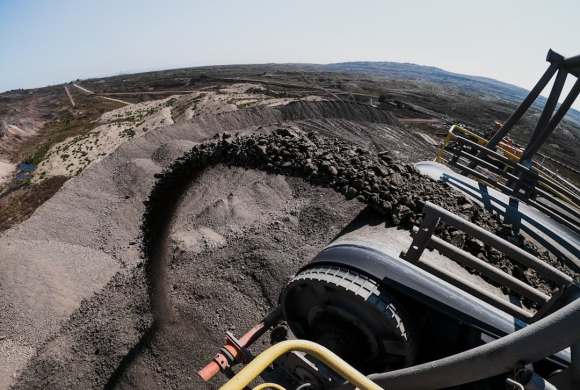
One of the most creative repurposing ideas involves using the cavities left behind by underground mining as energy storage facilities. Modern electricity grids face a fundamental challenge.
Mainly, renewable energy sources like solar and wind produce electricity inconsistently and generate excess power when the sun shines brightly or the wind blows strongly, and producing very little during calm, cloudy periods. Grids need storage technologies capable of delivering electricity for several hours or even days to bridge these gaps.
Decommissioned mines offer natural underground cavities that can house two promising storage technologies. The first is pumped hydro energy storage, where excess electricity pumps water uphill into a reservoir.
When electricity is needed, the water is released downhill through turbines that generate power on demand. The second is compressed air energy storage, where excess electricity pressurizes air underground, and the pressurized air is later released through turbines to generate electricity.
Both approaches turn the physical landscape of former mining regions into giant batteries for the clean energy grid. Pilot projects in Spain and the United Kingdom are already testing mine-based gravity and compressed air storage systems.
These experiments could prove that the underground infrastructure created by coal mining has genuine economic value in a decarbonized energy system, giving former mining communities a role in the future grid rather than simply being left behind by it.
Germany’s Ruhr Region
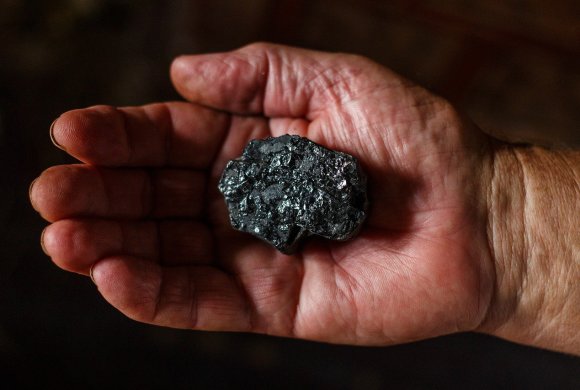
Perhaps the most convincing evidence that coal-dependent regions can successfully reinvent themselves comes from Germany’s Ruhr region. For most of the 20th century, the Ruhr was one of the most industrially intensive coal and steel producing areas in Europe.
When coal declined, the region faced severe economic hardship, population loss, and the kind of social problems that accompany rapid deindustrialization. But over two decades of coordinated industrial policy and sustained public investment, the Ruhr transformed itself into a center of advanced manufacturing and clean technology research.
The transformation was not quick or easy. It required long-term political commitment from both regional and national governments, substantial public-private financing, and deliberate workforce development programs.
But the results demonstrate that declining fossil fuel regions can become innovation centers rather than economic dead zones when the transition is planned and supported rather than left to market forces alone.
The Ruhr model has become an international reference point for what a managed coal transition can achieve when governments treat plant closures as opportunities rather than simply as endings.
Supporting the Workers Left Behind
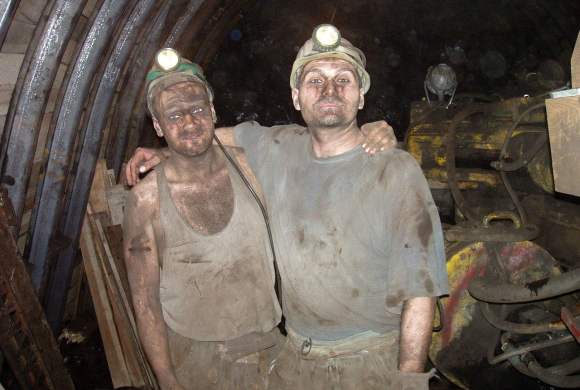
No discussion of coal transition is complete without addressing the people most directly affected: the workers themselves. Coal workers possess a range of genuinely valuable skills that transfer directly into clean energy industries.
Electrical maintenance experience, heavy machinery operation, underground safety training, and technical problem-solving are all capabilities that solar installation companies, wind turbine maintenance crews, and grid operators need urgently.
Short retraining programs can shift experienced coal workers into these growing sectors without requiring them to start their careers from scratch.
Several countries have implemented wage insurance programs that protect workers’ incomes during retraining periods, and regional investment funds specifically target communities losing coal jobs.
These approaches form part of a broader policy framework called just transition, which aims to ensure that workers and communities benefit from the shift to clean energy rather than simply bearing its costs while others capture the gains.
The concept of just transition recognizes a fundamental fairness issue. The communities that powered industrial growth for generations should not be abandoned when the energy system moves on.
Retraining initiatives, community investment schemes, and clean technology innovation clusters can increase regional resilience and give former coal communities genuine stakes in the clean energy economy rather than leaving them as casualties of decarbonization.
A Transformation
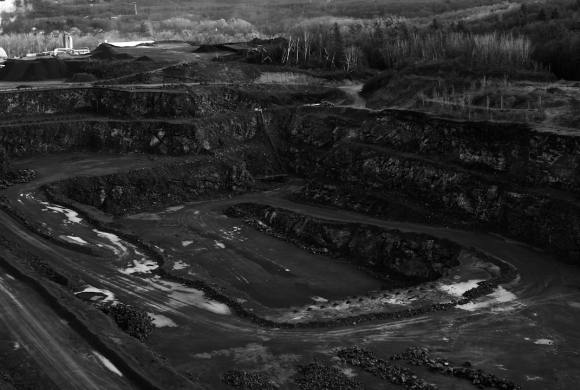
The transition of coal regions into clean energy hubs is not automatic. It requires coordinated policy from multiple levels of government, public-private financing arrangements, serious workforce planning, and sustained long-term political commitment that outlasts individual election cycles.
The economic disruption of coal decline is real and serious. Communities that lose their primary economic base without planned support face genuine hardship that cannot be minimized or ignored.
But the examples emerging across Europe and North America demonstrate clearly that coal’s decline does not have to mean regional decline.
Former coal regions that invest strategically in renewable energy infrastructure, manufacturing, and energy storage can develop new industries with higher long-term job stability and local ownership of energy assets.
The physical infrastructure of coal, the land, the grid connections, the underground cavities, and the skilled workforce, turns out to be a genuine foundation for building the next generation of clean energy industrial hubs rather than simply a legacy of a dying industry.
Sources:
Leave a Reply