

Somewhere in a strawberry yogurt, a bottle of Campari, or a tube of deep red lipstick, there may be an ingredient that most consumers have never thought to question.
The name is carmine. It produces a rich, stable crimson color, it has been used for over a thousand years, and it comes from an insect.
Carmine dye, extracted from the dried and crushed bodies of female cochineal insects, has been coloring food, drinks, and cosmetics for centuries. It is found in supermarkets, pharmacies, and high-end beauty counters around the world.
And for most of its history, the people consuming it had no idea it was there. Want to learn more about it?
Cochineal It Is
The cochineal insect has been used as a dye source in South America since at least the 10th century. Indigenous peoples across Central and South America, including the Maya and the Aztecs, used carmine to dye their fabrics long before Europeans arrived.
When Spanish explorers reached the Americas in the 16th century, they brought carmine back to Europe, where it quickly became valued as an inexpensive and vivid source of red. By the 18th century, importers had begun regulating the cochineal market, and production remained concentrated in South America.
Today, Peru alone supplies between 85% and 95% of the world’s carmine powder each year, with Mexico and the Canary Islands also maintaining significant industries.
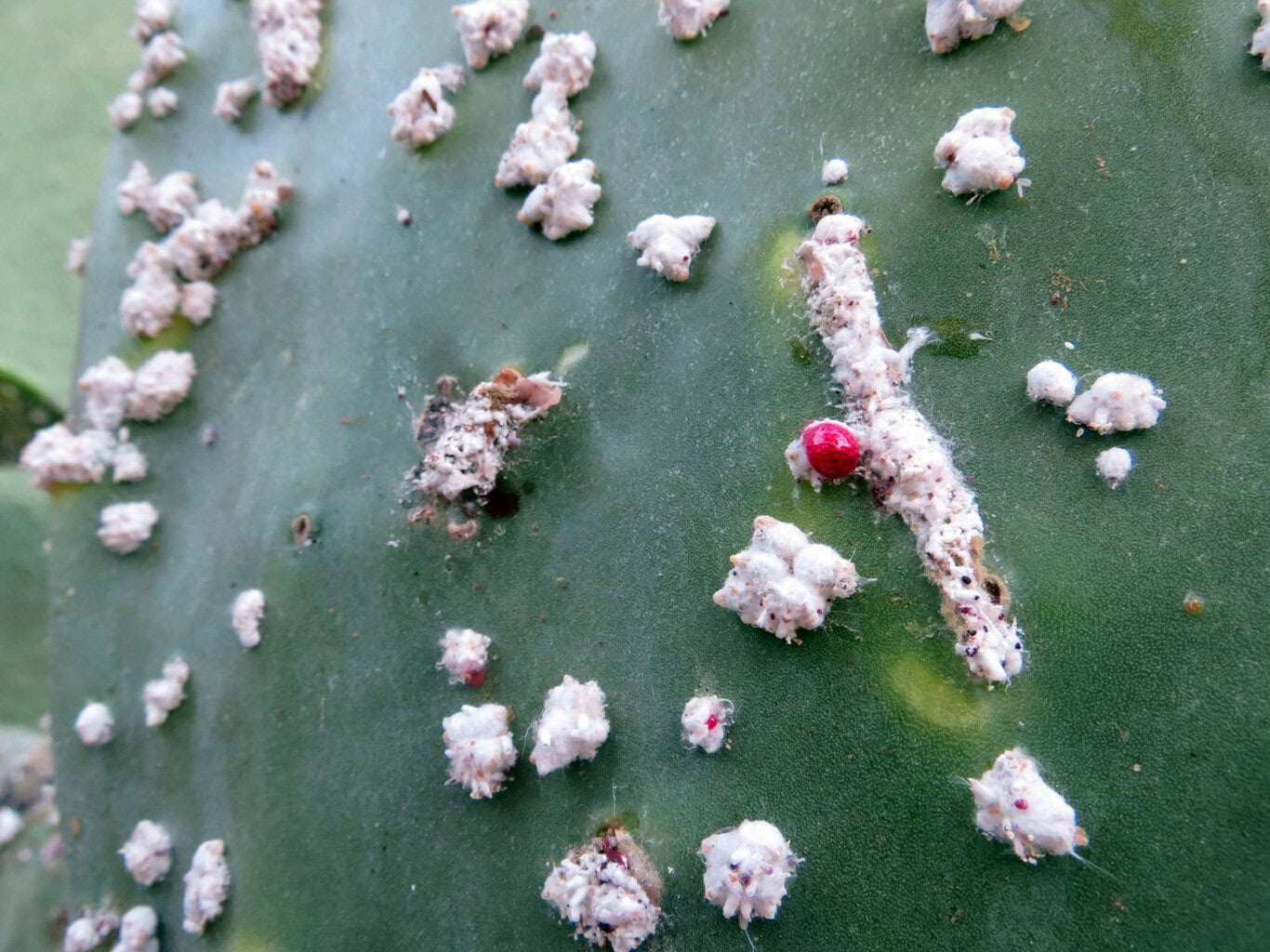
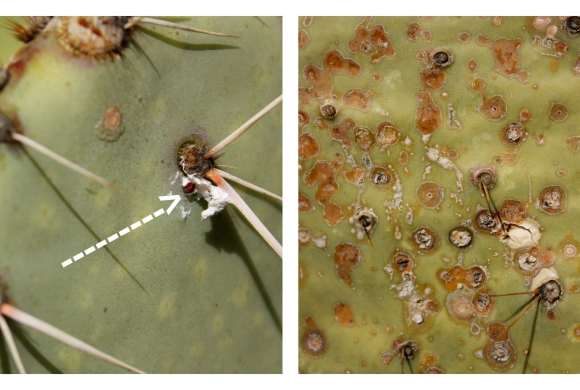
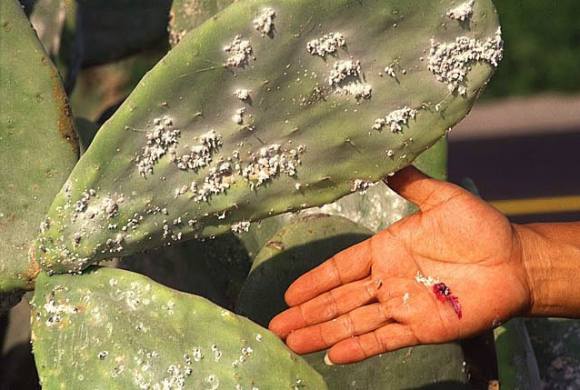
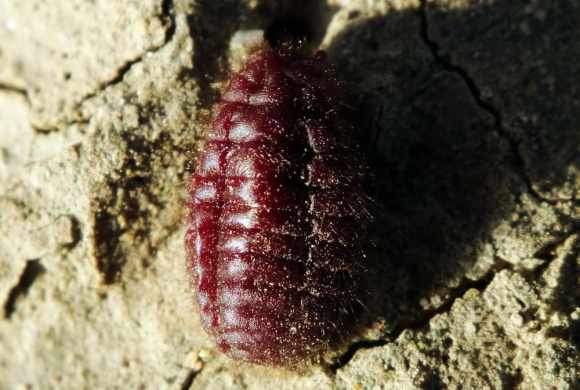
The insect responsible is Dactylopius coccus, a small scale insect about the size of a grain of rice that lives on prickly pear cactus. The females, which are mostly immobile and live around 90 days in the wild, naturally produce carminic acid as a chemical defense against predators.
Up to 20% of a female cochineal’s body weight consisted of this acid, and it was this compound that gave carmine its color. To produce the dye, insects were harvested, dried, and ground into powder, then boiled, filtered, and mixed with aluminum salts to create the final pigment.
The Carmine Effect
For much of its commercial history, carmine circulated through the food and cosmetics industries with little public scrutiny.
It appeared in processed meats, pastries, juices, yogurt, lipstick, eye shadow, and lip gloss, contributing rich reds and serving as a base for cooler pinks and purples. Companies used it because it was stable, naturally sourced, and produced consistent color results.
The ingredient’s obscurity began to break down in 2012, when Starbucks faced public criticism after it became known that the company used carmine in its strawberry-flavored drinks. The backlash came primarily from vegan consumers and people with religious dietary restrictions who felt they had been misled.
Starbucks President Cliff Burrows responded with a public announcement that the company would switch to lycopene, a tomato-based extract, and remove carmine from its strawberry products.
Campari, the Italian liqueur, had already made a similar move years earlier. The brand had used carmine for decades before replacing it with a petroleum-based artificial colorant in 2006. Other companies defended their continued use of the ingredient.
In 2020, Yoplait responded publicly to a customer complaint by clarifying that the carmine in its products came from dried cochineal shells in purified form and carried FDA approval for use in food.
Carmine’s Controversy
The debate around carmine touched on several different concerns that did not always overlap, and understanding why the ingredient remained controversial required looking at each one separately.
For vegan consumers, the core issue was transparency. An estimated 22 billion to 89 billion adult female cochineal insects were killed each year to produce carmine.
Many companies described their products as containing “natural colorings” or made claims about being vegan or free from animal ingredients without disclosing that carmine was present.
Since those terms were unregulated, companies could define them however they chose. The only reliable way to verify that a cosmetic product contained no animal-derived ingredients was to look for certification from recognized organizations such as The Vegan Society or Vegan Action.
For consumers with certain religious dietary restrictions, the issue was similar. Carmine was an animal-derived ingredient that might not be compatible with specific dietary laws, yet it frequently appeared on labels under names that gave no indication of its origin, including E120, natural red 4, crimson lake, carminic acid, cochineal extract, and CI 75470.
Health concerns also entered the picture. Research linked exposure to carmine to severe allergic reactions, including anaphylaxis, contact allergies, and asthma.
In 2009, the FDA responded by requiring any company producing carmine-containing food or cosmetics to list the ingredient explicitly on the label, making it harder for the source to remain hidden in ingredient lists.
Carmine Vs Synthetic

Some argued that carmine represented a better environmental choice than synthetic alternatives, since artificial food dyes were often derived from coal or petroleum byproducts.
Studies had also associated common synthetic food dyes with hyperactivity in children and various allergic reactions, making carmine look comparatively benign from a health perspective.
Others pointed out that the scale of cochineal harvesting made it difficult to treat the ingredient as simply a natural and neutral option. Tens of billions of insects were killed each year to supply a global market that largely kept that fact off the label.
The 2009 FDA labeling requirement shifted that dynamic somewhat, ensuring that consumers who looked carefully at ingredient lists could now identify when carmine was present. But with the ingredient appearing under so many different names, the disclosure was only useful to consumers who already knew what to look for.
Carmine remained legal, widely used, and FDA-approved. What changed over the years was not its status in the food and cosmetics industry, but the degree to which consumers became aware that it existed at all, and the extent to which that awareness shaped the choices they made when they picked up a tube of lipstick or a cup of strawberry yogurt.
Sources:
Leave a Reply