

What would you do if your village was slowly dying of thirst? Most people would wait for someone else to fix the problem.
But one man from Central Java decided to fix it himself, with his own hands, his own money, and nineteen years of quiet determination.
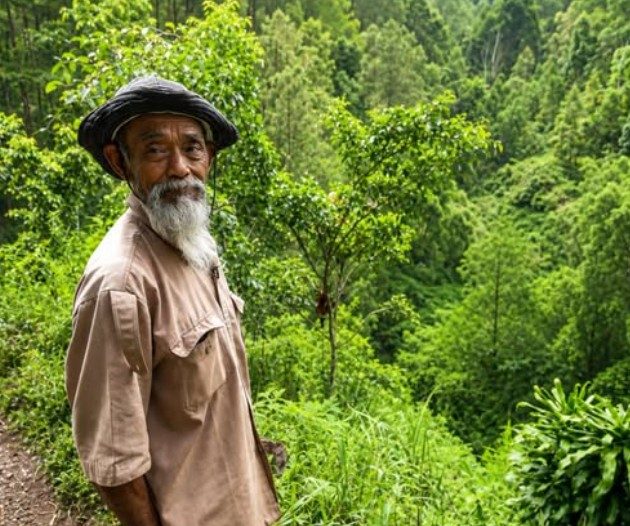
His name is Sadiman. He is a farmer from Dali hamlet, in Wonogiri regency, Central Java. Today, because of what he did, more than 800 families in his village and the surrounding area have clean water flowing to their homes every single day.
His story is one of the most powerful examples of what one ordinary person can do when they refuse to give up. And this story of Sadiman also means that we can save our water from future crisis if we really want to.
The Thirsty Village
To understand why Sadiman did what he did, you first need to understand how bad things used to be. Gendol Hill, which sits near his village on the southeastern slope of Mount Lawu, was once covered in thick forest.
But from the 1960s to the 1980s, heavy logging and repeated forest fires stripped the hill of almost every tree, and without its roots holding water in the soil, the Gendol River, the only water source for the villagers, dried up quickly every dry season.
Sadiman first noticed something was seriously wrong when he was working on the hill one day, tapping rubber trees to earn extra money. He found that many of the trees had stopped producing rubber latex altogether.
He said, “I found out that many rubber trees no longer produced rubber latex. Then I realized that the water crisis was too extreme. Even the tree trunks had dried up.” That moment changed everything for him, and he went home knowing that if nobody did something soon, the village would have nothing left.
A Bag Of Seedlings

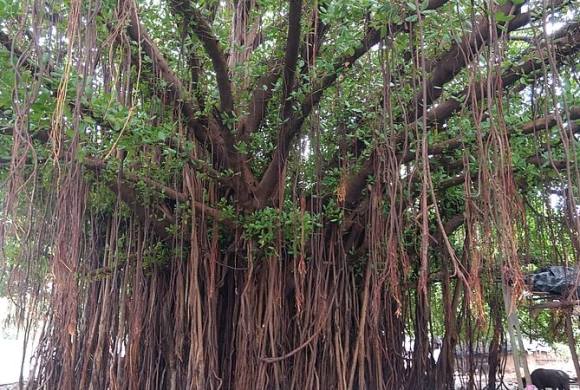
So he decided to act. Starting in 1996, Sadiman began buying tree seedlings with his own money and planting them on Gendol Hill, one tree at a time. He chose banyan trees as his main focus because, unlike rubber trees that absorb groundwater, banyan trees hold water in the soil and return it slowly to the ground below.
He said, “The more banyan trees planted means the more villagers will get clean water.” The work was not easy, and it was not cheap either. Banyan seedlings cost around 100,000 rupiah each, and Sadiman was not a wealthy man.
To keep his campaign going, he came up with a clever solution: he grew clove seedlings in front of his house and traded every ten clove seedlings for one banyan seedling from other growers. This simple exchange system allowed him to keep planting year after year without spending money he did not have.
What made his journey even harder was that most people around him did not believe in what he was doing.
Neighbors laughed at him and told him he was wasting his time. Villagers who brought their cattle to graze on the hill would pull out the seedlings he had just planted, destroying days of his work in minutes.
Didn’t Look Back in Anger
Sadiman never got angry. He simply came back with more seedlings and planted them again. He said, “I just wanted to see the village with reliable water sources again.”
That one sentence says everything about the kind of man he is, and it is the reason why, even when everything seemed to be working against him, he never once thought about quitting.
Year after year, he kept going. The hill slowly began to change as roots spread deeper into the soil, leaves caught rainfall, and dry land started to come alive again.
Nineteen years after he planted his first tree, at least 11,000 trees, including 4,000 banyan trees, had been planted across 100 hectares of land on Gendol Hill and the neighboring Ampyangan Hill.
While 30 other subdistricts in Wonogiri were struggling badly during a prolonged dry season, Geneng was one of the very few areas that remained calm and unaffected.
Water now flows from the foot of the hills through pipelines every day, reaching more than 800 families in Geneng and the neighboring Conto subdistrict. The village that once begged for water now has more than enough to go around.
The people of Geneng have not forgotten who made this possible. The local subdistrict chief said, “Pak Sadiman is our hero. This village used to struggle with a water crisis, but now we have an abundance of water because of him.”
Suranto, the principal of SDN 2 Geneng elementary school, added, “Mr. Sadiman is a living example of sincerity, persistence and hard work. He is a common man who has a big dream to empower his society.”
More Than Result

What makes Sadiman’s story so powerful is not just the result, but the reason behind it. He did not do this for money. He did not do it for fame or recognition. He did it because he loved his village and could not stand watching it suffer.
And perhaps the most inspiring part of all is that Sadiman has not stopped. Even after everything he has achieved, he says he still needs to plant at least 20,000 more trees to fully solve the water problem for all the surrounding areas. When asked about his plans, he gave an answer that should stay with all of us.
He said, “I won’t stop planting trees as long as I’m still physically fit to do that.”
That is the spirit of a true hero. Not someone with power or wealth or fame, but someone with a clear purpose and the courage to keep moving toward it no matter what others say.
Sadiman started alone, was laughed at, had his work destroyed, and kept going anyway. He turned a dying hill into a living forest and a thirsty village into one that has water to spare, and he did it all one tree at a time.
Sources:
https://www.thejakartapost.com/
Leave a Reply