

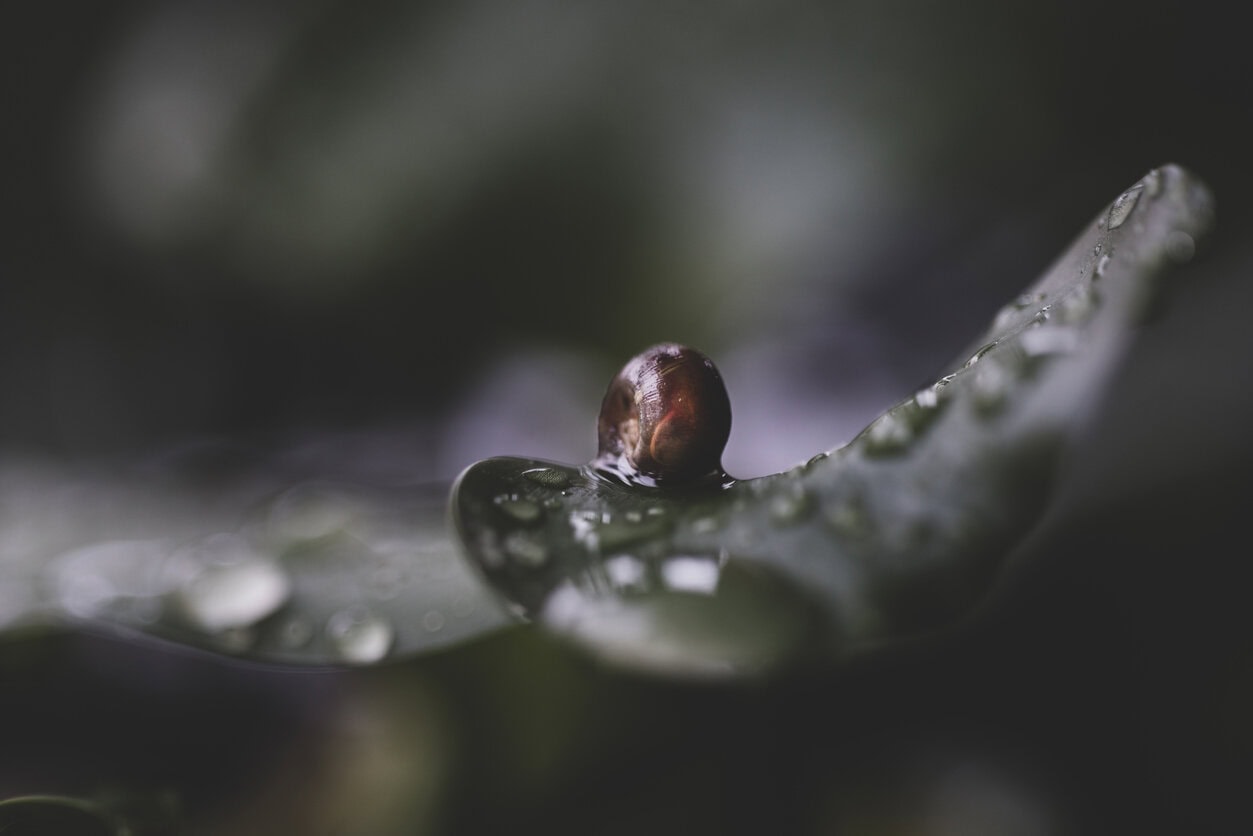
Snails can give us the most accurate information for weather changes and storms. Imagine it like this way. Remember when weather app told you to skip the umbrella, and then the sky opened up anyway?
Forecasts help, but records only go back so far. Before modern weather records began, scientists needed other clues to understand old storms.
Now researchers at the University of Queensland in Australia say one of those clues might be crawling around your garden. A humble land snail carries a record of extreme weather right on its back, and the secret is hidden in its shell.
How A Snail Builds Its Shell
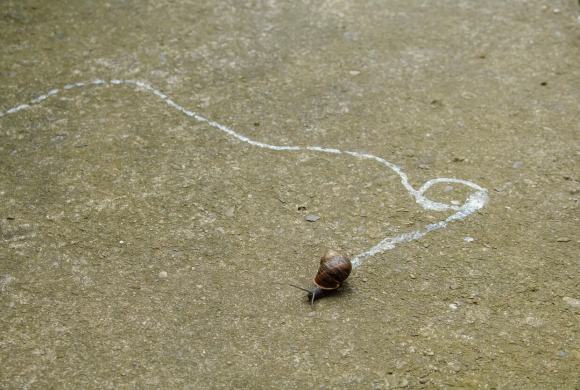
Before we get to storms, you need to know how a snail builds its shell. It works differently from how most animals grow, and that difference is exactly what makes this discovery possible. Let’s start at the very beginning, with a snail that has just hatched.
A tiny, newly hatched snail already has a shell, and it is equally tiny. The shell is hard, which protects the snail’s organs. But it also limits how much the little mollusc inside can grow. It is like wearing a helmet that never gets bigger.
Since the snail cannot make the coiled tube of its shell wider, it grows outward from the central spiral, at the opening. As its body pushes forward, a special organ on its back called the mantle gets to work.
The mantle secretes calcium carbonate at the shell’s opening. It hardens into solid crystals the moment it meets the outside world. So the shell grows outward too, spiraling along with the snail living inside it, like a house that extends one room at a time.
That means every new ring of shell records details about the snail’s life at that time. It is a little similar with tree rings, where each band quietly stores what a year was like. Only here, the diary is built from calcium carbonate.
In The Shell
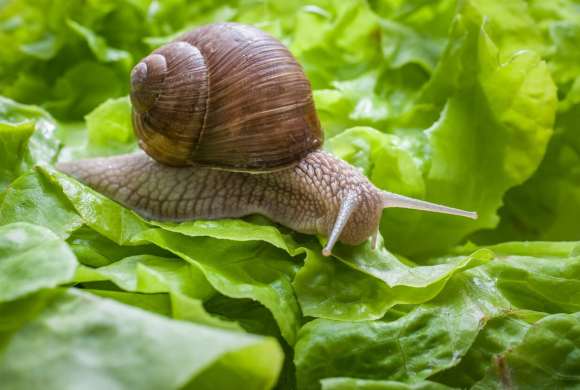
Scientists did not just admire the shell, they tested it. By studying one shell closely, the team found several layers of information hidden inside, from the snail’s age to the climate it lived through and the food it ate.
The study looked at a Biggenden Banded Snail, known scientifically as Figuladra bayensis. Some growth bands in its shell held elevated levels of radiocarbon. Those levels clearly came from nuclear tests carried out in Australia in the 1960s.
Geologist and environmental scientist Nicholas Patton, who led the research, explained that high resolution radiocarbon dating let the team work out the age of the growth bands. Thanks to that, they learned the snail had lived for about 4.5 years.
Carbon and oxygen isotopes are also locked into the shell material. Scientists can read them like a travel log. They hint at the climate the snail lived through, the environment around it, and even the food it ate.
Patton also noticed the shell did not grow steadily. There were bursts of rapid growth separated by long stretches of little or no growth. In some years the shell grew 23.7 millimeters, and in others it packed on 144.3 millimeters.
Rain Came, Snail Grew
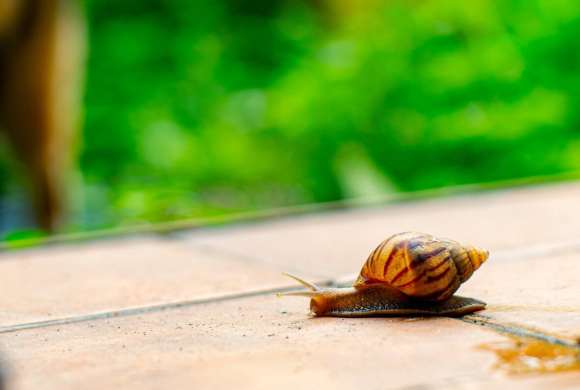
So what made the snail sprint in some years and barely move in others? The answer had less to do with ordinary weather and more to do with big, dramatic storms that left a lasting mark.
Environmental scientist Jamie Shulmeister explained that the snail was responding to extreme rainfall events instead of how wet the year was overall. A gentle rainy season did not matter much. A massive downpour did. That is pretty picky behavior for a small mollusc.
The team connected the fast growth phases to two specific cyclones, Severe Tropical Cyclone Marcia in 2015 and Tropical Cyclone Debbie in 2017. Both brought massive downpours to Coalstoun Lakes National Park, where the shell was collected. Same park, same snail, two huge storms.
So the shell works a bit like a flight recorder on a plane. It does not record speeds or altitudes. It records growth spurts and chemical clues. When a cyclone passes, the snail quietly logs the event in its own body.
Most of us only think about storms while they are happening. The snail turns a few intense days of rain into a permanent mark, one that can outlast the animal itself. That is a pretty reliable memory for a creature that never checks a forecast.
Old Shells and Ancient Storms
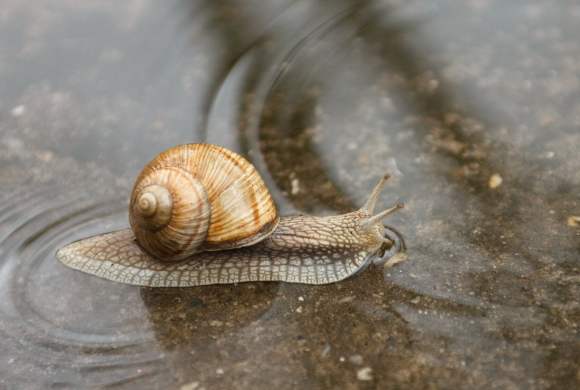
Here is where the story gets bigger than one snail. If a shell can record storms, then old shells might tell us about storms from long before anyone was measuring the weather. That idea is what excites the researchers most.
Shells are made of minerals, so they stick around in the environment much longer than the snails that built them. A shell can sit in the ground for a very long time. It is like a message in a bottle waiting on a beach.
There is also a growing field that uses biological evidence to work out what happened before modern meteorological records began. Snail shells could become another tool in that toolbox, helping scientists fill gaps from times when nobody was recording the weather.
Patton explained the next step. If researchers find shells in different layers of sediment, they can combine the individual shell records together. That would stretch this weather information further back in time, one layer at a time, like adding pages to a very old diary.
Shulmeister called it surprising and quite exciting that the humble snail could help reconstruct the paths of past cyclones, even in prehistoric times. For the rest of us, it is a reminder that useful clues can hide in very ordinary places.
So next time your weather app gets it wrong, spare a thought for the snail in your garden. It never needed a forecast, yet it kept a record of extreme storms right on its own back. Maybe the best weather historian is just a small spiral of shell.
Sources:
Leave a Reply