

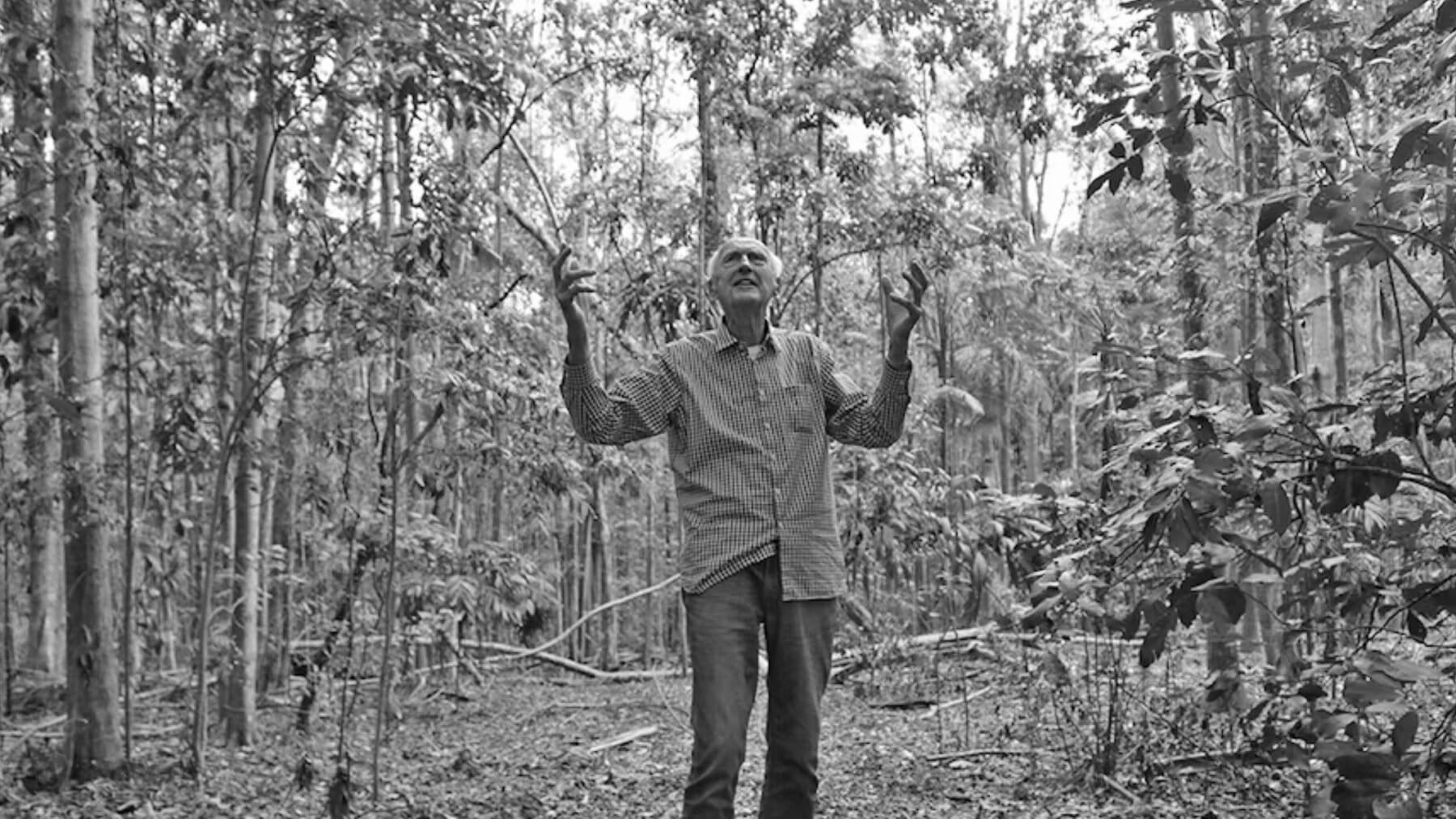
Imagine leaving behind a successful career, a comfortable life, and everything you worked hard for , just to plant trees. This is exactly what Tony Parkes did.
He walked away from investment banking and spent the next three decades of his life trying to bring a lost rainforest back to life.
His story is not just about trees. It is about what one person can do when they refuse to give up. Remember our story about Jadav Payeng? Here is another inspirational story alike.
A Forest On The Edge
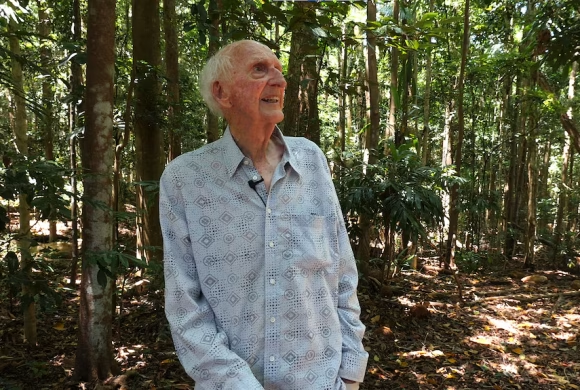
The Big Scrub was once a vast and beautiful subtropical rainforest covering about 75,000 hectares of rich land in northern New South Wales, Australia. It was full of figs, vines, palms, and rare birds like the Wompoo Fruit Dove.
But by the time people started paying attention, more than 99 percent of it was already gone, destroyed by farming, cattle, and clearing. Only tiny broken pieces were left, surrounded by weeds pressing in from every side.
Tony Parkes was born in Hobart, Australia, and grew up near the bush and the water. He later studied science and went into business management before becoming a successful investment banker in Sydney.
At 56 years old, he retired and could have chosen to rest and enjoy a quiet life. But instead, he and his wife Rowena moved to the Northern Rivers area and began learning about the broken land around them. What they found there would change the rest of his life forever.
When Tony and Rowena arrived, the Big Scrub was in a desperate state. The little forest that remained was fragmented into small patches on farms, roadsides, and reserves. Weeds were slowly eating away at what was left.
Nobody had a real plan to save it, and the people who cared about it were scattered and disconnected. The rainforest needed more than just hope. It needed money, science, landholders, seedlings, and someone who could bring all of these things together.
One Man With A Plan
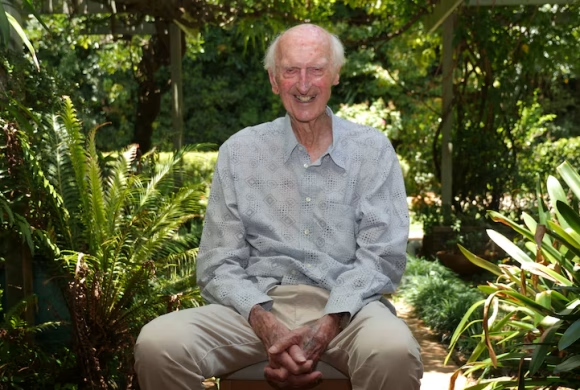
Tony Parkes became that person. In 1993, he helped found the Big Scrub Landcare Group, which later became the Big Scrub Rainforest Conservancy. This was not just another community group that met once a year and did nothing in between.
Under Tony’s leadership, it became a serious and disciplined organization with a clear mission. It gave landholders the tools, knowledge, and confidence they needed to restore rainforest on their own land.
The group also produced manuals, held field days, and built a large annual event called Rainforest Day. These activities helped turn scattered local concern into something much bigger and more lasting than anyone expected.
The work was hard, slow, and often unglamorous. Tony had to convince private landholders to join the cause, push government agencies to take action, and keep botanists, volunteers, nursery owners, and bush regenerators working together long after the initial excitement had faded.
Most people would have burned out quickly. But Tony brought the same sharp focus and discipline he had used in banking to the world of rainforest conservation.
Planting Trees, Bringing Life
He and Rowena also led by example on their own land. They planted tens of thousands of trees on their own property, watching patiently as the years passed and the canopy slowly closed above them.
The understory thickened, and birds returned. When the Wompoo Fruit Dove appeared in the trees, Tony saw it not just as a beautiful bird, but as proof that the old forest was beginning to work again.
For him, a bird carrying fruit across the landscape meant that nature’s machinery had started moving once more.
The results of his work spread far beyond his own property. Under his leadership, the conservancy helped care for dozens of rainforest remnants across the region and supported the planting of millions of trees.
He co-founded Rainforest Rescue and EnviTE, helped create permanent funding for Big Scrub restoration, and pushed hard for lowland subtropical rainforest to be officially recognized under federal law as critically endangered. He received Landcare honors, a Banksia Award, and the Order of Australia.
But awards were never really the point. The real reward could be seen in the land itself. Where there had once been only broken fragments of forest, larger patches of green were slowly growing back.
Where farmers had once felt alone and helpless, there was now a community with a shared plan. Where there had once been silence, there were now birds.
Never Satisfied

Even as he grew older, Tony never lost interest in the next challenge. The conservancy began exploring genetics, seed sourcing, and mycorrhizal fungi, the tiny underground networks that connect tree roots, to make sure the restored forests could survive diseases, insects, and a warming climate.
For Tony, planting trees was never enough if those trees could not last. He always believed that affection for nature had to be backed up by evidence and hard science, not just good intentions.
What made Tony Parkes so remarkable was that he was never the obvious candidate for this kind of work. He was a retired banker, not a trained environmentalist. He had no background in planting trees or running conservation programs.
But he brought something perhaps even more valuable than expertise. He brought the ability to make things happen. He knew how to raise money, run meetings, build alliances, and turn scattered concern into real action.
In the Big Scrub, the record of his life is unusually easy to see with your own eyes. The trees he planted are real, and they are still growing today. The forest he helped bring back is not just a dream anymore. It is a living, breathing place full of birds, fungi, and fruit doves doing the same important work they did hundreds of years ago.
Tony Parkes passed away at the age of 96. He spent nearly half of his long life fighting for a rainforest that most people had already quietly given up on, and he died knowing that the forest was still growing stronger every year.
He proved that it is never too late to start something truly important, and that one determined person, armed with nothing but patience and a solid plan, can change a landscape forever.
Sources:
Leave a Reply