


When you think about big cities nowadays, you probably picture tall buildings, busy streets, and lots of cars. You probably do not think about trees and green spaces.
This is not surprising because modern cities are not very friendly to plants and trees. In fact, it seems like cities are trying to remove all the trees to build more buildings, shopping malls, and highways.
Is that because the haven’t learned about the incredible abilities of trees?
The Study
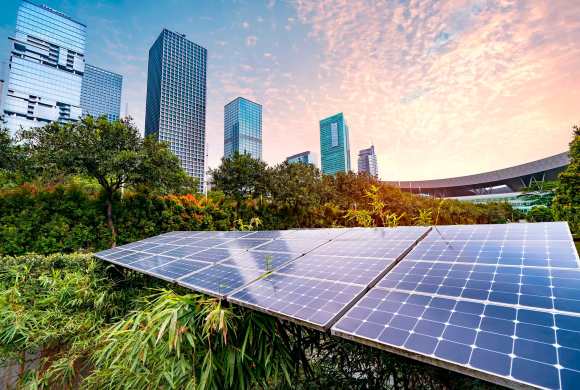
A study by Forest Service found something very concerning. About 40% of the concrete and hard surfaces in cities today are places where trees used to grow. This means that we have replaced natural green areas with artificial hard surfaces.
In the United States alone, approximately 36 million trees are cut down every year to make space for new construction and development. These places where trees once grew tall and beautiful have been replaced with concrete and asphalt.
This situation is becoming worse as cities continue to grow. But how serious is this problem really? What happens when we remove all the trees from our cities? In this article, we will explore how important trees are for modern cities and why we should protect them much more carefully.
Indeed, The United States is one of the most developed countries in the world with advanced cities and infrastructure. Currently, about four-fifths of Americans live in urban areas. This means that cities are very crowded and densely populated.
When you have so many people living in a small area, there is pressure to build more buildings and create more space for development. Because of this high population density, the United States experiences one of the greatest losses of trees in the world.
The Challenge of Growing Cities

As mentioned before, about 36 million trees are cut down every year. If we do the math, this equals about 1% of the total tree cover that disappears every single year. If this continues at the same rate, most of the trees will be gone within a century.
The irony is that cities actually need trees more than ever before. Urban forests have special abilities that help city residents survive in modern environments. Trees act as natural water collectors because they can absorb very large amounts of rainwater that falls on cities.
This is extremely important because modern cities have many hard surfaces like roads and parking lots that do not allow water to go into the ground.
Additionally, we learned in school that trees help fight climate change and reduce air pollution. Trees absorb carbon dioxide from the air through photosynthesis. They also filter out harmful pollutants released by cars, buses, and factories.
So planting trees is the simplest and most effective method for preventing urban flooding and reducing pollution. It is also natural and does not cost much money compared to building expensive drainage systems.
Rolf Skar, a forest protection director, explains, “Trees in urban areas help ward off pollution, providing a long list of benefits for people and the planet. This news proves once again that we need to prioritize adding more green spaces to our cities.”
Trees as Protection for Cities
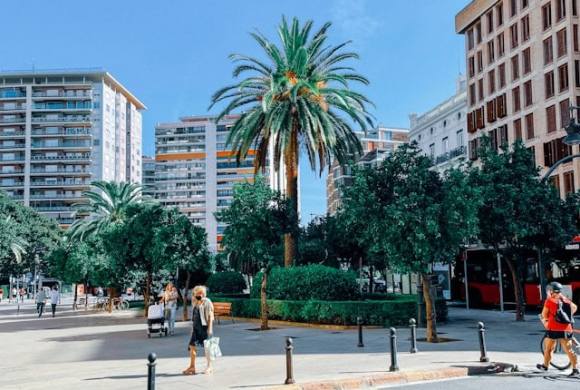
Have you ever realized that urban forests are actually like a defense system that cities use to protect themselves? Just like a body has an immune system, cities have their own protection system made of trees.
Trees reduce pollution levels in the air by absorbing carbon dioxide during photosynthesis. This is like having a natural air filter that works for free every single day without electricity. Modern cities suffer from severe air pollution because of vehicle emissions and factory smoke. Trees help clean this polluted air naturally.
You also probably noticed that streets with many trees feel cooler than streets without trees. This is very important in modern times because cities are getting hotter due to climate change. Trees provide shade and reduce temperature through a process called evapotranspiration. Urban forests can lower surrounding temperatures by several degrees.
This cooling effect has real economic benefits. When the air is cooler, people need to use air conditioning less. Trees can reduce air conditioning needs by up to 30% and heating needs by 50% in winter.
Think about how much money this saves on electricity bills. For the entire United States, the estimated loss of these benefits is about $96 million every single year. This includes pollution reduction, carbon storage, and energy savings.
After the pandemic, when many people felt stressed and isolated, scientists discovered that spending time near trees and green spaces helps reduce anxiety and depression. Having trees in your neighborhood makes you feel better mentally and physically.
David Nowak, a scientist who studies urban forests, explains, “Understanding where trees are being lost and how much is changing will help communities decide how many trees they want to have in the future, and how urban trees help protect the environment and improve human health.”
We Are Losing Trees Faster Than We Plant Them
We understand that trees give us many benefits. It makes sense that we should take good care of them and plant more. But the reality nowadays is the opposite. We keep cutting down more trees while planting fewer and fewer trees every day.
Scientists Nowak and Greenfield studied tree cover in the United States from 2009 to 2014. They looked at urban areas in every state across the country. Their findings were very concerning.
They discovered that 45 states were showing a decline in tree cover. Even worse, 23 of these states were experiencing significant tree loss. Overall, the entire country was losing about 175,000 acres of tree cover every single year.
Where did all these trees go? They were replaced by concrete and asphalt. The research found that over five years, hard surfaces like concrete and pavement increased by about 167,000 acres per year.
This shows a clear trade-off, as tree cover decreases, concrete surfaces increase. This is a dangerous trend because it makes cities less sustainable and more vulnerable to flooding and heat.
The Many Benefits of Urban Forests
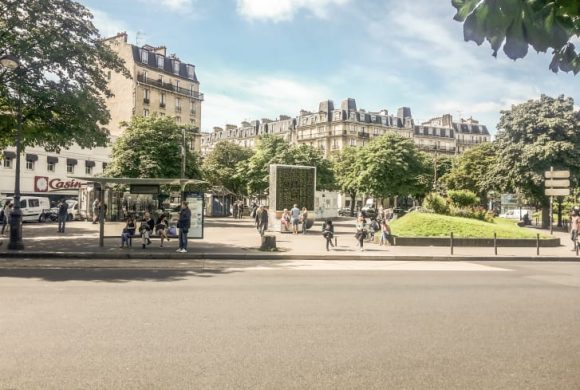
All the benefits we mentioned earlier, such as air filtration, water absorption, and temperature control, are well-known. But these are not the only advantages that urban trees provide us.
From an economic perspective, neighborhoods with preserved urban forests show greater prosperity and value. In Toronto, Canada, researchers found something remarkable. People living on streets with trees are healthier and live better lives.
The health benefits are equivalent to receiving a $10,000 salary increase. This shows that trees have real economic value to individuals.
Real estate agents know this well. They say that “leafy streets sell houses.” In Portland, Oregon, street trees increased house prices by a total of $1.35 billion. They also increased potential tax revenue by $15.3 million. This means that investing in trees is profitable for cities and good for property owners.
Trees also attract younger people and families to neighborhoods. Green spaces make neighborhoods more attractive and pleasant to live in. In modern times where mental health is a serious concern, having green areas nearby is becoming increasingly valuable.
Paul de Zylva from Friends of the Earth says, “Trees improve city living. It is worrying that we are losing so many trees in American cities when leading cities worldwide are experiencing the many benefits of investing in trees as part of their plans to improve urban life.”
Souces,
Leave a Reply