


Remember when a beach vacation meant soft sand, clear blue water, and the kind of view that made you forget every stressful day at work? You could picture your toes in the sand before you even packed your suitcase.
But what if you finally arrived, only to find the shoreline buried under mountains of smelly brown seaweed instead? It sounds like bad luck, but for millions of people across the Caribbean and nearby coasts, it has become the new normal.
So, why does this keep happen? The answer is more surprising than you might think.
A Famous Seaweed
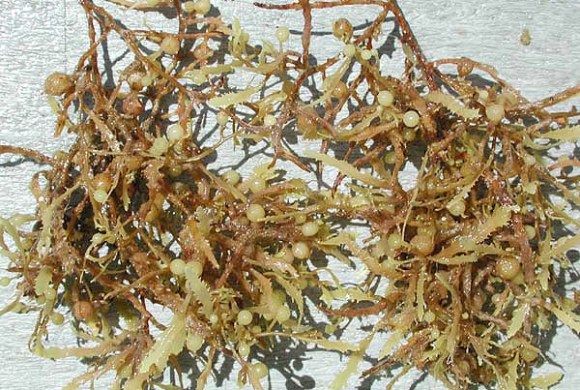
Sargassum is not some strange new plant. It has floated across the Atlantic Ocean for centuries. Long before modern tourists visited tropical beaches, Portuguese sailors spotted it and named it after grapes because of its tiny air-filled bubbles. Even Christopher Columbus wrote about seeing giant floating mats during his voyage across the Atlantic.
For hundreds of years, most of this seaweed stayed in the Sargasso Sea, a calm part of the North Atlantic.
Then, around 2011, everything changed. Huge floating mats started appearing much farther south, between Africa and South America. Since then, they have spread across the Caribbean, Central America, the Gulf of Mexico, and parts of Florida almost every summer.
According to ocean researchers studying these blooms, the Great Atlantic Sargassum Belt has grown into one of the biggest seaweed events ever recorded.
In 2025 alone, scientists estimated it contained more than 37,500 million tons of floating sargassum, and new records could still be on the way.
Fast Forward Button
At first, scientists searched everywhere for answers. Maybe fertilizers washing into rivers were feeding the blooms. Maybe warmer oceans were the main reason. Others looked at Saharan dust blowing across the Atlantic or changes in ocean currents.
Each idea explained part of the puzzle, but none explained everything.
Researchers eventually noticed another piece of the story. During the winter of 2010, unusually strong winds pushed large amounts of sargassum south from its usual home. Those same winds also mixed deep, nutrient-rich water into the sunny surface where seaweed grows best.
Think of it like giving a tiny garden both sunshine and unlimited fertilizer at exactly the right moment. Once the seaweed got that early boost, it exploded across the tropical Atlantic.
According to the research team behind the new model, those unusual weather conditions may have started the problem, but they are no longer the only reason it continues today.
The Seaweed Learned How to Feed Itself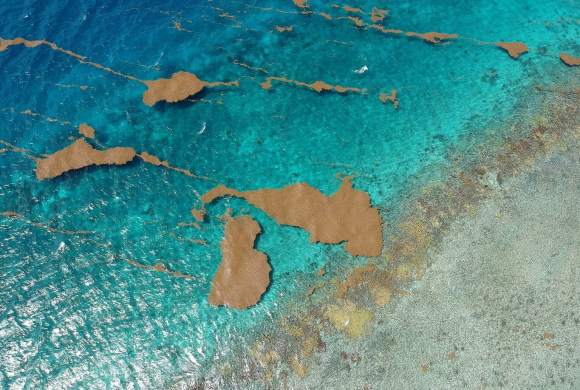
This is where the story becomes almost like something from a science fiction movie.
A floating sargassum mat is much more than a pile of seaweed. It works like a floating neighborhood packed with fish, shrimp, crabs, and countless tiny creatures. Scientists even have a name for this living community, the “sargassumsphere.”
Every animal living there eats, grows, and produces waste. Older seaweed also breaks apart over time. Together, these natural processes recycle valuable nutrients right back into the floating mat.
Imagine a factory that upgrades itself every day while making its own fuel. That is basically what these floating islands have become.
According to the researchers, the seaweed now gathers nutrients from a huge area of the ocean, concentrates them around itself, and creates the perfect conditions for even more growth. It is a double edged sword. The larger the bloom becomes, the easier it is for the next one to survive.
What Comes Next
One of the biggest breakthroughs did not happen on a beach. It happened inside computer models.
Researchers built a mathematical model using years of measurements, including nitrogen levels collected around the U.S. Virgin Islands. The model successfully recreated blooms from 2011 through 2022. Even more impressive, it correctly predicted how the massive blooms of 2023 and 2024 would develop before they happened.
That kind of forecasting matters because coastal communities often have very little time to react. Hotels, fishermen, boat operators, and local governments all need advance warning before giant mats begin washing ashore.
According to the scientists behind the project, better predictions can help communities prepare instead of simply being surprised every summer.
Bad for Beaches

If you only see pictures online, sargassum may not seem like a huge problem. After all, it is just seaweed.
Reality looks very different.
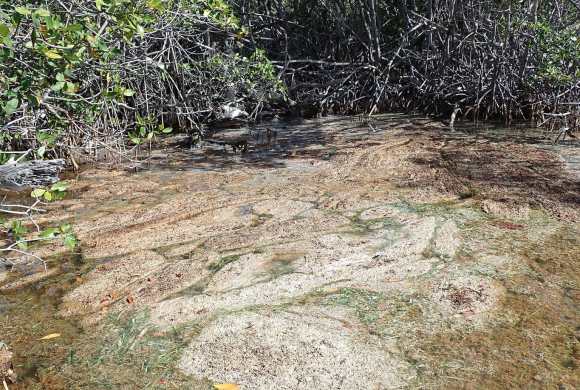
As the seaweed piles up on shore, it begins to rot. During decomposition, it releases gases such as hydrogen sulfide, ammonia, and methane. The smell alone can drive tourists away, but the gases also raise health concerns for nearby residents.
The floating mats can clog harbors and make boating difficult. Fishing becomes harder because boats cannot move easily through thick layers of seaweed. Marine animals may also struggle when giant mats block sunlight or change local habitats.
For many coastal towns that depend on tourism and fishing, one heavy bloom can feel like watching an entire season disappear before it even begins.
The Useful Problem
Here is the part of the story that feels surprisingly hopeful.
Instead of treating sargassum as nothing but trash, scientists and entrepreneurs are asking a different question. What if all that seaweed could become something valuable?
Researchers have already found several exciting possibilities.
Sargassum contains large amounts of carbohydrates, which makes it useful for producing renewable fuels such as bioethanol, biogas, bio-oil, and even hydrogen. According to scientists in Barbados, combining collected seaweed with wastewater from the island’s rum industry can help produce biofuel while reducing waste from both sources.
Farmers are also experimenting with processed sargassum as fertilizer and soil improvement. Once excess salt and unwanted metals are removed, the seaweed can help improve soil, hold more water, and support healthier crops.
The ideas do not stop there. Researchers in Mexico have created compressed building panels using sargassum, while entrepreneur Omar Vázquez Sánchez developed affordable bricks made with about 40 percent seaweed mixed with limestone and other materials.
It is almost like turning yesterday’s beach headache into tomorrow’s building blocks. That does not erase the problem, but it gives coastal communities more options than simply hauling the seaweed away every year.
The next time you think back to those perfect beach memories, remember that nature is always changing. Sometimes it creates challenges nobody expects. Sometimes it also hands us unexpected opportunities hiding inside the mess.
Sources:
Leave a Reply