


What’s on your plate tonight, and how did it grow so big? Chances are, synthetic fertilizer played a part. That powder in the farm supply store feeds much of humanity, yet making it burns a lot of energy.
Of course we all know that synthetic fertilizer is not what everyone wants to be on their plates. Especially when in this era of information, we can simply just open our phone and find out what’s actually be put on our plates.
And because of that, now a purple microbe might offer a cleaner way.
Researchers at Kyoto University in Japan tested this idea in real fields for two years. The results were better than many people would expect. Let’s walk through why it matters for your food, your planet, and maybe your next bowl of broccoli.
The Hidden Cost

Synthetic fertilizer is a quiet hero of modern farming. Farmers rely to it every season to feed a growing population. But that success comes with a price tag most people never see, and it starts right at the factory.
These fertilizers are made in huge pressure cookers heated to 450°C, or 840°F. The factories gush an estimated 450 million metric tons of CO2 into the atmosphere each year. That’s a heavy carbon bill just to help crops grow.
The trouble doesn’t stop at the factory gate. Overuse has acidified farm soils, which ironically makes them less productive. It’s like drinking too much coffee to stay energized, then crashing even harder. The very thing meant to help starts working against farmers.
Runoff is another headache. Fertilizer that flows into lakes, rivers, and bays spurs algal blooms. Those blooms deplete the oxygen in the water, killing fish and damaging whole ecosystems. A product meant to grow food ends up choking life in the water.
Then there’s the sky. Every year, millions of tons of these nitrogen compounds return to the atmosphere as nitrous oxide, or N2O. This greenhouse gas is 298 times as potent as carbon dioxide. A little bit goes a very long way.
Natural options like manure or hay seem like easy fixes. But they contain less nitrogen, which makes them less useful in many cases. Farmers need something strong enough to compete with the factory stuff, yet kinder to the planet.
Purple Microbe
Enter the Kyoto University researchers, who looked at a tiny organism that needs no pressure cooker at all. Just sunlight, air, and water. It sounds too simple to be true, but the early results say otherwise.
The star is a marine purple non-sulfur photosynthetic bacterium called Rhodovulum sulfidophilum. It’s common in coastal waters, rivers, and lakes. Because it absorbs CO2 while growing, people have even studied it as a possible source of biofuels. Pretty talented for something so small.
But here’s the real magic. As it grows, it fixes nitrogen from the air, turning it into proteins and other useful biomolecules. Think of it as a tiny factory powered by sunshine instead of fossil fuels, with no industrial pressure cooking needed.
Think about how different that is. Today’s fertilizer plants rely on extreme heat. This microbe simply grows in water and pulls nitrogen from the air. It’s slow cooker magic versus a pressure cooker, with a lot less carbon in the picture.
Real Broccoli Fields
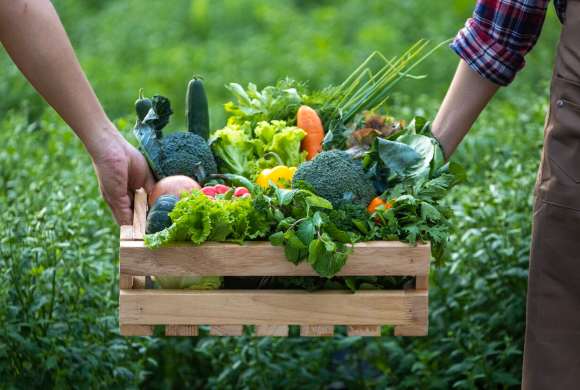
Cool science means little if crops don’t respond. So the team moved step by step, from small greenhouse tests to real farm fields, checking at each stage that the purple powder could hold its own against the synthetic stuff.
In 2024, the team reported greenhouse experiments using the bacteria, lysed, dried, and powdered. It helped Japanese mustard spinach, called komatsuna, grow just as well as synthetic fertilizers did. That was a promising first win for the purple powder.
By 2025, they developed a way to grow large amounts of the microbe inexpensively, in vats of diluted sea water. That made mass production look feasible. Suddenly this wasn’t just a lab curiosity, it was something farmers might actually use someday.
Their newest study went outdoors. The team tested the fertilizer, called purple-PB for processed biomass, in fields where broccoli was farmed for two years. It boosted yields as effectively as synthetic fertilizers. Two full years of real farming, and the purple stuff kept up.
It also increased the nitrogen content of the plants, which serves as a stand-in for protein content, just as well as synthetic fertilizers. So the broccoli didn’t just grow big. It stayed nutritious too, which is exactly what you want on your dinner plate.
Slow Release
Matching synthetic fertilizer is impressive on its own. But the purple version has another trick up its sleeve, and it’s all about timing. That’s where the climate benefit really shows up.
Lab experiments showed purple-PB released its nitrogen into the soil more gradually than synthetic fertilizers. Picture a slow drip coffee maker instead of a fire hose. Plants get a steady supply rather than a sudden flood.
That slower release helped the climate, just as researchers expected. In the first six days after fertilizing, N2O flux decreased by 15 to 73 percent compared to synthetic fertilizers. Less of that super potent gas seeped into the air.
If this approach succeeds, it could also ease other harms caused by synthetic nitrogen fertilizers. That includes the soil and water problems we talked about earlier. It won’t fix everything overnight, but it could tackle several problems with one purple powder.
Many people say the Green Revolution, with its synthetic fertilizers, made it possible to feed the planet’s growing population. Now a Purple Revolution might help make agriculture sustainable. So next time you bite into broccoli, ask yourself, what if its fertilizer was grown, not cooked?
Sources:
Leave a Reply