


When people talk about climate change, they usually think about forests, factories, cars, or fossil fuels. Very few people think about soil.
Yet the ground beneath our feet may be one of the most important tools in the fight against global warming. A new report released during COP30 found that soil stores much more carbon than scientists believed in the past.
So, should we start talking about soil?
The Silent Hero
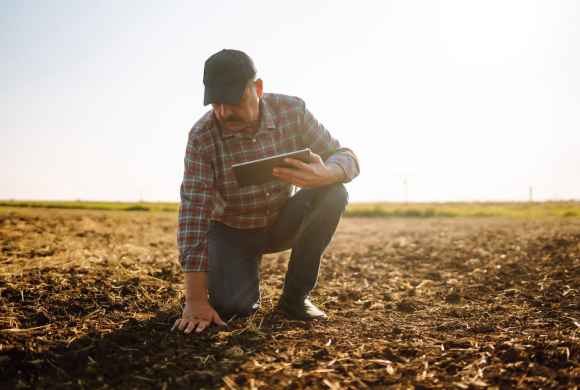
The report says that the world’s topsoil stores around 2,822 gigatons of carbon in just the top one meter of soil. Earlier estimates only suggested around 1,500 gigatons. This means soil is a much larger carbon sink than experts once thought.
A carbon sink is something that absorbs carbon dioxide from the atmosphere and stores it safely. Forests and oceans are well-known carbon sinks, but now scientists believe healthy soil is just as important.
Researchers also found that healthy soil could absorb 27% of the carbon emissions needed to keep global warming below 2 degrees Celsius. This equals about 3.38 gigatons of carbon dioxide each year. The report explains that soil can help slow climate change if people protect and restore it properly.
However, scientists warn that this natural system is now in danger. Large areas of land around the world are becoming degraded because of overfarming, pollution, and poor land management.
If this damage continues, soil could release huge amounts of carbon back into the atmosphere. The report says degraded soil may release 4.81 billion metric tons of CO2 every year.
This problem is already very serious in some places. The report explains that carbon emissions from degrading soil in the United States equal the pollution produced by about 75 million cars.
In Europe, if only 1% of soil carbon were released, it would equal the yearly emissions of 1 billion cars. These numbers show why soil health is now becoming a major climate issue.
Healthy Soil Is Important
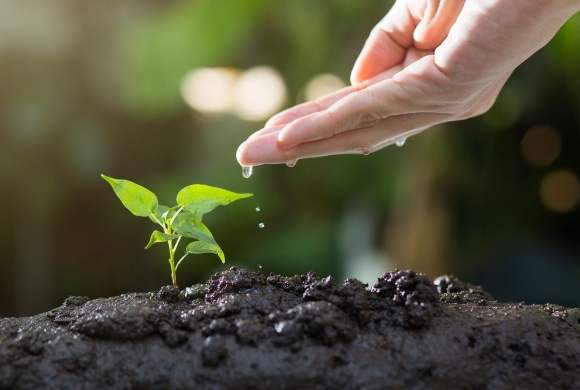
Healthy soil does much more than store carbon. It is also very important for food production, water systems, and ecosystems. Farmers depend on healthy soil to grow crops. Without good soil, plants cannot grow properly, and food production becomes weaker.
The report says that soil ecosystem services are worth more than $11 trillion every year. It also says that every $1 invested in soil regeneration could return up to $30 in economic benefits. This means protecting soil is not only good for nature, but also very helpful for the economy.
Praveena Sridhar from the Save Soil campaign believes governments are still not taking this issue seriously enough. She said, “All energy and transportation commitments are quantified, but nothing is quantified with regard to soil.
And if you don’t get soil into quantifiable targets, it’s all talk.” Her statement means many countries discuss soil protection, but very few create real targets or strong plans.
Scientists explain that living soil acts almost like a sponge. Healthy soil can absorb extra rainwater during floods and keep water during droughts. This helps farmers during extreme weather events that are becoming more common because of climate change.
Sridhar also explained, “Healthy, living soils can absorb flood waters, and in drought they hold water like sponges.” This ability is very important for countries that face floods, dry seasons, and unstable weather.
At the same time, soil contains many living organisms such as bacteria, fungi, and insects. These organisms help break down dead plants and recycle nutrients. Without healthy soil life, crops become weaker and farmers often use more chemical fertilizers and pesticides. Unfortunately, overuse of these chemicals can damage soil even more.
The United Nations Food and Agriculture Organization warns that 40% of Earth’s land is already degraded. By 2050, up to 90% of land could become degraded if humans continue current practices. This shows how urgent the problem has become.
We Struggle to Protect Soil

Even though scientists now understand the importance of soil better, political action is still very slow. The report says only 30% of countries include soil restoration in their climate plans under the Paris Agreement.
Many governments focus more on energy and transportation while soil receives less attention. One major problem is measurement. Scientists need accurate systems to measure how much carbon soil stores.
This process is called MRV, which stands for monitoring, reporting, and verification. Measuring soil carbon is not easy because soil conditions can change from one place to another very quickly.
Sridhar explained this challenge by saying, “You need clear, accurate measurability. It’s not like a factory, where you can switch on to determine the baseline.” In other words, soil is a natural system, so it changes constantly and is harder to measure than machines or factories.
Still, some regions are trying to improve the situation. The European Union started a large project called “A Soil Deal for Europe.” The project plans to invest around 1 billion euros until 2028. The goal is to create better soil monitoring systems and improve soil health across Europe by 2030.
Another important issue is the lack of global legal protection for soil. Oceans have international agreements such as the Law of the Sea, while climate change has the Paris Agreement. Soil, however, still does not have a strong global legal system for protection.
Recently, the European Union, the Pan-African Parliament, and the International Union for Conservation of Nature started discussions about creating a global legal framework for soil security. This could become an important step in future soil conservation efforts.
At COP30, Brazil also introduced a new project called the Resilient Agriculture Investment for Net-Zero Land Degradation. The project hopes to restore degraded farmland and support sustainable farming methods.
World’s Strongest Climate Solutions

The new report introduces something called the Soil Security Framework. This system focuses on five areas: soil condition, soil capacity, public awareness, economic value, and legal protection. Scientists believe this framework can help countries protect soil more effectively in the future.
The report also changes the way many people think about soil. For years, soil was mostly seen as something only connected to farming. Now, scientists are starting to see soil as a strategic resource linked to food security, water supply, climate stability, and economic health.
Healthy soil may also help countries prepare for climate disasters. Floods, droughts, and heat waves are becoming more common around the world. Living soil can reduce some of these impacts because it stores water and supports stronger ecosystems.
Sridhar said, “The security lies below the surface.” Her statement means the future of farming and climate protection may depend heavily on healthy soil underground, not only on technology above the ground.
The report shows that soil is not just dirt. It is a living system that supports life on Earth. It stores carbon, grows food, controls water, and protects ecosystems. Yet many people still ignore its importance.
Scientists believe the world still has time to restore damaged soil, but action must happen quickly. Governments, farmers, and communities all need to work together to protect this hidden climate helper beneath our feet.
Sources:
Leave a Reply