

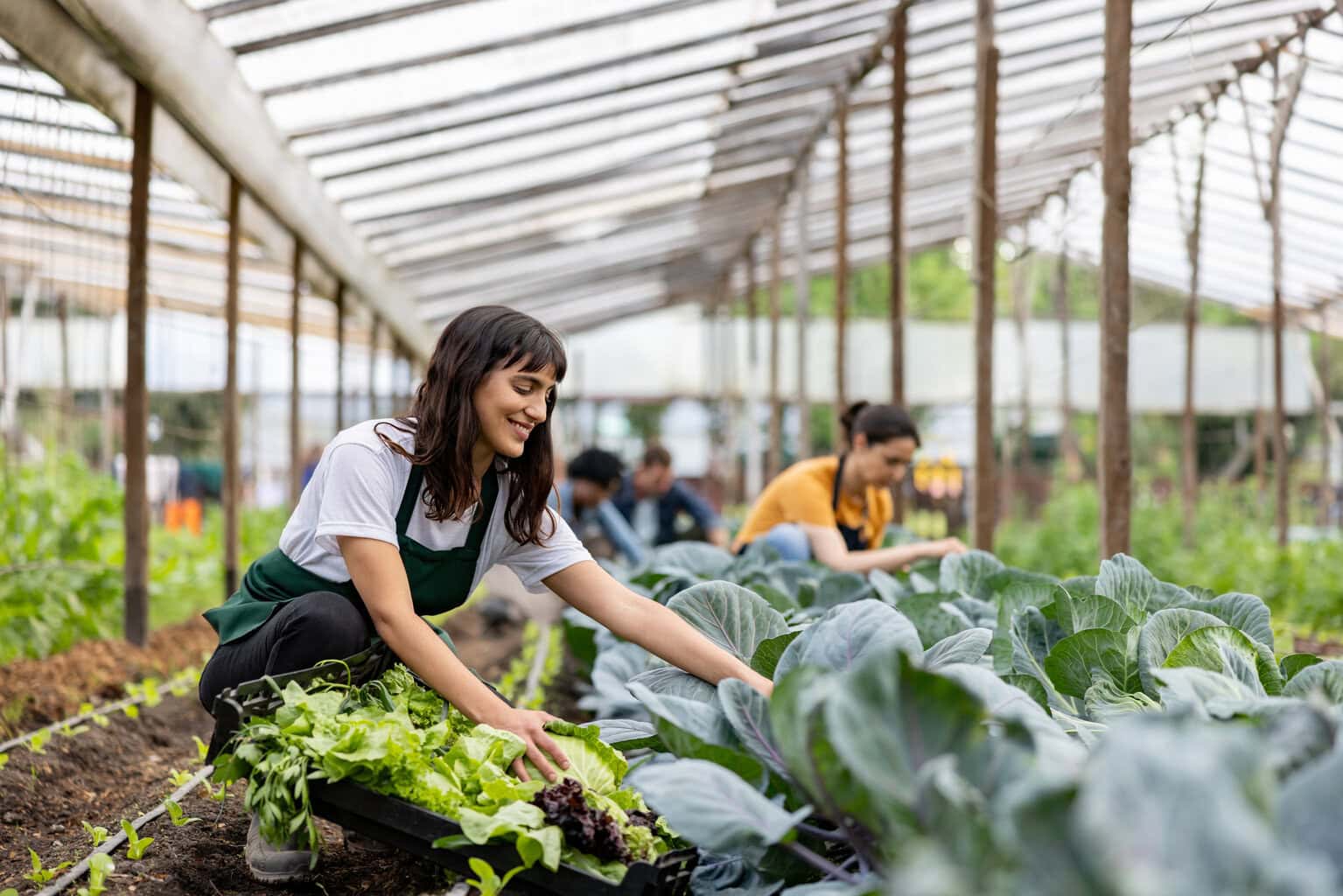
Talk to any group of commercial growers, and the subject of going organic comes up fast. Buyers want it. Retail chains ask about it. The premium on certified organic transplants and produce keeps climbing. Yet plenty of growers who like the idea in principle hesitate when it comes to actually doing it, and their reasoning is usually the same: they have heard horror stories about operations that switched programs mid-season and watched crop quality fall apart.
That fear is not irrational. A greenhouse is a tightly tuned system, and the nutrition program is its engine. Swap the engine out carelessly and things go wrong quickly. But the transition itself is not the problem. The problem is transitioning badly, all at once, with no plan, no buffer, and no understanding of how organic nutrition actually behaves differently from the synthetic programs most greenhouses were built around.
The growers who make the switch cleanly do a few things differently. They phase it in, they rebuild their soil biology deliberately, and they choose greenhouse products and inputs that support the transition rather than fight it. Here is how the process works when it is done right.
Why You Cannot Just Swap Bottles
The first thing to understand is that organic and synthetic nutrition work through fundamentally different mechanisms.
Synthetic fertilizer is essentially predigested. The nutrients are in mineral form, immediately soluble, and available to roots the moment they hit the root zone. That is why synthetic programs produce fast, predictable, uniform results. It is also why they carry risks: salt buildup, leaching, and a root zone that can become biologically quiet, because there is little for microbes to do when everything arrives pre-processed.

Organic nutrition works through biology. Organic inputs, fish hydrolysate, composted poultry litter, seaweed extracts, amino acid blends, are not immediately available to plants. They must first be broken down by microbes into forms roots can absorb. The fertilizer is, in a very real sense, food for the soil life, and the soil life feeds the crop.
This has two enormous implications for a transition. First, an organic program is only as good as the microbial community running it. Second, that community takes time to build. A grower who switches overnight from a fully synthetic program to organic inputs is asking a biologically dormant root zone to suddenly digest food it has no workforce for. The nutrients sit there, the crop goes hungry, and the grower concludes that organic does not work. It does work. It just was not given the staff it needs.
Phase One: Rebuild the Biology Before You Change the Diet
The smartest transitions start months before any fertilizer change.
Start by testing everything. Get a full soil or substrate analysis, including organic matter, pH, soluble salts, and biological activity if the lab offers it. You cannot plan a route without knowing where you are starting.
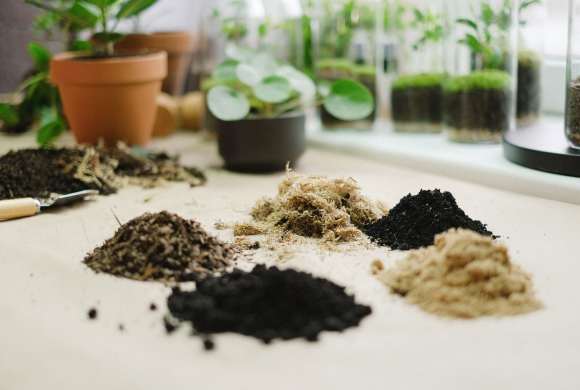
Then begin feeding the biology while you are still running your existing program. Incorporate compost, compost teas, humic and fulvic acids, and microbial inoculants into your routine. Many growers begin applying mycorrhizal inoculants at the plug or liner stage during this phase, because inoculated roots explore the substrate faster and tolerate stress better, which buys you margin later.
Watch your salt levels during this period. If your synthetic program has been running hot, accumulated salts may need flushing or gradual drawdown before organic inputs can perform. High soluble salt levels suppress exactly the microbial community you are trying to establish.
The goal of phase one is simple: by the time you change fertilizers, the workforce should already be hired and working.
Phase Two: Transition One Crop or One Bench at a Time
Never convert the entire operation in a single season. Pick a low-risk crop, something forgiving, fast-turning, and not your bread and butter, and run it fully organic while the rest of the house continues on the standard program.
This pilot does several things. It lets you learn the timing of organic nutrition on your substrate, your water quality, and your climate, because organic release rates respond to temperature and moisture in ways synthetic products do not. It reveals which pests and diseases show up differently under the new program. And it gives you a side-by-side comparison that will convince you, your staff, and eventually your buyers, far better than any brochure.
During the pilot, keep records obsessively. Note EC and pH drift, crop color, root development, and time to finish. Organic programs often run at lower EC readings than synthetic ones while feeding the crop adequately, because the nutrition is tied up in organic matter rather than floating in solution. If you manage the pilot by the numbers you are used to, you will overcorrect. Learn your new normal.
Phase Three: Match the Program to the Crop Stage
A well-built organic greenhouse program is not one product, it is a sequence.
Early in the crop, roots are small and the microbial system is still spinning up. This is where gentle, phosphorus-forward starter nutrition matters. Seedlings and young transplants need available phosphorus for root initiation, but they are also the most salt-sensitive plants in the house. Low-salt organic starter formulas, the 5-10-5 style blends built for establishment, exist precisely for this window.
Mid-crop, the emphasis shifts to steady vegetative growth. This is where balanced organic maintenance feeds, granular or liquid, carry the load, supported by biostimulants like seaweed extract and amino acids that improve nutrient uptake and stress tolerance.
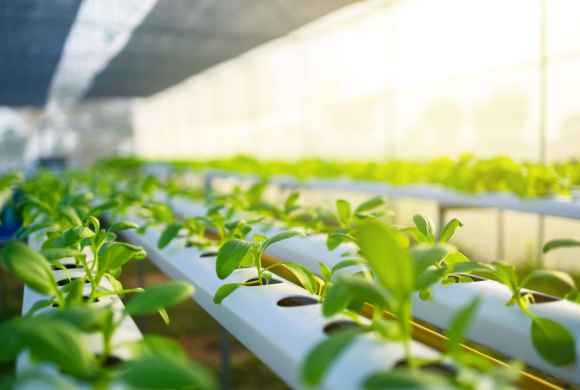
For flowering and fruiting crops, the program shifts again toward bloom nutrition, higher phosphorus and potassium with micronutrients, to support bud set and fill. Growers running hydroponic or liquid-feed systems can find organic-compatible base and bloom formulas, but mixing practices change: organic liquids behave differently in tanks, need agitation, and can clog fine emitters, so plan filtration and line flushing into your routine.
The point is that organic growing rewards growers who think in stages rather than in one-size-fits-all feedings. In practice, many operations find the staged approach improves crop uniformity compared to their old single-formula habit, because it forces attention to what each phase of growth actually needs.
The Problems You Should Expect
Honesty helps here, so let us name the predictable challenges.
Pest pressure shifts. Organic programs eliminate most conventional pesticide options, so biological controls, beneficial insects, and preventive practices stop being optional and become the core of your pest management. Start building those relationships with biocontrol suppliers before you need them.
Nutrition timing feels slower at first. Organic inputs release gradually, so a crop that would have greened up overnight under synthetic feed may take a few days longer to respond. Growers who anticipate this do not panic and over-apply. Over-applying organic nitrogen is the classic beginner mistake, and it causes as much trouble as under-applying.
Cost structure changes. Organic inputs often cost more per unit of nutrient, though many operations recover the difference through premium pricing, reduced shrink, and lower long-term soil remediation costs. Run the numbers for your crops rather than assuming.
Recordkeeping expands. If certification is the goal, documentation starts on day one of the transition, not the day you apply. Talk to your certifier early, because transition periods and input approvals vary and some products you might assume are fine are not allowed.
The Payoff Side of the Ledger
Growers who complete the transition consistently report a few things beyond the market premium. Root systems improve, because the microbial partnerships established early keep working through the crop cycle. Crops often show better stress tolerance, a function of biostimulants, amino acids, and a more active root zone. And the operation becomes less dependent on the price swings of synthetic fertilizer markets, which have been anything but stable in recent years.
There is also a durability argument. An organic program is, at its heart, an investment in the living system inside your greenhouse. That system compounds. Every crop run on biology makes the next crop easier, because the workforce you built is still there, working.
A Realistic Timeline
For a typical mid-size operation, a sensible transition looks like this: three to six months of biological priming while running the existing program, one full season of pilot crops, then a staged rollout across the house over the following year, with certification paperwork running in parallel if that is the goal. Total elapsed time, roughly eighteen months to two years. Operations that try to compress that into one season are usually the ones that end up in the horror story pile.
The Bottom Line
Going organic in a commercial greenhouse is not a product swap. It is a systems change, from feeding plants directly to feeding the biology that feeds plants. The growers who lose crops during the transition almost always skipped the biology phase, converted everything at once, or managed the new program with the old program’s numbers.
Do the opposite. Prime the biology, pilot on a small scale, stage your nutrition to crop development, and expect a learning curve measured in seasons, not weeks. Handled that way, the transition is not a gamble. It is a planned upgrade, and the crop you are worried about losing will likely finish better than the one it replaced.
Leave a Reply