


Natural disasters were easy to imagine. A hurricane forming over warm ocean water, an earthquake splitting the ground without warning, a wildfire sparked by lightning in dry grass. These were forces that operated largely outside human control.
But some of the most damaging environmental events in American history had a different origin. They grew out of industrial decisions, engineering failures, policy choices, and years of neglect, each one building slowly until something broke.
The disaster that followed of course was not acts of nature. They were the accumulated consequences of how humans had chosen to use the land, the water, and the air around them.
Slow Disaster
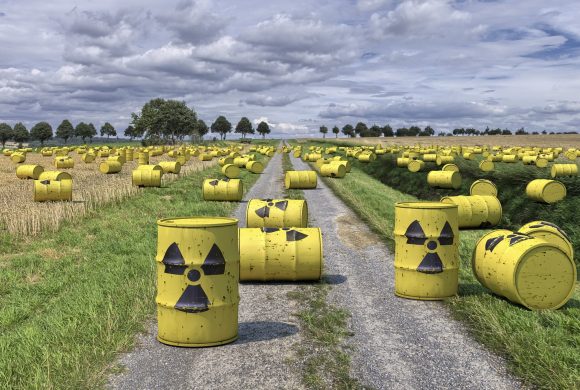
Some of the worst environmental damage did not happen in a single moment. It accumulated quietly over years before becoming impossible to ignore.
The Gulf of Mexico dead zone began appearing in maps in 1985, but its cause stretched back much further. For decades, the Mississippi River had carried pesticides, industrial waste, and toxic chemicals toward the Gulf.
As the river emptied, it also deposited large amounts of nitrogen and phosphorus, nutrients that triggered massive algal blooms in the coastal water.
When those blooms died and decomposed, they consumed oxygen in the process, leaving behind a hypoxic zone, a stretch of water with oxygen levels too low to support most marine life.
The dead zone reappeared every summer, and by 2021 it covered 6,334 square miles. The Great Pacific Garbage Patch developed through a similarly gradual process.
Plastic waste discarded across the North Pacific was pulled by four converging ocean currents, the California, North Equatorial, Kuroshio, and North Pacific currents, into a rotating system called the North Pacific Gyre.
The gyre trapped the debris in a slowly circling mass of microplastics and larger fragments that had no clear boundary and no straightforward way to remove.
Its size remained impossible to estimate precisely, but it represented one of several such accumulation zones scattered across the world’s oceans.
The Love Canal disaster in upstate New York also unfolded over decades. In the 1940s, the Hooker Chemical Company dumped approximately 21,000 tons of toxic chemicals into an abandoned canal site in Niagara Falls.
The land was later sold and developed into a residential neighborhood. By the late 1970s, heavy rainfall caused buried drums to surface and chemicals to leach into surrounding soil and groundwater.
Officials eventually detected 421 different chemicals in nearby homes, water, and land. The 239 families living closest to the landfill were forced to relocate.
Lasting Consequences

Other disasters arrived without warning, the result of equipment failures or structural collapses that released dangerous materials faster than anyone could contain them.
On March 28, 1979, a reactor at the Three Mile Island Nuclear Generating Station near Harrisburg, Pennsylvania shut down automatically after a mechanical failure.
A relief valve designed to keep the reactor core cool became stuck in an open position, causing the cooling system to lose pressure.
The reactor’s core partially melted and released radioactive material into the surrounding environment. Responders eventually removed around 110 tons of damaged uranium fuel from the facility, but the cleanup took 12 years and cost $973 million.
In December 2008, a dam holding coal ash at a power plant in Kingston, Tennessee collapsed, sending 5.4 million cubic yards of ash into a nearby water body and contaminating more than 300 acres of land.
The ash contained arsenic, selenium, lead, and radioactive materials. Removing it from the Emory River and surrounding area took about six years, and researchers were still working to understand the full impact on local ecosystems years after the spill.
Oil in the Water

Two major oil spills marked the bookends of a particularly damaging period for American coastal ecosystems.
In 1989, the supertanker Exxon Valdez struck a reef in Prince William Sound, Alaska, rupturing eleven cargo tanks and releasing 11 million gallons of crude oil across 1,300 miles of shoreline.
Around 250,000 seabirds, 2,800 sea otters, and hundreds of other marine mammals and birds died as a result. Responders attempted to burn the oil, apply chemical dispersants, and skim it from the surface, but the scale of the spill overwhelmed available resources.
A survey conducted in 2015 found that as much as 0.6% of the original spill remained in the sound more than 25 years later.
In April 2010, an explosion on BP’s Deepwater Horizon rig in the Gulf of Mexico killed 11 workers and triggered the largest accidental marine oil spill in recorded history.
Over the following 87 days, approximately 134 million gallons of crude oil poured into the Gulf before the well was finally capped. The spill affected sea turtles, whales, dolphins, birds, and fish across a vast area of the Gulf, and cleanup efforts were still continuing more than a decade after the event.
Everyone is Responsible
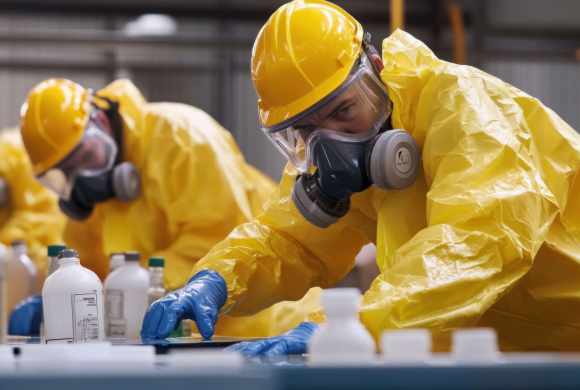
Two disasters in particular showed how environmental failure could fall hardest on specific communities rather than dispersing its damage evenly.
The 2017 California wildfire season was shaped by a combination of long-term climate trends and immediate infrastructure failure. Global warming had raised temperatures and prolonged drought conditions across northern California, creating ideal burn conditions.
When PG&E power lines failed or came into contact with trees in October of that year, at least 12 major fires ignited. Together, they burned an estimated 245,000 acres, killed at least 47 people, and destroyed thousands of homes and businesses.
The Flint Water Crisis began on April 25, 2014, when the city of Flint, Michigan switched its drinking water source to the Flint River. The pipeline carrying the water had not been tested for toxins or treated to prevent corrosion. Lead and other contaminants began leaching into the supply.
Approximately 140,000 residents were exposed, with lead levels in some areas exceeding safe thresholds. Although the city issued a health advisory in October 2015, the infrastructure was not repaired immediately, and many residents had no practical choice but to continue using the contaminated water.
Years later, some residents were still experiencing health effects from the exposure, and access to fully clean water remained a concern.
Across all ten of these events, the pattern was similar. Decisions made for economic or logistical reasons created conditions that damaged ecosystems and harmed communities, often in ways that took years or decades to become fully visible.
Sources:
Leave a Reply