

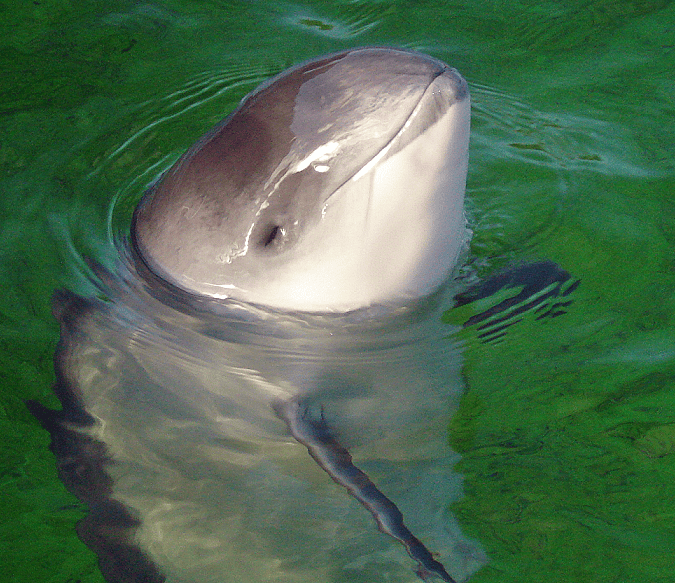
Imagine there are only 10 individuals of your entire species left on the planet. Ten. Not ten thousand, not ten hundred. Just ten living creatures standing between your species and complete extinction.
This is the terrifying reality facing the vaquita, the world’s smallest porpoise and the most endangered marine mammal on Earth. Found only in the northern Gulf of California in Mexico, this small, shy creature measures just 1.5 meters in length and weighs about 54 kilograms.
It has distinctive dark circles around its eyes, almost like a panda of the sea. Its numbers have been falling steadily since scientists first surveyed the species in 1997, when fewer than 600 individuals remained.
Accidental entanglement in fishing nets has been the main cause of its decline. Now, in a development that has alarmed conservation groups worldwide, Mexican officials have proposed scaling back the fishing regulations specifically designed to protect the vaquita’s last remaining habitat.
If implemented, the changes could shrink protected areas and allow fishing vessels to enter zones where all activity is currently banned. So, it is never a wrong time to talk about it.
What Would Change

The vaquita lives in a narrow stretch of ocean between Baja California and mainland Mexico. Protections for this area were first established in 2005 and most recently revised in 2020.
The current regulations include a zero-tolerance area spanning 288 square kilometers where all navigation and fishing activity is completely prohibited. Surrounding this is a refuge area of 1,263 square kilometers with strict fishing regulations.
Beyond that sits a gillnet prohibition zone of approximately 11,000 square kilometers where certain types of nets are banned entirely.
The proposed changes, which have not yet been made public but were reviewed by Mongabay, would significantly reduce these protections. The zero-tolerance area would shrink from 288 square kilometers to 225 square kilometers.
The vaquita refuge would be eliminated entirely. The gillnet prohibition zone would be reduced in size, reopening much of the vaquita’s habitat to fishing activity. A new special use area would be added adjacent to the zero-tolerance area, permitting certain fishing activities including free diving and hookah diving.
The proposal would also reverse the current ban on nighttime fishing between 4 p.m. and 5 a.m. The reasoning given is that Pacific sierra, a fish species commonly targeted by local fishers, has nocturnal habits and is best caught at night.
The internal government analysis reviewed by Mongabay argued that regulations on fishing gear are strong enough to make time-based restrictions unnecessary. The proposal also suggests reducing the number of departure sites for fishing vessels to consolidate monitoring at fewer locations.
Alarmed
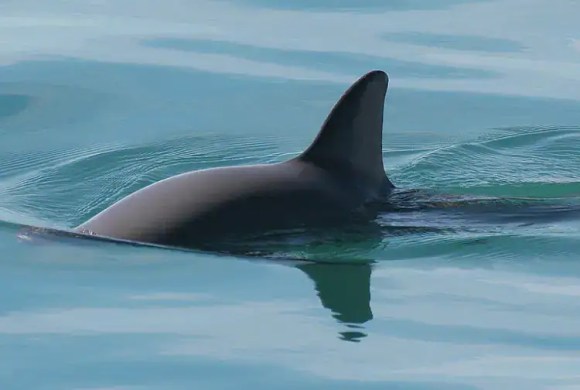
Conservation organizations reacted strongly against the proposed changes. Sarah Doleman, senior ocean campaigner for the Environmental Investigation Agency, emphasized that the vaquita is the most endangered marine mammal in the world.
With only 10 individuals remaining, any effort to reduce the protective measures currently in place would represent a real threat to the future of the species. The numbers leave almost no margin for error. Losing even one or two individuals to fishing nets could push the species past the point of recovery.
Alex Olivera, senior scientist at the Center for Biological Diversity, was even more direct in his criticism. He argued that instead of expanding enforcement, the government was surrendering the vast majority of the vaquita’s habitat to the very fishing gear that kills them.
His concern centers on a fundamental problem with reducing protected areas: wild marine mammals do not stay within a box drawn on a map. Scientists have repeatedly documented vaquitas moving outside the zero-tolerance area into surrounding waters.
Narrowing the scope of protection creates risks that a species with only 10 remaining individuals simply cannot afford. Critics of the proposal also argued that the explanation provided in the government’s internal analysis is too simplistic. The vaquita population needs a larger protected habitat, not a smaller one, if it is ever going to recover.
The Fishing Pressure

Understanding why Mexico is considering these changes requires understanding the complex situation in the northern Gulf of California. Local fishing communities have long depended on these waters for their livelihoods.
When the protected areas were established and expanded, fishing restrictions severely impacted these communities’ ability to earn income.
The proposal cites scientific research suggesting reduced vaquita activity in some areas where protections would be loosened, but it also explicitly aims to satisfy local fishing communities who have pushed back against restrictions.
One particularly dangerous factor in the region is illegal fishing for totoaba, an endangered fish whose swim bladder sells for thousands of dollars on the international black market. Fishers who set gillnets and trammel nets primarily to catch totoaba have repeatedly killed vaquitas as bycatch.
Bycatch means animals that are accidentally caught when fishers are targeting a different species. Gillnets hang vertically in the water like underwater walls, catching anything that swims into them. Vaquitas, which need to surface regularly to breathe, drown when entangled in these nets.
The government agencies developing the proposal include the Ministry of Environment and Natural Resources, the National Commission of Natural Protected Areas, the Navy, and the Ministry of Agriculture.
In a written statement to Mongabay, the Federal Attorney’s Office for Environmental Protection described the changes not as a reduction but rather as a reorganization designed to allow more effective monitoring.
The statement argued that focusing enforcement efforts on sites where updated records show actual vaquita presence allows for more precise action. However, critics pointed out that fewer than a dozen animals surviving in a dynamic ocean environment cannot be reliably confined to a reduced zone.
A Species on the Edge

The vaquita’s decline from nearly 600 individuals in 1997 to just 10 today represents one of the most dramatic population collapses in recent conservation history. The species never had a large population to begin with, living only in this one small corner of the ocean.
Each loss brought it closer to extinction. Conservation surveys in 2025 did provide a small reason for cautious hope. Researchers reported spotting a stable number of individuals, including at least one calf, suggesting the remaining population was still reproducing.
But a stable population of 10 individuals remains critically vulnerable. Any change to the protected area that increases the risk of accidental entanglement could erase this fragile progress almost immediately.
The internal government analysis reviewed by Mongabay indicates that officials have been considering these changes since at least 2023, involving visits to the area and meetings with fishing communities and civil society groups.
It remains unclear whether the agencies developing the proposal have reached a final decision or whether additional changes might still be included. The timeline for potential implementation has also not been made public.
Every month that passes without strong protections means a potential threat vaquita whose entire species could fit inside a single fishing boat.
Sources:
Leave a Reply